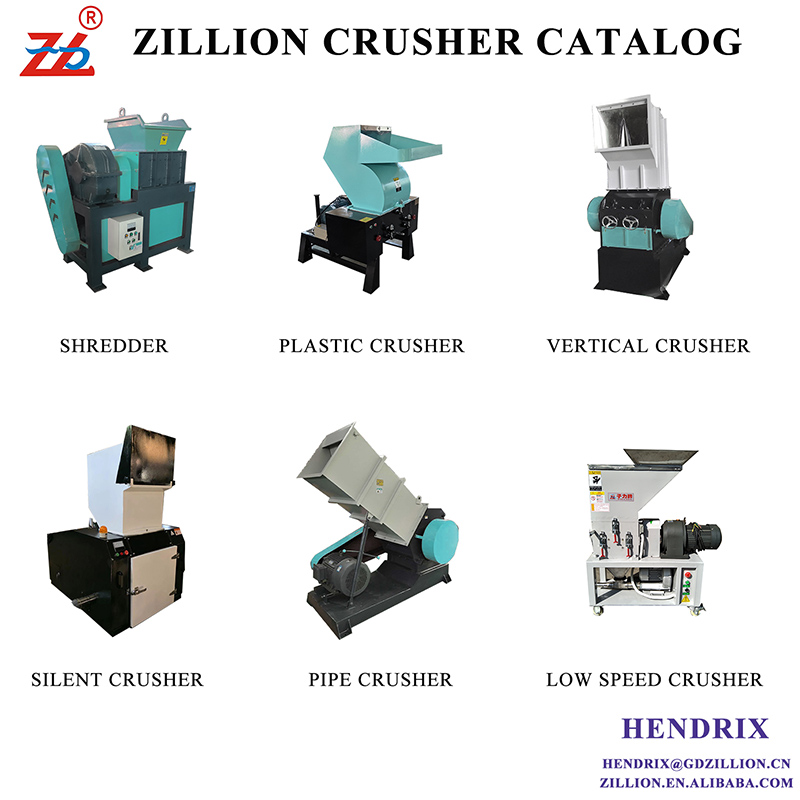
In the plastic recycling industry, the plastic shredder plays a pivotal role in breaking down plastic materials into smaller pieces for subsequent recycling processes. Making the right choice of a plastic shredder is crucial for ensuring efficient recycling operations. Here are some key aspects to consider when selecting a plastic shredder. Types of Plastic Shredders There are various types of plastic shredders designed for different plastics. For instance, the pet bottles shredder is specifically for processing PET bottles. The pp, pe, etc. plastic film crusher is suitable for plastic films made of polypropylene (PP) and polyethylene (PE). The hard plastic grinder is designed to handle hard plastic materials, and the styrofoam crushing machine is used for styrofoam. Based on the number of blade shafts, plastic shredders can be classified into single - shaft shredders, double - shaft shredders, and multi - shaft shredders. The multi - shaft shredder offers high output, making it ideal for large - scale production scenarios. In contrast, the single - shaft shredder is more flexible and is a good fit for manufacturers with lower output requirements. POWERFUL PLASTIC CRUSHER The powerful plastic shredder, with robust blades and high torque, efficiently crushes tough and thick plastic materials, ideal for heavy - duty recycling tasks. LOW NOISE SIDE SHREDDER The in - line slow shredder operates at a low speed, minimizing dust and noise, making it perfect for integrating with production lines to handle scrap plastics on - site. SHREDDER MACHINE The shredder, boasting strong cutting force, excels at breaking down thick plastics and metals into manageable pieces, serving as a reliable pre - processing tool. ----------------------------- Crushing Capacity The capacity of a plastic shredding machine is influenced by several factors. One of them is the inner chamber size. The size of the crusher is determined by the inner chamber. Generally, the width of the crusher's inner chamber ranges from 80 to 150 cm. A wider crusher usually means higher output. The speed of the crusher pulley also affects the capacity. The speed of the pulley on the crusher is calculated by multiplying the motor speed by the diameter of the small pulley next to it and then dividing by the diameter of the pulley on the crusher. Within the reasonable range of 400 to 800 rpm, a higher speed generally leads to higher output. However, if the speed is too low, the machine may jam, and if it is too high, the machine may vibrate. The design of screens and blades is another crucial factor. The size of the crushed material is controlled by the mesh size of the screen. For example, the mesh size of pet bottle flakes is usually adjusted to 16 - 18 mm, while that of pvc plastic steel is around 30 mm. Thicker blade thickness and a smaller gap between the blades are beneficial. For example, some efficient shredder blades are about 10 - 30 mm thick, and the gap is usually between 0.2 and 1 mm...
Read More
From plastic melting and molding to pharmaceutical cold-chain production, from electronic chip heat dissipation to auto parts die-casting, industrial chillers act as "invisible temperature guardians." By accurately controlling temperature, they ensure stable production processes and qualified product quality, becoming indispensable core auxiliary equipment on production lines across multiple industries. Due to the huge differences in production characteristics of different industries, chillers also need to be "customized" to meet the specific needs of each industry. In the plastic processing industry, chillers are crucial for ensuring the molding quality of products. During injection molding, after plastic is melted and injected into the mold, excessively high mold temperature will cause slow cooling and uneven shrinkage of plastic parts, leading to defects such as deformation and flash. Conversely, excessively low temperature will reduce the fluidity of plastic, making it impossible to fill the mold cavity. At this time, industrial chillers cool the mold through circulating chilled water, controlling the mold temperature within the optimal range of 20-60℃. This ensures rapid and uniform cooling of plastic parts, reducing the defect rate. For example, when producing thin-walled plastic parts (such as mobile phone casings), chillers need to have rapid cooling capabilities to prevent warping caused by insufficient cooling of plastic parts. When producing thick-walled plastic parts (such as plastic barrels), chillers need to adjust the temperature slowly to avoid internal stress in the plastic parts. In extrusion molding (e.g., production of plastic pipes and films), chillers also cool the extruder barrel and die head to control the melting viscosity of plastic, ensuring extrusion speed and uniform product thickness. The pharmaceutical industry has extremely strict requirements for the accuracy and stability of temperature control, and industrial chillers are one of the core equipment to meet GMP standards. During biopharmaceutical processes, microbial cultivation in fermentation tanks requires a stable temperature environment (usually 25-37℃). A temperature fluctuation exceeding ±0.5℃ may affect microbial activity, leading to fermentation failure. Industrial chillers achieve precise temperature control through PID (Proportional-Integral-Derivative) technology, controlling the temperature fluctuation of fermentation tanks within ±0.1℃ to ensure stable fermentation processes. In the pharmaceutical cold storage link, chillers provide cold sources for cold storage and cold-chain transportation equipment, ensuring that medicines are always within the safe temperature range of 2-8℃ during storage and transportation to prevent drug deterioration and failure. Additionally, the pharmaceutical industry has high requirements for equipment cleanliness. Chillers need to use stainless steel circulating pipelines to avoid pipeline rust...
Read More
Screw water - cooled chillers are indispensable equipment in various industries, from manufacturing to HVAC systems. Their efficient operation is crucial for maintaining production processes and ensuring comfortable indoor environments. Proper maintenance not only guarantees their optimal performance but also extends their service life, reduces energy consumption, and minimizes the risk of unexpected breakdowns. In this article, we will explore the key aspects of screw water - cooled chiller maintenance, covering essential steps, common issues, and best practices. Regular maintenance of screw water - cooled chillers is not just a matter of keeping the equipment running; it directly impacts the overall efficiency and cost - effectiveness of your operations. A well - maintained chiller can operate at peak efficiency, reducing energy bills significantly. On the contrary, a neglected chiller may experience a decline in performance, leading to higher energy consumption and increased operational costs. Moreover, unexpected breakdowns can cause production halts, resulting in substantial financial losses. By adhering to a consistent maintenance schedule, you can identify and address potential problems early, avoiding costly repairs and downtime. Essential Maintenance Steps for Screw Water - Cooled Chillers Checking and Maintaining the Cooling Water System The cooling water system is a critical component of the screw water - cooled chiller. Regularly check the water flow rate to ensure it meets the manufacturer's specifications. Inspect the water pump for any signs of leakage, unusual noise, or vibration. Clean the water filter regularly to prevent clogging, which can restrict water flow and reduce cooling efficiency. Additionally, monitor the water quality, including pH levels, hardness, and conductivity. Proper water treatment, such as adding chemicals to prevent scaling and corrosion, is essential to protect the system components. Inspecting and Servicing the Compressor The compressor is the heart of the screw water - cooled chiller. Regularly check the compressor's oil level, pressure, and temperature. Inspect for oil leaks and ensure the oil is clean and of the correct viscosity. Clean the compressor's suction and discharge valves to ensure proper operation. It is also important to check the compressor's electrical connections for tightness and signs of overheating. Cleaning the Condenser and Evaporator The condenser and evaporator are responsible for heat exchange in the chiller. Over time, they can accumulate dirt, scale, and other contaminants, reducing heat transfer efficiency. Regular cleaning is necessary to maintain their performance. For the condenser, depending on the type, you can use chemical cleaning or mechanical cleaning methods. For the evaporator, ensure that the refrigerant flow is uniform and clean the tubes if necessary. Examining the Electrical System The electrical system of the screw water - cooled chiller ...
Read More
In the realm of industrial operations, maintaining precise temperature control is crucial for ensuring the efficiency, longevity, and quality of various processes. Industrial chillers play a pivotal role in this regard, providing reliable cooling solutions across a wide range of applications. However, not all chillers are created equal, and understanding the different types available is essential for making an informed decision when selecting the right chiller for your specific needs. This article will delve into the diverse types of industrial chillers, exploring their unique features, advantages, and ideal applications. Air-Cooled Chillers: Versatile and Convenient Air-cooled chillers are one of the most common types of industrial chillers, renowned for their simplicity, versatility, and ease of installation. These chillers utilize ambient air to dissipate heat, eliminating the need for a complex water cooling system. Instead, they feature a fan or blower that circulates air over a condenser coil, transferring heat from the refrigerant to the surrounding environment. This makes air-cooled chillers particularly well-suited for applications where access to a water source is limited or where water conservation is a priority. One of the key advantages of air-cooled chillers is their flexibility in terms of installation. They can be installed indoors or outdoors, making them suitable for a variety of industrial settings. Additionally, air-cooled chillers are generally more compact and lightweight than their water-cooled counterparts, making them easier to transport and install. This makes them an ideal choice for small to medium-sized industrial facilities or for applications where space is at a premium. Another benefit of air-cooled chillers is their low maintenance requirements. Since they do not rely on a water cooling system, there is no need to worry about issues such as water treatment, scaling, or corrosion. This can significantly reduce maintenance costs and downtime, making air-cooled chillers a cost-effective cooling solution for many industrial applications. However, it's important to note that air-cooled chillers are generally less energy-efficient than water-cooled chillers. This is because they rely on ambient air to dissipate heat, which can be less effective than using water as a cooling medium. Additionally, air-cooled chillers can be noisy, particularly when operating at high capacities. This may be a consideration for applications where noise levels need to be minimized. Water-Cooled Chillers: High-Efficiency and High-Capacity Water-cooled chillers, on the other hand, are designed for applications that require high cooling capacities and maximum energy efficiency. These chillers use water as a cooling medium to transfer heat from the refrigerant to the environment, typically through a cooling tower or a closed-loop water system. The water is circulated through the condenser coil, absorbing heat from the refrigerant and ca...
Read More
As the injection molding industry undergoes a transformative shift toward automation, sustainability, and advanced technology integration, the granules vacuum loader has emerged as a critical component in modern production lines. This innovative equipment addresses the sector’s evolving demands while aligning with global trends such as Industry 4.0, circular economy practices, and high-precision manufacturing. Industry Trends Driving Demand The injection molding market is projected to grow from $304.4 billion in 2024 to $481.6 billion by 2035, driven by surging demand for automotive parts, packaging solutions, and consumer electronics . Key trends reshaping the industry include: Automation and Industry 4.0 IntegrationFactories are adopting AI-driven systems, IoT sensors, and digital twins to optimize production. For example, smart vacuum loaders with PLC controls and real-time monitoring enable seamless integration with injection molding machines, reducing downtime by 20% and improving energy efficiency by 15% . Sustainability and Circular EconomyStricter regulations like the EU’s Extended Producer Responsibility (EPR) and plastic waste reduction laws are pushing manufacturers to adopt closed-loop systems. Granules vacuum loaders with dust-free designs and regenerative blower technology minimize material waste and comply with environmental standards . Advanced Materials HandlingThe rise of high-performance polymers (e.g., PEEK, PTFE) and recycled materials (PCR plastics) requires specialized handling. Vacuum loaders with anti-static hoses and magnetic grills ensure contamination-free transport of sensitive materials, supporting applications in medical devices and electronics . Precision and ScalabilityMulti-station production lines and large-scale manufacturing demand equipment capable of long-distance conveying (up to 1300kg/h) with minimal vibration. Stainless steel vacuum loaders with anti-vibration brackets and explosion-proof designs meet these requirements while ensuring operator safety . Innovations in Granules Vacuum Loader Technology Leading manufacturers are responding to these trends with cutting-edge solutions: Intelligent Control Systems: Models like the CE-certified High Capacity Vacuum Loader feature LCD touch screens and remote monitoring, allowing operators to adjust parameters (e.g., conveyor speed, material level) from a centralized dashboard . Energy Efficiency: Regenerative blower technology reduces energy consumption by 25% compared to traditional systems, aligning with the industry’s shift toward servo-driven machinery . Dust-Free Operation: Cyclone dust separators and anti-static hoses prevent particulate emissions, improving workplace safety and material purity—critical for industries like healthcare and automotive . Modular Design: Vacuum loaders now integrate with 3D-printed molds and hybrid manufacturing setups, enabling rapid prototyping and cost-effective prod...
Read More
In the realm of industrial cooling solutions, shell and tube air cooled chillers stand out as reliable, efficient, and versatile systems. Designed to meet the cooling demands of various industries, these chillers combine the robustness of shell and tube heat exchangers with the convenience of air-cooled technology. This article explores their working principles, key components, advantages, applications, and considerations for optimal selection. What is a Shell and Tube Air Cooled Chiller? A shell and tube air cooled chiller is a mechanical device that removes heat from a process or space by circulating a refrigerant through a series of tubes enclosed in a shell. Unlike water-cooled chillers, these systems utilize ambient air as the cooling medium, eliminating the need for a separate cooling tower or water supply. The core components include: Compressor: Drives the refrigerant circulation and increases its pressure. Shell and Tube Condenser: The shell houses multiple tubes where the high-pressure refrigerant releases heat to the air blown over the tubes by fans. Evaporator: Absorbs heat from the process fluid (such as water or glycol) through the tube surfaces. Expansion Valve: Reduces the pressure of the refrigerant, enabling it to absorb heat in the evaporator. How Do Shell and Tube Air Cooled Chillers Work? The working cycle follows the vapor-compression refrigeration principle: Compression: The compressor takes low-pressure, low-temperature refrigerant vapor and compresses it into a high-pressure, high-temperature vapor. Condensation: The hot refrigerant vapor flows into the shell and tube condenser. As ambient air is forced over the tubes by axial or centrifugal fans, the refrigerant releases heat and condenses into a liquid. Expansion: The liquid refrigerant passes through the expansion valve, where its pressure drops significantly, causing it to partially vaporize and enter the evaporator at a low temperature. Evaporation: In the evaporator, the low-temperature refrigerant absorbs heat from the process fluid circulating through the tubes, cooling the fluid while the refrigerant vaporizes. The vapor then returns to the compressor to repeat the cycle. Key Advantages of Shell and Tube Air Cooled Chillers 1. High Efficiency and Performance The shell and tube heat exchanger design offers a large heat transfer surface area, promoting efficient heat exchange between the refrigerant and the cooling medium (air or process fluid). Advanced finned tube designs in the condenser enhance air-side heat transfer, reducing energy consumption compared to older models. 2. Low Maintenance Requirements Air-cooled systems eliminate the need for water treatment, cooling tower cleaning, and related issues like scale formation or microbial growth, significantly reducing maintenance costs. The robust construction of shell and tube components ensures long service life with minimal downtime. 3. Flexible Installation No requirement for a dedicate...
Read More
As summer approaches and temperatures rise, industrial facilities across the globe are gearing up to ensure their cooling systems operate at peak efficiency. Cooling towers, the unsung heroes of industrial thermal management, play a critical role in maintaining optimal operating conditions for power plants, manufacturing plants, and data centers. Proper maintenance is key to preventing breakdowns, improving energy efficiency, and extending the lifespan of these essential systems. Key Maintenance Steps for Cooling Towers Thorough Cleaning: Start with a comprehensive cleaning of the cooling tower basin, fill media, and drift eliminators. Accumulated debris, scale, and biological growth can restrict water flow and reduce heat transfer efficiency. Using high-pressure washing and specialized cleaning agents can remove these contaminants effectively. Inspection of Mechanical Components: Regularly inspect fans, motors, gearboxes, and drive systems for signs of wear and tear. Lubricate moving parts to reduce friction and noise, and check for loose bolts or misaligned components that could lead to vibration and premature failure. Water Quality Management: Maintaining proper water quality is crucial for preventing scale formation, corrosion, and microbial growth. Conduct regular water testing to monitor pH levels, conductivity, and microbiological activity. Adjust chemical treatment programs as needed to ensure optimal water conditions. Leak Detection and Repair: Inspect the cooling tower structure, pipes, and joints for leaks. Even small leaks can lead to water loss, reduced cooling efficiency, and potential damage to surrounding equipment. Promptly repair any leaks using appropriate sealants or replacement parts. The Benefits of Proactive Maintenance Investing in pre-summer cooling tower maintenance offers numerous benefits for industrial facilities: Improved Energy Efficiency: A well-maintained cooling tower operates more efficiently, reducing energy consumption and lowering utility costs. According to industry reports, proper maintenance can improve cooling tower efficiency by up to 15%. Reduced Downtime: Regular maintenance helps prevent unexpected breakdowns, minimizing costly production interruptions. By identifying and addressing potential issues early, facilities can ensure continuous operation throughout the hot summer months. Extended Equipment Lifespan: Proper care and maintenance can significantly extend the lifespan of cooling tower components, saving facilities from the high costs of premature replacement. Environmental Compliance: Maintaining good water quality and efficient operation helps facilities comply with environmental regulations regarding water discharge and air emissions. Partner with a Trusted Cooling Tower Service Provider For industrial facilities looking to ensure their cooling towers are ready for the summer heat, partnering with a professional cooling tower service provider is essential. These experts have the ...
Read More
In the era of global sustainability, effective plastic waste recycling is key to reducing production costs and environmental impact. At Zillion Mechanical, our Plastic Crushers are designed to transform challenges into opportunities for manufacturers worldwide. 3 Key Advantages of Zillion Crushers Versatile Performance: Process all major plastics (PET, PP, PE, PVC) and waste types (films, bottles, scraps) with capacities ranging from 50kg/h to 5,000kg/h. Customizable blades and screens ensure uniform output for regrinding, pelletizing, or repurposing. Factory-Direct Quality & Value: Built with wear-resistant steel and energy-efficient motors, our crushers offer 20% longer lifespan than market alternatives. As an ISO 9001-certified factory, we eliminate middleman costs, delivering 30% lower prices without compromising on durability. Global Success Stories: A Turkish packaging plant reduced waste disposal costs by 40% using our heavy-duty crushers for PET bottle recycling. A Mexican injection molding factory achieved zero-waste production by reprocessing scrap plastic into reusable pellets with our compact crusher model. Optimize Your Recycling Line Today Pair our crushers with complementary solutions like Plastic Dryers (for moisture removal) and Auto Loaders (for automated feeding) to create a fully integrated waste management system. All products come with 1-year warranties and 24/7 technical support. Ready to boost recycling efficiency?
Read More

Our company's series of products are well-known in the plastic auxiliary machinery industry for their excellent performance and high cost performance.


 IPv6 network supported


 English
  English
 español
 العربية