Oil Heating vs Water Heating MTC: How to Choose Between Thermal Oil and Water Mold Temperature Control in 2026 One of the most consequential decisions in setting up or upgrading an injection molding, blow molding, or extrusion operation is the choice of mold temperature control system. The mold temperature controller (MTC) — also called a mold temperature control unit, mold chiller, or模温机 — directly affects product quality, dimensional accuracy, cycle time, energy consumption, and overall production cost. The two principal technologies are water heating (using a water-type MTC that circulates heated water or a water-glycol mixture) and oil heating (using a thermal oil heating system that circulates heated thermal oil). Each technology has a distinct temperature range, performance profile, maintenance requirement, and cost structure — and choosing the wrong type for your application can mean anything from inconsistent product quality to a complete system replacement. This guide provides a systematic comparison of oil-type and water-type MTCs across the key selection criteria: temperature capability, heating performance, energy efficiency, maintenance, safety, and total cost of ownership. The Fundamental Difference: Temperature Range The primary difference between water-type and oil-type MTCs is the maximum achievable mold surface temperature: Water-type MTCs operate up to approximately 120°C, at atmospheric pressure. Above 100°C, water begins to boil and flash to steam at any pressure above atmospheric — so at 120°C, the water in the system must be pressurized to approximately 2 bar (above atmospheric) to remain in liquid state. Pressurized water MTCs require pressure vessels, pressure relief valves, and regular safety inspections. Oil-type MTCs operate up to approximately 180°C (standard thermal oil systems) or 300°C (high temperature synthetic oil systems) at atmospheric pressure. Thermal oils have much higher boiling points than water — a properly formulated heat transfer oil does not boil or vaporize until well above 300°C, so the system operates at atmospheric pressure throughout its entire temperature range. This fundamental difference in temperature capability is the primary determinant of which technology to choose. If your application requires mold temperatures above 120°C — which is common for engineering plastics, PET preforms, optical components, and composite materials — oil-type MTCs are the only practical choice. Head-to-Head Comparison: Water Type vs Oil Type MTC Factor Water Type MTC Oil Type MTC (Thermal Oil) Max Temperature 120°C (at pressure) 180°C standard / 300°C high temp Operating Pressure Pressurized (1-3 bar above atmospheric) Atmospheric pressure (pressure-free) Heating Rate Fast (high specific heat of water) Slower (lower specific heat of thermal oil) Temperature Uniformity Good Excellent (oil has better heat transfer coefficient at high t...
Read MoreMold Temperature Controller Troubleshooting Guide 2026: 12 Common MTC Problems and How to Fix Them A mold temperature controller (MTC), also known as a mold temperature control unit or "mold chiller" in some regions, is one of the most operationally critical pieces of auxiliary equipment in any injection molding, blow molding, or plastic extrusion operation. When an MTC fails or operates outside its specified performance envelope, the consequences are immediate and measurable: part quality defects, dimensional non-conformance, production downtime, and in severe cases, damage to expensive tooling. This guide provides a systematic troubleshooting reference for the 12 most common MTC fault conditions encountered in plastic processing operations. Each section describes the symptom, identifies the most likely root causes, and provides a step-by-step diagnostic and resolution procedure. The guide covers both water-type MTCs (operating up to 120°C) and oil-type MTCs (operating up to 180°C or 300°C for high-temperature units). Understanding Your MTC Before You Troubleshoot Before diagnosing a fault, it helps to understand the basic architecture of a mold temperature controller. An MTC consists of three primary functional circuits: Heating circuit: An electric heater (immersed in water or thermal oil) raises the temperature of the circulating fluid to the setpoint. Controlled by a solid-state relay (SSR) driven by the PID temperature controller. Cooling circuit: When process temperature exceeds the setpoint, a solenoid valve opens to admit cooling water from the plant supply into a heat exchanger, removing excess heat from the circulating fluid. Circulation circuit: A magnetically coupled centrifugal pump circulates the heated (or cooled) fluid through the mold channels at the required flow rate and pressure. Most MTC faults can be attributed to one of these three circuits. A disciplined troubleshooting approach starts by determining which circuit is at fault before opening the machine. Problem 1: MTC Fails to Heat — No Temperature Rise Symptoms The MTC display shows a setpoint above ambient temperature, the unit is running, but the mold temperature does not rise above ambient after an extended period (more than 20-30 minutes for water-type units). Root Causes and Diagnosis Cause 1a: Heater failure (burned out element) The most common cause of total heating failure is a burned-out heater element. On water-type MTCs, this is often caused by operation with insufficient fluid level (the heater element must be fully submerged). On oil-type MTCs, coking or carbonization of the thermal oil at the heater surface over many operating hours can create an insulating barrier that causes local overheating and element failure. Diagnostic: Use a clamp meter to measure current draw on the heater circuit. A properly functioning heater will draw current commensurate with its rated wattage (P/V = current). No current draw indicates an open circuit — ...
Read MoreIntroduction If you are processing engineering plastics like polycarbonate (PC), polymethyl methacrylate (PMMA), or nylon (PA), you already know that water-based temperature control will not cut it. These materials require mold temperatures between 100C and 180C -- a range that demands thermal oil as the heat transfer medium. An oil type mold temperature controller (also called an oil-type MTC or thermal oil mold heater) uses thermal oil instead of water to deliver precise, high-temperature control for demanding plastic processing applications. Unlike water, thermal oil can reach 180C at atmospheric pressure without boiling. What Is an Oil Type Mold Temperature Controller? An oil type mold temperature controller is a temperature regulation system that uses thermal oil as its heat transfer medium. The oil is heated by electric heating elements and circulated through the mold by a pump. The heated oil transfers thermal energy to the mold cavity, maintaining precise temperatures throughout the production cycle. Key advantage over water MTC: Thermal oil can reach temperatures up to 180C without requiring pressurized vessels. Core Components Component Function Electric Heating Elements Heat the thermal oil to target temperature Thermal Oil Heat transfer medium -- circulates between MTC and mold Circulation Pump Moves hot oil through the mold circuit PID Temperature Controller Precisely regulates temperature within +/-0.1C Expansion Tank Accommodates oil volume changes at temperature Safety Valves Over-temperature protection and pressure relief Why Choose Oil Type Over Water Type? Choose oil type MTC when: Your process temperature exceeds 100C You are processing engineering plastics (PC, PMMA, PA, PEEK, ABS) You need mold temperatures between 100C and 180C Your application demands very uniform heat distribution You operate in cold environments where water could freeze Stick with water type MTC when: Your process temperature is below 100C Cleanliness is paramount (food, medical, pharmaceutical packaging) You want the lowest operating cost for mid-temperature applications Applications of Oil Type Mold Temperature Controllers 1. Engineering Plastics Materials like polycarbonate, PMMA, and nylon require high mold temperatures to achieve proper melt flow and surface finish. 2. Optical Components Manufacturing lenses, light guides, and display components requires mold temperatures above 100C to prevent stress birefringence and ensure optical clarity. 3. Automotive Interiors High-gloss automotive components require precisely controlled mold temperatures to achieve flawless surfaces without sink marks or flow lines. 4. Medical Device Manufacturing Certain medical-grade plastics require high-temperature processing to meet stringent quality standards. 5. Composite Compression Molding Thermoset composites and sheet molding compounds (SMC) require temperatures often exceeding 140C. How to Select the Right Oil Type MTC Step 1: Determine Required Temperature ZILLION...
Read MoreIntroduction: Why Mold Temperature Control Matters In injection molding, extrusion, and other plastic processing techniques, mold temperature is one of the most critical parameters affecting product quality. Fluctuations in mold surface temperature can lead to warping, sink marks, surface defects, and dimensional instability. This is where mold temperature controllers (MTC) become indispensable. Choosing between an oil type MTC and a water type MTC is one of the first and most important decisions for any plastic manufacturer. What Is a Water Type Mold Temperature Controller? Water type MTC uses water as the heat transfer medium. Water efficiently absorbs and transfers heat, making these units highly responsive to temperature changes. Key Specifications Parameter Value Maximum Temperature 120C Temperature Control Precision PID +/-0.1C Heat Transfer Medium Water Typical Heating Power Range 6kW - 36kW Pump Flow Rate 35 - 90 L/min Advantages Fast heating response: Water has high specific heat capacity for rapid temperature adjustments Clean operation: No oil stains or odors -- ideal for cleanroom environments Cost-effective: Water is freely available and inexpensive Energy efficient below 100C: Lower operating costs for mid-range temperature processes Typical Applications Injection molding of general-purpose plastics (PP, PE, ABS, PS) Film extrusion lines Rubber vulcanization processes Food packaging production What Is an Oil Type Mold Temperature Controller? Oil type MTC uses thermal oil as the heat transfer medium. Oil can operate at significantly higher temperatures than water without pressure -- typically up to 180C. Key Specifications Parameter Value Maximum Temperature 180C (standard) Temperature Control Precision PID +/-0.1C Heat Transfer Medium Thermal Oil Typical Heating Power Range 6kW - 36kW Pump Flow Rate 35 - 90 L/min Advantages High temperature capability: Up to 180C without requiring pressurized vessels Excellent temperature uniformity: Even heat distribution across the mold surface No freezing risk: Unlike water, oil will not freeze in cold environments Wide application range: Suitable for high-temperature processes that water simply cannot handle Typical Applications High-temperature engineering plastics (PC, PMMA, PA, PEEK) Compression molding of thermoset composites Rubber injection and transfer molding Optical lens manufacturing Automotive interior components requiring high-gloss surfaces Oil Type vs Water Type MTC: Direct Comparison Criteria Water Type MTC Oil Type MTC Max Temperature 120C 180C Temperature Response Very Fast Fast Operating Cost Lower Moderate Maintenance Low Moderate Cleanliness Very Clean Light oil residue possible Cold Environment Freezing risk below 5C No freezing risk Pressure Requirement Requires pressure above 100C Atmospheric to 180C Typical Applications General plastics, packaging Engineering plastics, high-temp How to Choose: Decision Framework Choose Water Type MTC when: Process temperature is below 100...
Read MoreA mold temperature controller that worked fine yesterday and suddenly fails to reach temperature this morning can shut down an entire production line. This guide covers the most common mold controller failures and what a qualified technician can do to resolve each one. Problem 1: Controller Fails to Heat Symptoms: Mold temperature remains at ambient despite controller showing "heating" status. Root causes: heating element failure (burned out heater), loose electrical connection at heater terminal, tripped thermal overload relay, failed temperature sensor, closed isolation valve. Floor fixes: check isolation valves are fully open, check circuit breaker and thermal overload relay, inspect electrical connections at heater terminals. Problem 2: Mold Temperature Too Hot (Over Temperature) Symptoms: Mold temperature exceeds setpoint and continues rising. Root causes: cooling water not flowing (closed valve, water supply failure), fouled cooling channels in the mold, failed cooling valve, temperature sensor out of calibration, cooling water temperature too high. Problem 3: Mold Temperature Fluctuates Unstably Symptoms: Controller cycles rapidly between heating and cooling, temperature oscillates +/- 5-10C around setpoint. Root causes: oversized heating capacity relative to mold thermal mass, poor flow rate, incorrect PID parameters, air in the heating/cooling circuit. Problem 4: High Temperature Alarm Symptoms: Controller display shows an error code, operation stops, alarm indicator lights. Root causes: overtemperature condition, temperature sensor short circuit or open circuit, controller internal fault, cooling system failure during heating mode. Floor fixes: allow mold to cool below alarm threshold, check cooling water supply, reset controller and restart. Problem 5: Low Flow Alarm or No Flow Symptoms: Controller displays flow alarm, pump runs but mold does not heat or cool effectively. Root causes: airlock in the circuit, clogged strainer or filter, closed isolation valve, pump failure, leaking connections. Problem 6: Controller Will Not Start / No Power Symptoms: Controller display is blank, machine does not respond to power switch. Root causes: power supply failure, failed power switch, internal fuse blown, control panel PCB failure. Preventive Maintenance: Weekly — check water/thermal fluid level, inspect for leaks, verify display accuracy. Monthly — clean strainers and filters, check electrical connections, verify cooling water flow rate. Quarterly — full system calibration check, inspect heating and cooling valves, test safety interlocks. Annually — comprehensive service by qualified technician, replace thermal fluid (oil systems), test and replace temperature sensors. Most mold controller problems have recognizable symptoms and traceable root causes. A systematic troubleshooting approach resolves the majority of issues without a service call. Need technical support? Contact Zillion: leika@gdzillion.cn
Read MoreMold temperature is one of the most critical variables in injection molding. It directly controls surface finish quality, dimensional accuracy, cycle time, and the mechanical properties of the finished part. Yet many molders treat the mold temperature controller (MTC) as a commodity purchase, choosing on price alone rather than matching the controller to the actual thermal requirements of the mold and material. Why Mold Temperature Matters Surface finish: Higher mold surface temperatures produce glossy, blemish-free surfaces. Low mold temperatures cause flow lines, weld lines, and silver streaks. Dimensional stability: Consistent mold temperature reduces part warpage and ensures dimensional tolerances. Cycle time: In some applications, higher mold temperatures allow faster injection speeds and shorter pack/hold times. Material properties: Some engineering resins (PC, Nylon, PBT) require high mold temperatures to achieve their rated mechanical properties. Water vs Oil: Which System Do You Need? Water mold temperature controllers offer temperature range up to 95-120C (pressurized). Best for general-purpose injection molding with standard materials (PP, PE, PS, ABS, PA6, PA66). Advantages: fast heating and cooling response, low cost, easy maintenance. Oil mold temperature controllers offer temperature range up to 200-300C. Best for high-temperature engineering resins (PC, PEI, PEEK, PPS), hot runner molds, compression molding. Advantages: higher maximum temperature, more uniform heat distribution. Limitations: slower response time, thermal fluid degradation, fire hazard. Key Specifications: Heating capacity (kW) determines how fast the controller can bring a cold mold up to temperature. Cooling capacity (kW) determines how effectively you can remove heat from the mold during production. Flow rate (L/min) determines how quickly heat is circulated through the mold cooling channels. Temperature stability (+/- C): typical ranges from +/- 1.0C to +/- 0.1C. Higher precision for engineering parts. Matching Controller to Mold: Small molds (under 300mm): compact water MTC with 6-12 kW. Medium molds (300-600mm): mid-size water MTC with 12-24 kW. Large molds (over 600mm): larger water or oil MTC with 24-36+ kW. High-temperature materials (PC, Nylon, PEI): oil MTC required above 120C. Common Selection Mistakes: Choosing by price alone — an undersized controller saves money on purchase but costs more in extended cycle times and quality defects. Ignoring cooling capacity — equally important as heating capacity. Not planning for mold changes — if you change molds frequently, oversized heating capacity pays for itself in reduced setup time. The mold temperature controller is one of the highest-leverage productivity tools in injection molding. The right controller, correctly sized, directly reduces cycle time, improves part quality, and minimizes startup waste. Need help selecting the right mold temperature controller? Contact Zillion: leika@gdzill...
Read More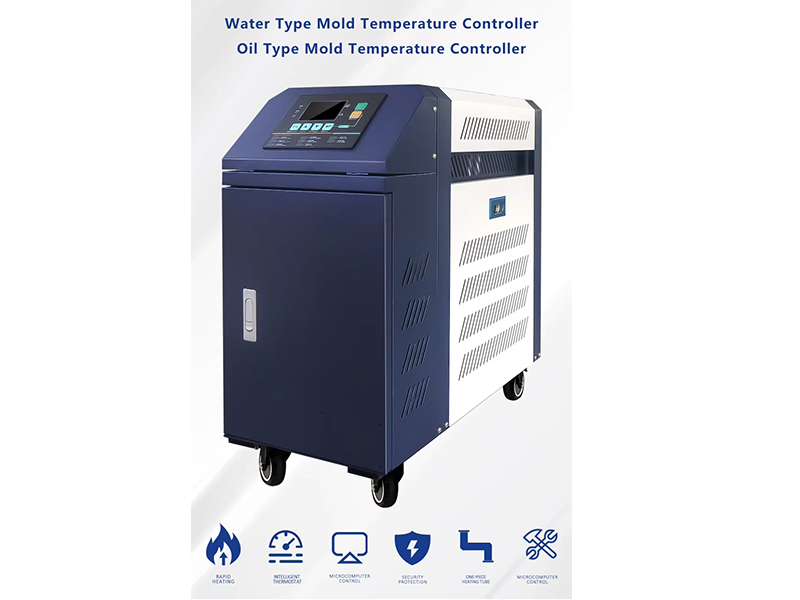
In modern industrial manufacturing, especially in the field of injection molding and die-casting, maintaining the appropriate mold temperature is crucial. This is where mold temperature controllers, also known as Thermostatic Machine, Mold Temperature Stabilizer, and Industrial Mold Temperature Equipment, come into play. A mold temperature controller helps to ensure the consistency and quality of the final products. It precisely regulates the temperature of the mold, preventing issues such as warping, shrinkage, and surface defects. By maintaining a stable temperature, it can also reduce cycle times, increasing production efficiency. These machines are available in various types and configurations to meet different industrial needs. One of the key features of a good mold temperature controller is its accuracy in temperature control. With advanced sensors and control systems, it can maintain the set temperature within a very narrow range. This level of precision is essential for producing high-quality parts with tight tolerances. Another important aspect is its reliability. A reliable mold temperature controller can operate continuously without breakdowns, minimizing production interruptions. In addition to the product's excellent performance, the Zillion brand offers outstanding services. Zillion provides professional technical support and after-sales service. Their team of experts is always ready to assist customers in installation, operation, and maintenance. With Zillion, customers can have peace of mind knowing that they will get comprehensive support throughout the product's lifecycle. Whether it's troubleshooting technical issues or providing regular maintenance advice, Zillion is committed to ensuring the smooth running of their mold temperature controllers and maximizing customer satisfaction.
Read More
In the modern mold manufacturing industry, the mold temperature controller plays a crucial role. It is a device specially used for controlling the temperature of molds, which can ensure that the molds maintain a stable temperature during the production process, thereby improving product quality and production efficiency. The working principle of the mold temperature controller is to transfer heat to the mold through heating or cooling media, so as to achieve precise control of the mold temperature. It can set different temperature ranges according to different production process requirements to meet the production needs of various molds. In the injection molding process, the role of the mold temperature controller is particularly significant. Injection molds need to maintain a certain temperature during the production process to ensure that the plastic melt can smoothly fill the mold cavity and quickly solidify during the cooling process, so as to obtain high-quality plastic products. The mold temperature controller can precisely control the temperature of the mold and avoid product defects such as shrinkage, deformation, and bubbles caused by too high or too low temperature. In addition, the mold temperature controller can also improve the service life of the mold. By controlling the mold temperature, the thermal fatigue and wear of the mold at high temperatures can be reduced, and the service life of the mold can be extended. At the same time, the mold temperature controller can also improve production efficiency, reduce production cycles, and reduce production costs. In short, the mold temperature controller is an indispensable key equipment in the modern mold manufacturing industry. It can precisely control the mold temperature, improve product quality and production efficiency, and extend the service life of the mold, bringing huge economic benefits to mold manufacturing enterprises.
Read More

Our company's series of products are well-known in the plastic auxiliary machinery industry for their excellent performance and high cost performance.


 IPv6 network supported


 English
  English
 español
 العربية