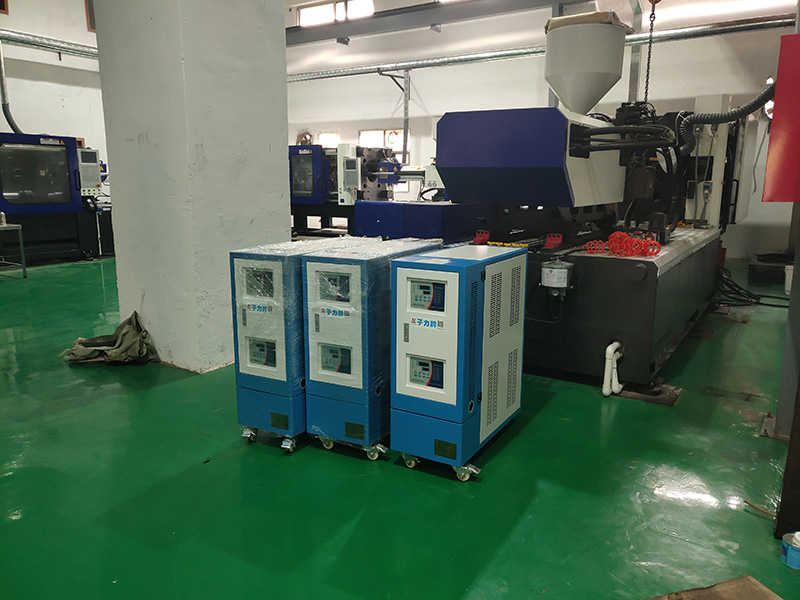
High-precision Temperature Control Rapid Response Energy-saving and Environmentally Friendly Dual-temperature mold temperature controllers, also known as dual-unit integrated mold temperature controllers or dual-circuit mold temperature controllers, are characterized by having two independent temperature control systems inside. This unique design enables them to meet different temperature control requirements simultaneously. For example, in the production processes of magnesium-aluminum alloy die-casting, SMC (Sheet Molding Compound), and BMT (Bulk Molding Compound), they can precisely control the temperatures of the upper and lower molds respectively, effectively suppressing product defects, reducing the generation of defective products, and improving the molding efficiency of products. In terms of working principle, dual-temperature mold temperature controllers mainly operate based on the principles of heat conduction and heat convection. Taking the dual-temperature oil-type mold temperature controller as an example, it heats the heat transfer oil through heating elements such as electric heating tubes to increase its temperature. Then, the hot oil pump forcibly circulates the high-temperature heat transfer oil into the heating channels of the mold. Heat is transferred to the mold through heat conduction and convection to achieve the heating of the mold. When it is necessary to lower the mold temperature, the cooling system is activated, and cooling water or other cooling media conduct heat exchange with the high-temperature heat transfer oil through the heat exchanger to take away the heat of the heat transfer oil, thus reducing the mold temperature. In terms of performance, dual-temperature mold temperature controllers have outstanding performance: High-precision Temperature Control: Adopting intelligent temperature control systems, the temperature control accuracy can be as high as ±0.5 °C or ±1 °C, or even higher, ensuring that the mold maintains a constant temperature during the processing process and greatly improving the processing accuracy and surface quality of the mold. Rapid Response: With advanced heating and cooling systems and optimized temperature control algorithms, dual-temperature mold temperature controllers can reach the set temperature in a short time, quickly adapt to temperature changes during the production process, and ensure the stability and quality of product molding. Stable and Reliable: High-quality mechanical and electrical components are selected. The equipment has a simple structure and is convenient for maintenance. It can maintain stable performance during long-term production, reducing failures and downtime. Energy-saving and Environmentally Friendly: By precisely controlling the mold temperature, it reduces material waste and energy consumption. Meanwhile, it adopts energy-saving designs, such as high-efficiency heating elements and optimized cooling systems, furthe...
Read MoreIntroduction Mold temperature controllers (MTCs) are essential equipment in modern plastic manufacturing. They regulate the temperature of molds during injection molding, extrusion, and other processing techniques, directly impacting product quality, cycle time, and overall production efficiency. Whether you are producing automotive components, electronic housings, or medical devices, precise temperature control is non-negotiable for achieving consistent, high-quality outputs. Why Mold Temperature Matters Plastic materials behave differently at various temperatures. The viscosity of molten polymer changes with temperature, affecting flow characteristics, filling patterns, and the final surface finish of the product. If the mold temperature is too low, the material may solidify prematurely, causing short shots, poor surface quality, and excessive warpage. If the mold temperature is too high, flash, sticking, and degradation of certain polymers can occur. Industrial mold temperature controllers maintain the mold within a narrow, optimal temperature range—typically between 30°C and 300°C—ensuring that the plastic material fills the cavity completely, packs properly, and solidifies evenly. Key Benefits of Mold Temperature Controllers 1. Improved Product Quality Consistent mold temperature eliminates defects such as warpage, sink marks, and surface waviness. For optical components, medical parts, and high-precision engineering plastics, even a 2-3°C deviation can mean the difference between a usable product and a reject. MTCs provide ±1°C precision, ensuring that each cycle produces parts meeting exact specifications. 2. Shorter Cycle Times When mold temperature is optimized, the plastic cools and solidifies more predictably. This allows manufacturers to fine-tune cycle times with confidence. Some operations report cycle time reductions of 15-30% after installing a high-quality MTC system, translating directly into higher throughput without additional equipment investment. 3. Extended Mold Life Thermal shock—the rapid expansion and contraction of mold surfaces—is one of the primary causes of mold wear and cracking. By maintaining steady, controlled temperatures, MTCs reduce thermal stress on mold components, extending service life and reducing maintenance costs. 4. Material Versatility Different polymers require vastly different processing temperatures. Engineering resins like polycarbonate (PC), polyetheretherketone (PEEK), and nylon (PA) have strict temperature windows. A programmable mold temperature controller allows quick temperature adjustments, enabling the same mold to process different materials without mechanical modifications. Water-Cooled vs. Oil-Cooled MTCs Choosing between water-cooled and oil-heated mold temperature controllers depends on your application requirements: Water-Cooled MTCs: Ideal for temperatures up to 90°C. They offer fast heating and cooling rates, are easier to maintain...
Read MoreIn plastic injection molding, temperature is not just about melting the material — it is about controlling the mold. A mold that runs too cold produces parts with poor surface finish, excessive warpage, and incomplete fills. A mold that runs too hot causes sticking, flash, and longer cycle times. The water mold temperature controller (MTC) is the tool that keeps the mold in that precise thermal window where quality and efficiency converge. Section 1: How Water MTCs Work A water MTC heats and/or cools water and circulates it through channels in the mold cavity. The system consists of: Heating element — typically electric, rated in kW Cooling coil or water-cooled heat exchanger — uses facility cooling water to remove heat Circulating pump — moves heated/cooled water through the mold circuit Temperature sensor and controller — PID controller maintains setpoint within plus/minus 0.5–1 deg C Expansion tank — accommodates water thermal expansion The controller continuously compares the actual water temperature at the mold outlet with the setpoint and adjusts heating or cooling output to maintain thermal equilibrium. Section 2: Why Temperature Control Matters for Injection Molding 2.1 Surface Finish and Gloss Mold surface temperature directly affects how the plastic surface fills and solidifies against the cavity wall. Too cold produces poor replication of mold texture, sink marks, and weld lines. Too hot causes surface gloss variation and sticking. For high-gloss parts such as automotive interior panels and consumer electronics housings, a stable mold temperature within plus/minus 1 deg C is typically required. 2.2 Dimensional Accuracy Most engineering plastics shrink as they cool. The rate and uniformity of cooling determines final part dimensions. Non-uniform mold temperatures cause differential shrinkage, warpage, and rejected parts. Water MTCs with fast-response PID control significantly reduce dimensional variation compared to no-temperature control. 2.3 Cycle Time Counterintuitively, a hotter mold does not always mean a longer cycle time. With the right balance, proper temperature control allows lower injection pressure (material flows more easily at optimum temperature), consistent fill times (no need to over-pack to compensate for cold sections), and faster achievement of ejection temperature. For thin-wall parts especially, cycle time reduction of 10–20% is achievable through proper mold temperature management. 2.4 Tool Life Thermal cycling stress — repeated heating and cooling of the mold block — causes micro-cracking and fatigue in the cavity surface over time. Stable, controlled temperatures reduce thermal shock and extend mold life. Section 3: Water MTC vs. Oil MTC Both water and oil MTCs serve the same function but differ in key characteristics. Water MTCs reach maximum temperatures of 98–120 deg C with fast heating speed and excellent cooling efficiency (water has high hea...
Read MoreWhy Mold Temperature Control Matters In plastic injection molding, mold temperature is one of the most critical process variables. The mold temperature directly affects surface finish, dimensional accuracy, warpage, and cycle time. Even a small deviation from the optimal mold temperature can lead to defects such as sink marks, short shots, flash, and poor surface gloss. A Mold Temperature Controller (MTC), also known as a mold heater or tempering unit, precisely regulates the mold surface temperature by circulating hot oil or water through channels built into the mold tooling. Key Benefits of Mold Temperature Controllers Reduced Defects: Consistent mold temperature eliminates sink marks, warpage, and surface blemishes caused by uneven cooling. Improved Surface Finish: Higher mold temperatures produce smoother, glossier surfaces — especially important for cosmetic parts and visible components. Reduced Cycle Time: By maintaining optimal temperature, MTCs allow faster injection cycles without compromising part quality. Extended Mold Life: Thermal stress on mold tooling is minimized, reducing wear and maintenance costs. Water vs. Oil Mold Temperature Controllers Water MTCs operate up to approximately 95–130°C. They heat quickly, are easy to maintain, and are suitable for most standard molding applications. Water units are the preferred choice for molds requiring moderate temperatures. Oil MTCs can reach temperatures of 200°C or higher, making them ideal for engineering plastics, thick-walled parts, and high-precision components that require elevated mold temperatures to achieve proper flow and crystallinity. Choosing the Right MTC When selecting a mold temperature controller, consider heating capacity (kW), temperature range, pump flow rate, and pressure. Match the MTC heating capacity to the mold size and thermal load. For high-precision tooling, choose a unit with PID temperature control for ±1°C accuracy. Zillion MTC series offers both water and oil heated units with digital PID control, compact design, and reliable performance for plastic injection molding, blow molding, and rubber processing applications.
Read MoreMold Temperature Controllers: How They Improve Product Quality in Manufacturing Mold temperature control is one of the most overlooked yet critical factors in plastic manufacturing. Whether you are running injection molding, extrusion, or blow molding operations, maintaining precise mold temperatures directly impacts product quality, cycle time, and overall production efficiency. Why Mold Temperature Matters The mold surface temperature affects viscosity, flowability, and surface finish of the plastic material. Too cold: the material hardens prematurely, causing short shots, warpage, and poor surface finish. Too hot: flash, sticking, and extended cycle times occur. Water vs. Oil Temperature Controllers Water MTCs are ideal for applications requiring temperatures up to 95C. They heat quickly, are easy to maintain, and offer precise temperature control for general-purpose molding. Oil MTCs reach temperatures up to 200C or higher, making them essential for high-temperature engineering plastics like PEEK, PPS, and LCP. Key Benefits of Precision Temperature Control 1. Consistent product dimensions and weights 2. Reduced warpage and sink marks 3. Shorter cycle times through optimized cooling 4. Better surface finish and part aesthetics 5. Lower scrap rates and rework costs Choosing the Right MTC Select a temperature controller with heating capacity 20-30% higher than your process requirements. Look for PID controllers with plus/minus 0.5C accuracy or better. Zillion MTC Solutions Zillion offers a complete range of water and oil mold temperature controllers designed for reliability and precision. Our MTCs feature advanced PID control, RS485 communication, and robust construction for demanding manufacturing environments.
Read MoreMold Temperature Controllers: How They Improve Product Quality in Manufacturing Mold temperature control is one of the most overlooked yet critical factors in plastic manufacturing. Whether you are running injection molding, extrusion, or blow molding operations, maintaining precise mold temperatures directly impacts product quality, cycle time, and overall production efficiency. Why Mold Temperature Matters The mold surface temperature affects viscosity, flowability, and surface finish of the plastic material. Too cold: the material hardens prematurely, causing short shots, warpage, and poor surface finish. Too hot: flash, sticking, and extended cycle times occur. Water vs. Oil Temperature Controllers Water MTCs are ideal for applications requiring temperatures up to 95°C. They heat quickly, are easy to maintain, and offer precise temperature control for general-purpose molding. Oil MTCs reach temperatures up to 200°C or higher, making them essential for high-temperature engineering plastics like PEEK, PPS, and LCP. Key Benefits of Precision Temperature Control 1. Consistent product dimensions and weights 2. Reduced warpage and sink marks 3. Shorter cycle times through optimized cooling 4. Better surface finish and part aesthetics 5. Lower scrap rates and rework costs Choosing the Right MTC Select a temperature controller with heating capacity 20-30% higher than your process requirements. Look for PID controllers with ±0.5°C accuracy or better. Consider flow rate and pressure capabilities relative to your mold design. Zillion MTC Solutions Zillion offers a complete range of water and oil mold temperature controllers designed for reliability and precision. Our MTCs feature advanced PID control, RS485 communication, and robust construction for demanding manufacturing environments.
Read More

Our company's series of products are well-known in the plastic auxiliary machinery industry for their excellent performance and high cost performance.


 IPv6 network supported


 English
  English
 español
 العربية