When plastic processing plants run around the clock, the difference between a profitable shift and a costly breakdown comes down to one piece of equipment: the crusher. Standard industrial plastic crushers are designed for typical workloads. Heavy duty industrial plastic crushers are built for operations that cannot afford downtime — facilities running double or triple shifts, processing hard materials, and feeding continuous production lines. What Makes a Crusher "Heavy Duty"? A heavy duty industrial plastic crusher is defined not just by its motor size, but by its entire mechanical architecture — the housing, blade shaft, bearing assemblies, feeding system, and control panel are all engineered to tolerate sustained stress without performance degradation. Key differentiators: welded steel housing (not bolt-together panels), oversized blade shafts and bearings to handle continuous radial and axial stress, hydraulic or pneumatic feeding systems, hardened blade retention systems that prevent blade slippage under load, and variable frequency drive (VFD) motors for controlled startup and speed adjustment. Motor Power: Matching kW to Your Throughput Target Heavy duty plastic crushers typically range from 15 kW to 55 kW. 15-22 kW: 600-900 kg/h for processing purgings, small-diameter pipes, and moderate volumes of pre-sorted material. 30-37 kW: 800-1,500 kg/h — the sweet spot for most heavy industrial applications including thick-walled containers, large HDPE/PP parts, and continuous production scrap. 45-55 kW: 1,500-2,500+ kg/h for the heaviest applications — large containers, automotive plastic components, and bulk post-industrial scrap. Underpowering a heavy duty application is the most common and costly mistake. A machine running at its thermal limit 24/7 will fail prematurely. Blade Systems for Demanding Applications Heavy duty machines use 21 to 42 rotary blades and 4 to 8 fixed blades. SKD-11 is the standard for heavy duty applications — it holds a cutting edge through continuous operation without the rapid wear you would see with standard tool steel. The additional cost is justified by 2-3x longer blade life in heavy use. 24/7 Operation: What Actually Changes Running a crusher 24/7 introduces thermal cycling, bearing fatigue, and blade wear patterns that do not appear in intermittent operations. Look for machines with oil cooling or forced-air cooling systems on the motor and blade shaft bearings. With SKD-11 blades, expect 4-6 months of blade life in continuous operation vs 2-3 months for standard tool steel. Applications Suited to Heavy Duty Crushers: Post-industrial plastic scrap from injection molding (continuous runner systems), large HDPE/PP containers and drums (20L to 200L), thick-walled PVC pipes and fittings, automotive interior and exterior plastic components, and agricultural film and piping. Key Takeaways: Heavy duty means the entire machine architecture, not just a bigger motor. 30-37 kW is the sweet s...
Read MoreThe global PET plastic recycling market is booming. Every ton of PET bottles recycled saves approximately 1.5 tons of CO2 and $1,000 in raw material costs. Yet many recycling businesses struggle to move beyond manual sorting because they lack the right equipment. If you are running a recycling operation, you need a machine that can process thousands of bottles per hour, produce clean granules, and survive 24/7 operations. That is exactly what a quality PET bottle crusher delivers. What Is a PET Bottle Crusher? A PET bottle crusher is a heavy-duty industrial machine designed to shred post-consumer PET (polyethylene terephthalate) bottles into small flakes or granules for recycling. These flakes become raw input for new plastic products — fiber for clothing, new bottle preforms, strapping bands, and more. Key applications: recycling facilities processing municipal plastic waste, bottle collection centers, in-plant recycling for manufacturing operations using PET packaging, and PET thermoforming companies recycling production scrap. How Does a PET Bottle Crusher Work? 1. Feeding: Bottles are fed manually or via conveyor into the crushing chamber. A hopper with proper throat width prevents bridging and ensures smooth material flow. 2. Shredding: Rotating blades shear the bottles against stationary blades. For PET, 9 to 42 blades are used depending on throughput targets. 3. Screening: A screen at the chamber base controls the final flake size (typically 10-25mm). 4. Collection: Processed flakes are collected via a discharge outlet, ready for washing, drying, and pelletizing. Key Specifications to Evaluate Crushing Capacity: Measured in kg/h (kilograms per hour), this determines how fast you can process material. For a mid-sized recycling operation, look for machines in the 400-800 kg/h range at minimum. Larger operations should target 1,000-2,000 kg/h. Motor Power: PET bottles require significant cutting force. For efficient crushing, look for motors of 7.5 kW to 30 kW depending on capacity. Underpowered machines jam easily and wear out blades rapidly. Blade Material: T8 Tool Steel provides good balance of hardness and toughness for general PET recycling. SKD-11 offers superior wear resistance for mixed loads and high-volume continuous operations. ROI: Calculating Your Payback Period Assume: You process 500 kg of PET bottles per day, 25 days per month = 12,500 kg/month input. Without a crusher: sell baled whole bottles at ~$0.30/kg. With a crusher: produce clean flakes at ~$0.60/kg. Net benefit after processing costs: ~$3,670/month. Machine investment: $1,320-$3,800. Payback period: 1-2 months. How to Choose the Right PET Bottle Crusher 1. What is your daily processing volume? Match capacity to your actual throughput, not theoretical maximum. 2. Are your bottles pre-sorted and clean, or mixed? Mixed loads demand SKD-11 blades. 3. What flake size do your buyers require? Confirm before selecting screen size. 4. What are your operational hours? Con...
Read More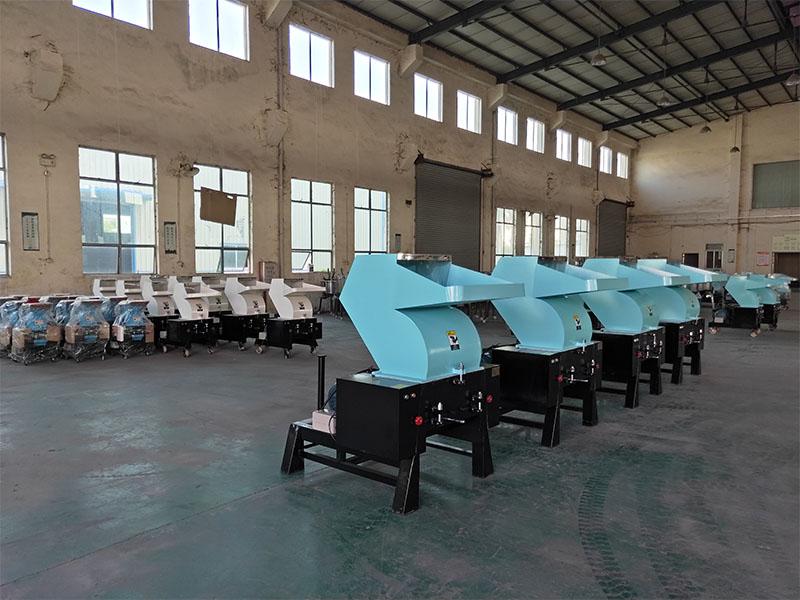
In today's era that emphasizes environmental protection and resource recycling, plastic crushers play a crucial role. It is a device specially used to crush waste plastic products into small particles and is widely used in the plastic recycling and processing industries. Plastic crushers are widely used in the field of plastic recycling. With the extensive use of plastic products, the amount of waste plastics is also continuously increasing. If these waste plastics are not properly treated, they will cause serious pollution to the environment. Plastic crushers can crush waste plastic products into uniform small particles. These small particles can be used as raw materials again for the production of plastic products, realizing the recycling of resources. In the plastic processing industry, plastic crushers are also indispensable. In the production process of plastic products, there are often some scraps and defective products. If these wastes are directly discarded, it will not only cause waste of resources but also increase production costs. And plastic crushers can crush these wastes and re-add them to the production process, improving the utilization rate of raw materials and reducing production costs. In addition, plastic crushers also have the advantages of simple operation, high efficiency, and low noise. It can adjust the size of crushed particles according to different needs to meet different production requirements. At the same time, the plastic crusher has a compact structure and a small footprint, which is convenient for installation and movement. In short, as an important equipment for plastic recycling and processing, plastic crushers have made important contributions to environmental protection and resource recycling.
Read MoreWhat Is a Plastic Crusher? A plastic crusher (also called a plastic granulator) shreds and crushes plastic waste — rejected parts, sprues, runners, and start-up scrap — into reusable granules. These granules are fed back into the injection molding hopper, closing the material loop and significantly reducing raw material costs. Why Every Injection Molding Shop Needs a Crusher 1. Cut Raw Material Costs by 10–30% Reground plastic from a crusher replaces a portion of virgin resin. In high-volume production runs, this can save thousands of dollars per month. Even for small shops, the savings compound quickly over time. 2. Reduce Waste Disposal Costs Plastic waste disposal fees can be substantial. By crushing and recycling scrap on-site, you minimize the volume of waste that goes to landfill or requires paid collection. 3. Improve Production Efficiency A reliable crusher near the injection machine allows operators to re-feed regrind immediately, keeping the production line running without waiting for new material. This reduces cycle time disruptions and smooths workflow. 4. Support Environmental Compliance Recycling plastic waste on-site aligns with global sustainability goals and demonstrates environmental responsibility — a growing consideration for buyers in Europe, North America, and other regulated markets. Types of Plastic Crushers Low Speed Crushers: Slower rotation, lower noise, less dust. Ideal for hard materials like ABS, PC, and acrylic. Suitable for thick-walled parts. Powerful (High Speed) Crushers: Higher throughput, faster processing. Best for soft plastics like PE, PP, and PS. Good for thin-walled or large-volume scrap. Key Buying Criteria Throughput capacity: Match to your daily scrap volume Hopper size and feed opening: Larger hoppers reduce pre-cutting labor Blade material and replaceability: Hardened steel blades last longer; look for easily replaceable wear parts Motor power: Heavier crushing duties need stronger motors (7.5HP+ for industrial-scale) Noise level: Below 85dB preferred for operator comfort Maintenance Tips for Longevity Clean blades regularly to prevent material buildup Lubricate bearings monthly per manufacturer schedule Inspect blades for dullness — replace promptly to avoid uneven cuts and motor strain Check electrical connections and motor insulation periodically ZillionChiller — Your Plastic Auxiliary Equipment Partner Beyond crushers, ZillionChiller supplies a full range of plastic auxiliary equipment including hopper dryers, auto-loaders, mixers, and industrial chillers. Our machines are engineered for durability, energy efficiency, and easy maintenance, serving manufacturers in Southeast Asia, the Middle East, Africa, and beyond. Interested in our plastic crusher models or need a complete auxiliary system quote? Contact our sales team — we respond within 24 hours.
Read MorePlastic waste is one of the biggest environmental challenges in manufacturing today. Industrial plastic crushers provide an efficient, reliable solution for recycling plastic scrap and turning waste into valuable raw material — directly improving profitability and sustainability for manufacturers. What Does a Plastic Crusher Do? A plastic crusher (also called plastic shredder or granulator) takes large plastic items such as sprues, runners, reject parts, and bulk plastic waste, and reduces them into small, uniform flakes or granules. These flakes can then be washed, sorted, and fed back into the production line as recycled material. Key Applications Plastic Injection Molding Workshops — Recycles sprues, runners, and reject parts on-site, reducing raw material costs significantly. Blow Molding & Extrusion Lines — Processes scrap from production to minimize waste and improve material utilization rates. Plastic Recycling Plants — Acts as the primary size-reduction step in centralized recycling operations, handling large volumes of post-consumer and post-industrial plastic waste. Film & Sheet Manufacturing — Shreds edge trim and off-spec film into reusable regrind for the extrusion process. Pipe & Profile Production — Recovers cut-off pieces and defective products for immediate reuse. Types of Plastic Crushers Heavy-Duty Central Crushers — High throughput machines designed for continuous operation in large recycling facilities. Built with robust steel frames and powerful motors for processing thick, hard plastics. Low-Speed Crushers — Operate at lower RPM to reduce noise, heat, and dust generation. Ideal for crushing softer plastics and films without excessive shredding. Soundproof Crushers — Enclosed design with noise reduction features, suitable for workshop environments where operator comfort matters. Pipe Crushers — Specialized machines designed for crushing plastic pipes, tubes, and profile shapes without clogging or jamming. Why Choose Zillion Plastic Crushers? Zillion offers a comprehensive range of plastic crushing equipment tailored to different production needs. All machines feature: Heavy-duty alloy steel blades for long blade life and consistent cutting performance Overload protection and automatic reverse function to prevent machine damage Modular design for easy blade replacement and maintenance CE certified quality with professional OEM/ODM customization available Conclusion Whether you run a small injection molding workshop or a large-scale plastic recycling operation, investing in the right plastic crusher pays for itself quickly through material cost savings and reduced waste disposal fees. Contact Zillion for product specifications, pricing, and customized solutions for your specific application.
Read More

Our company's series of products are well-known in the plastic auxiliary machinery industry for their excellent performance and high cost performance.


 IPv6 network supported


 English
  English
 español
 العربية