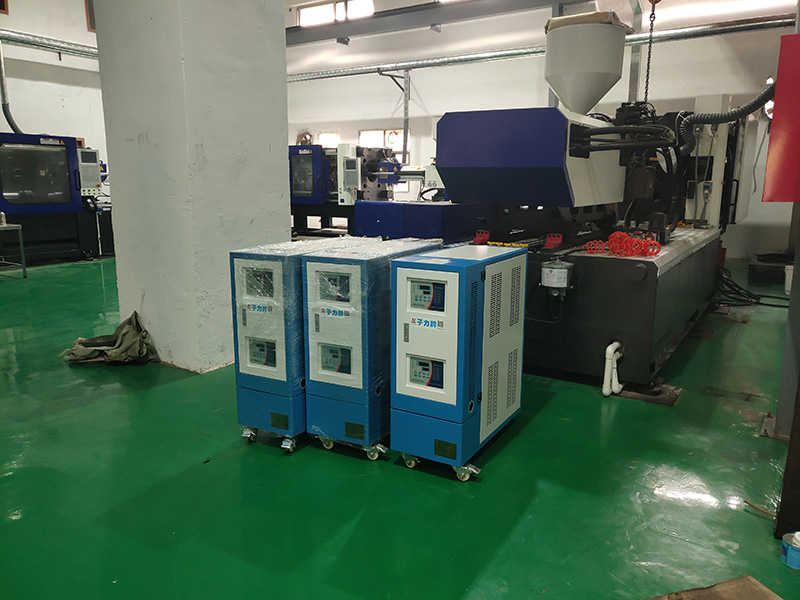
High-precision Temperature Control Rapid Response Energy-saving and Environmentally Friendly Dual-temperature mold temperature controllers, also known as dual-unit integrated mold temperature controllers or dual-circuit mold temperature controllers, are characterized by having two independent temperature control systems inside. This unique design enables them to meet different temperature control requirements simultaneously. For example, in the production processes of magnesium-aluminum alloy die-casting, SMC (Sheet Molding Compound), and BMT (Bulk Molding Compound), they can precisely control the temperatures of the upper and lower molds respectively, effectively suppressing product defects, reducing the generation of defective products, and improving the molding efficiency of products. In terms of working principle, dual-temperature mold temperature controllers mainly operate based on the principles of heat conduction and heat convection. Taking the dual-temperature oil-type mold temperature controller as an example, it heats the heat transfer oil through heating elements such as electric heating tubes to increase its temperature. Then, the hot oil pump forcibly circulates the high-temperature heat transfer oil into the heating channels of the mold. Heat is transferred to the mold through heat conduction and convection to achieve the heating of the mold. When it is necessary to lower the mold temperature, the cooling system is activated, and cooling water or other cooling media conduct heat exchange with the high-temperature heat transfer oil through the heat exchanger to take away the heat of the heat transfer oil, thus reducing the mold temperature. In terms of performance, dual-temperature mold temperature controllers have outstanding performance: High-precision Temperature Control: Adopting intelligent temperature control systems, the temperature control accuracy can be as high as ±0.5 °C or ±1 °C, or even higher, ensuring that the mold maintains a constant temperature during the processing process and greatly improving the processing accuracy and surface quality of the mold. Rapid Response: With advanced heating and cooling systems and optimized temperature control algorithms, dual-temperature mold temperature controllers can reach the set temperature in a short time, quickly adapt to temperature changes during the production process, and ensure the stability and quality of product molding. Stable and Reliable: High-quality mechanical and electrical components are selected. The equipment has a simple structure and is convenient for maintenance. It can maintain stable performance during long-term production, reducing failures and downtime. Energy-saving and Environmentally Friendly: By precisely controlling the mold temperature, it reduces material waste and energy consumption. Meanwhile, it adopts energy-saving designs, such as high-efficiency heating elements and optimized cooling systems, furthe...
Read MoreIntroduction An air-cooled chiller is a refrigeration device that removes heat from process equipment using ambient air as the cooling medium. How Air Cooled Chillers Work Air-cooled chillers use fans to force ambient air across condenser coils containing refrigerant. The heat from the refrigerant is rejected to the air stream. Key Components The main components include the compressor, condenser coils with fans, evaporator, and expansion valve. Selecting the Right Size Chiller sizing depends on heat load, desired coolant temperature, and ambient conditions. Always consult with a specialist. Applications Air-cooled chillers are widely used in plastics processing, laser cutting, medical设备, and food processing.
Read MoreCooling Towers vs Air Cooled Chillers This is a comprehensive comparison guide.
Read More

Our company's series of products are well-known in the plastic auxiliary machinery industry for their excellent performance and high cost performance.


 IPv6 network supported


 English
  English
 español
 العربية