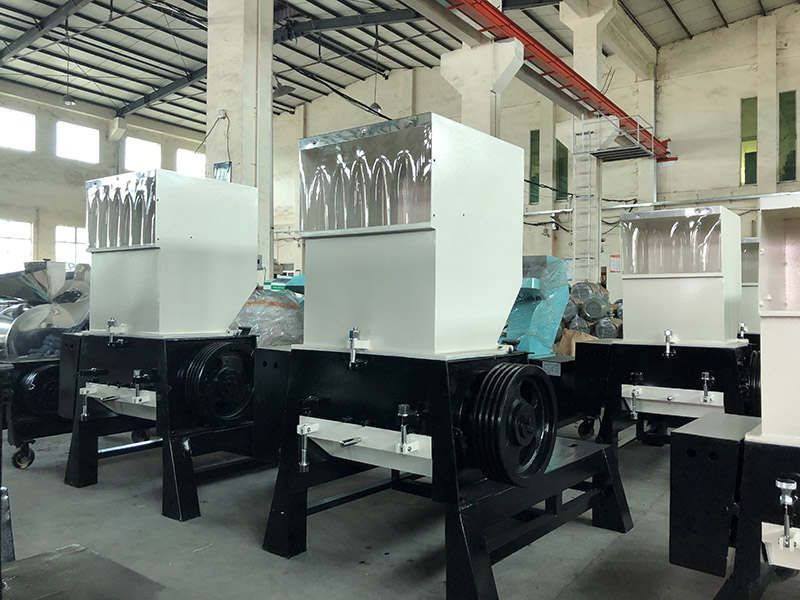
In the plastic recycling and processing industry, the efficiency of plastic crushers directly affects the overall production progress. A plastic processing enterprise in [Area] was troubled by the feeding problem of its plastic crusher, which seriously restricted the production efficiency. After in - depth communication and on - site investigation, we designed a straight tube feeding port for its plastic crusher, which effectively solved the feeding dilemma. The Feeding Problem of the Original Plastic Crusher The original feeding port of the enterprise's plastic crusher was a funnel - shaped structure with a relatively small upper opening and a curved transition to the crushing chamber. During the actual production process, this structure brought a series of problems. First of all, when feeding larger plastic pieces or bulk plastic materials, they were often stuck at the curved transition part of the funnel - shaped feeding port. The workers had to use tools to push the materials into the crushing chamber, which not only wasted a lot of time and energy but also increased the risk of workplace accidents. Secondly, the feeding speed was seriously affected. Due to the easy blockage of the feeding port, the materials could not enter the crushing chamber continuously and smoothly. The crusher often operated under the condition of insufficient material supply, which reduced the crushing efficiency and could not give full play to the equipment's performance. In addition, the funnel - shaped feeding port was not easy to clean. After a long period of use, plastic residues would accumulate at the curved part, which not only affected the hygiene of the production process but also might cause cross - contamination between different types of plastics, affecting the quality of the crushed products. Design Ideas of Straight Tube Feeding Port In view of the problems existing in the original feeding port, we put forward the design scheme of the straight tube feeding port. The core idea is to ensure that the plastic materials can enter the crushing chamber smoothly and quickly through a straight and unobstructed channel. First, determine the diameter of the straight tube. According to the size of the plastic materials commonly processed by the enterprise and the feeding capacity required by the production, we calculated and determined the appropriate diameter of the straight tube. The diameter is slightly larger than the maximum size of the commonly used plastic materials to avoid the problem of material jamming caused by insufficient space. Second, design the length of the straight tube. The length of the straight tube is determined according to the height of the crusher and the feeding habits of the workers. It should be convenient for workers to transport materials to the feeding port and ensure that the materials can fall into the crushing chamber by their own gravity without additional pushing. Third, optimize the connection between the straigh...
Read More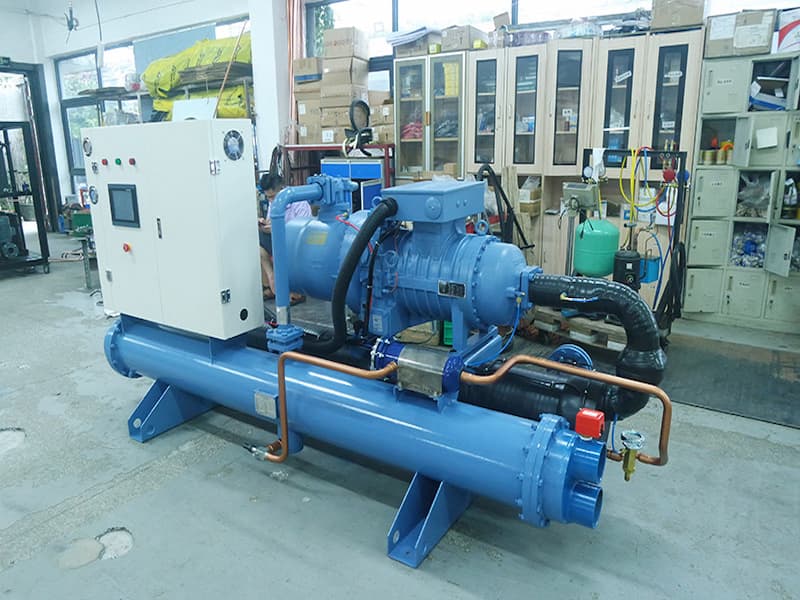
Introduction In an era where industrial efficiency and sustainability are paramount, maintaining precise temperature control is non-negotiable for processes ranging from manufacturing to data management. Traditional cooling systems often fall short in delivering consistent performance, energy savings, and adaptability—challenges that screw chillers have uniquely addressed. As the backbone of modern industrial cooling, screw chillers combine robust engineering, energy-efficient design, and versatile functionality to meet the evolving needs of diverse industries. This article explores why these systems have emerged as the ultimate solution for businesses seeking reliable, high-performance cooling. How Screw Chillers Work: The Mechanics of Efficient Cooling At the core of a screw chiller lies its namesake component: the twin-screw compressor, a marvel of mechanical engineering designed for seamless refrigerant compression. The system operates through four key stages in the vapor-compression refrigeration cycle: Compression:The twin-screw compressor—featuring interlocking male (convex) and female (concave) rotors—draws in low-pressure refrigerant vapor. As the rotors rotate, they reduce the volume of the vapor, increasing its pressure and temperature before discharging it to the condenser. Condensation:The high-pressure vapor enters the condenser, where it releases heat to a cooling medium (water or air), transforming into a liquid. This stage rejects excess heat generated by industrial processes, ensuring ambient temperatures remain stable. Expansion:A thermal expansion valve or capillary tube reduces the pressure of the liquid refrigerant, causing it to vaporize at a lower temperature as it enters the evaporator. Evaporation:In the evaporator, the low-pressure refrigerant absorbs heat from the target environment (e.g., chilled water or air), converting back to vapor. This cooled medium is then circulated to maintain the desired temperature in the facility, completing the cycle. Key components like variable frequency drives (VFDs) and intelligent control systems optimize this process, adjusting output in real time to match fluctuating cooling demands. Unmatched Advantages of Screw Chillers 1. Exceptional Energy Efficiency Screw chillers lead the industry in energy savings, particularly under partial loads—a common scenario in most industrial settings. Their variable capacity control (via slide valves or VFDs) allows output to scale from 10% to 100% of rated capacity, minimizing energy waste. Modern models achieve integrated part-load values (IPLV) as high as 12.0, significantly outperforming reciprocating or centrifugal chillers. This efficiency not only lowers operational costs but also aligns with global sustainability goals, reducing carbon footprints. 2. Robust Reliability and Longevity With fewer moving parts than reciprocating compressors (no pistons, valves, or crankshafts), screw chillers experience minim...
Read More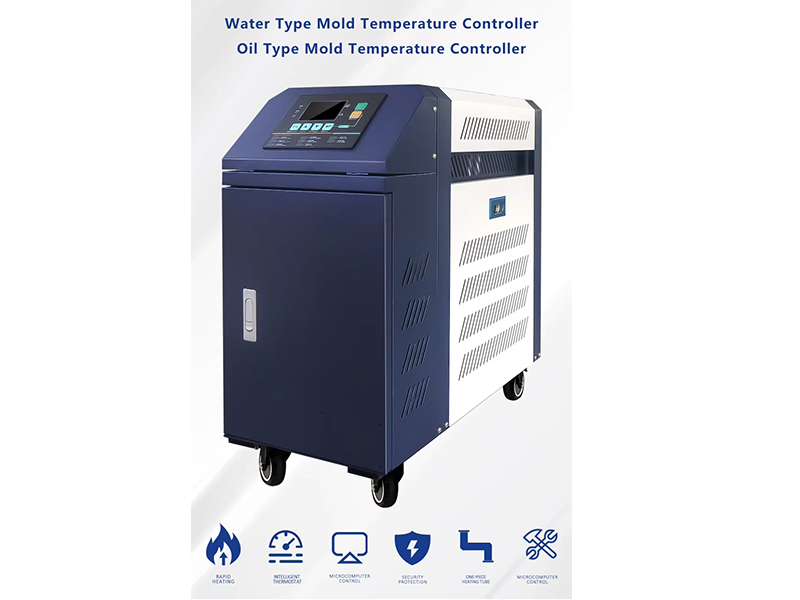
In modern industrial manufacturing, especially in the field of injection molding and die-casting, maintaining the appropriate mold temperature is crucial. This is where mold temperature controllers, also known as Thermostatic Machine, Mold Temperature Stabilizer, and Industrial Mold Temperature Equipment, come into play. A mold temperature controller helps to ensure the consistency and quality of the final products. It precisely regulates the temperature of the mold, preventing issues such as warping, shrinkage, and surface defects. By maintaining a stable temperature, it can also reduce cycle times, increasing production efficiency. These machines are available in various types and configurations to meet different industrial needs. One of the key features of a good mold temperature controller is its accuracy in temperature control. With advanced sensors and control systems, it can maintain the set temperature within a very narrow range. This level of precision is essential for producing high-quality parts with tight tolerances. Another important aspect is its reliability. A reliable mold temperature controller can operate continuously without breakdowns, minimizing production interruptions. In addition to the product's excellent performance, the Zillion brand offers outstanding services. Zillion provides professional technical support and after-sales service. Their team of experts is always ready to assist customers in installation, operation, and maintenance. With Zillion, customers can have peace of mind knowing that they will get comprehensive support throughout the product's lifecycle. Whether it's troubleshooting technical issues or providing regular maintenance advice, Zillion is committed to ensuring the smooth running of their mold temperature controllers and maximizing customer satisfaction.
Read More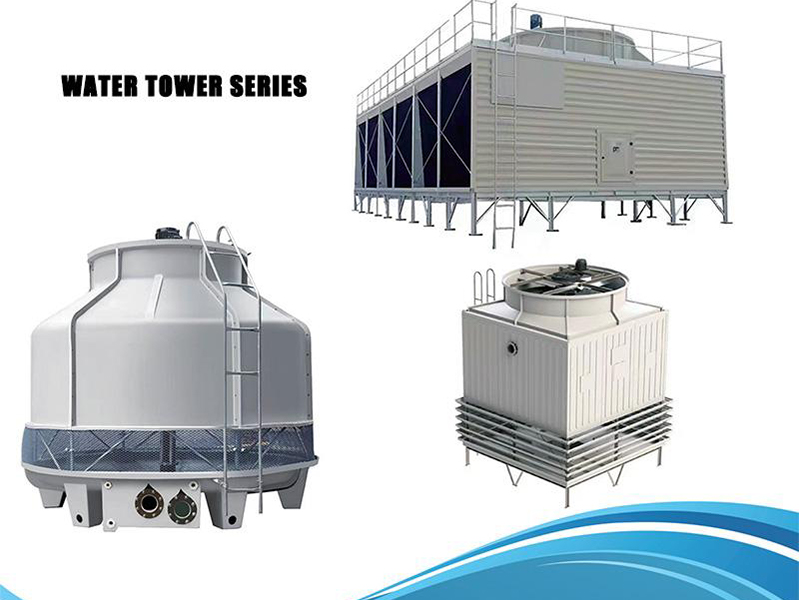
In industrial production, the cooling tower is a crucial equipment that provides efficient cooling solutions for many industries. The main function of the cooling tower is to exchange heat between hot water and air to cool the hot water and then recycle it. This cooling method not only saves water resources but also reduces energy consumption. In the power industry, cooling towers are widely used in the cooling systems of power plants. Generating sets will generate a large amount of heat during operation, and the circulating water needs to be cooled by the cooling tower to ensure the normal operation of the generating sets. The efficient cooling performance of the cooling tower can effectively reduce the temperature of the generating set, improve power generation efficiency, and prolong the service life of the equipment. The chemical industry is also one of the important application fields of cooling towers. In the chemical production process, many chemical reactions will generate a large amount of heat and need to be cooled in time. The cooling tower can quickly cool the hot water in the reaction kettle to ensure the smooth progress of the chemical reaction and improve product quality. In addition, cooling towers are also widely used in industries such as steel, metallurgy, pharmaceuticals, and food. In these industries, the cooling tower can not only provide cooling for production equipment but also provide a cold source for air conditioning systems and create a comfortable working environment for employees. There are many types of cooling towers. According to different application scenarios and needs, different types of cooling towers can be selected. For example, counterflow cooling towers, crossflow cooling towers, closed cooling towers, etc. Each type of cooling tower has its unique advantages and application scopes. In short, as an efficient cooling equipment, the cooling tower plays an important role in industrial production. It can not only save resources and reduce costs but also improve production efficiency and product quality, providing strong support for the sustainable development of enterprises.
Read More
In the modern mold manufacturing industry, the mold temperature controller plays a crucial role. It is a device specially used for controlling the temperature of molds, which can ensure that the molds maintain a stable temperature during the production process, thereby improving product quality and production efficiency. The working principle of the mold temperature controller is to transfer heat to the mold through heating or cooling media, so as to achieve precise control of the mold temperature. It can set different temperature ranges according to different production process requirements to meet the production needs of various molds. In the injection molding process, the role of the mold temperature controller is particularly significant. Injection molds need to maintain a certain temperature during the production process to ensure that the plastic melt can smoothly fill the mold cavity and quickly solidify during the cooling process, so as to obtain high-quality plastic products. The mold temperature controller can precisely control the temperature of the mold and avoid product defects such as shrinkage, deformation, and bubbles caused by too high or too low temperature. In addition, the mold temperature controller can also improve the service life of the mold. By controlling the mold temperature, the thermal fatigue and wear of the mold at high temperatures can be reduced, and the service life of the mold can be extended. At the same time, the mold temperature controller can also improve production efficiency, reduce production cycles, and reduce production costs. In short, the mold temperature controller is an indispensable key equipment in the modern mold manufacturing industry. It can precisely control the mold temperature, improve product quality and production efficiency, and extend the service life of the mold, bringing huge economic benefits to mold manufacturing enterprises.
Read More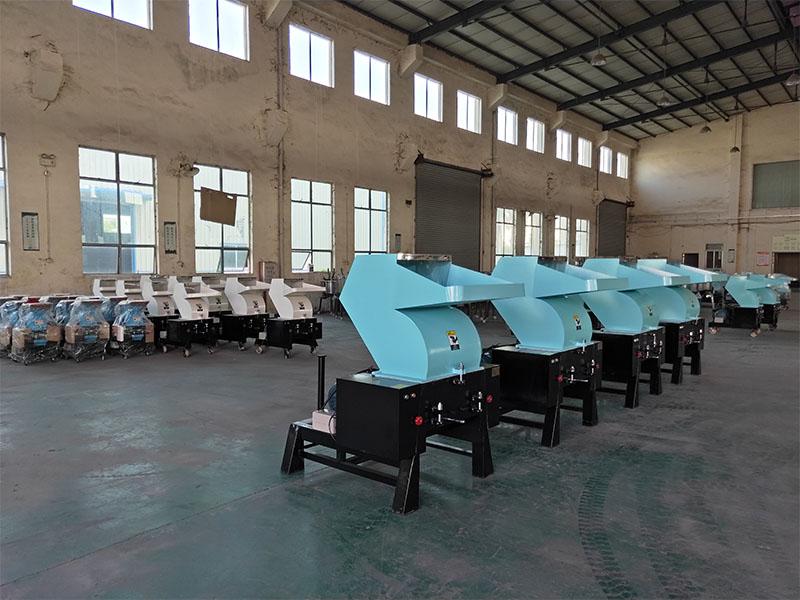
In today's era that emphasizes environmental protection and resource recycling, plastic crushers play a crucial role. It is a device specially used to crush waste plastic products into small particles and is widely used in the plastic recycling and processing industries. Plastic crushers are widely used in the field of plastic recycling. With the extensive use of plastic products, the amount of waste plastics is also continuously increasing. If these waste plastics are not properly treated, they will cause serious pollution to the environment. Plastic crushers can crush waste plastic products into uniform small particles. These small particles can be used as raw materials again for the production of plastic products, realizing the recycling of resources. In the plastic processing industry, plastic crushers are also indispensable. In the production process of plastic products, there are often some scraps and defective products. If these wastes are directly discarded, it will not only cause waste of resources but also increase production costs. And plastic crushers can crush these wastes and re-add them to the production process, improving the utilization rate of raw materials and reducing production costs. In addition, plastic crushers also have the advantages of simple operation, high efficiency, and low noise. It can adjust the size of crushed particles according to different needs to meet different production requirements. At the same time, the plastic crusher has a compact structure and a small footprint, which is convenient for installation and movement. In short, as an important equipment for plastic recycling and processing, plastic crushers have made important contributions to environmental protection and resource recycling.
Read More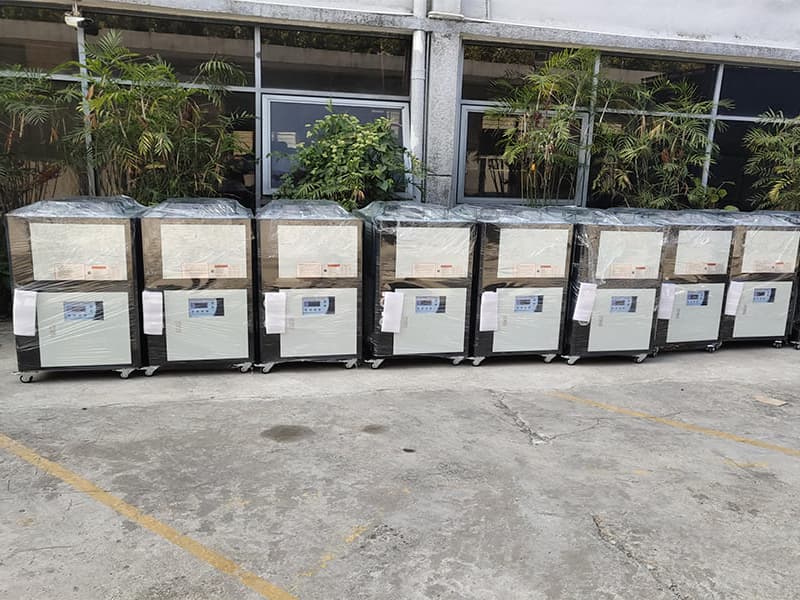
In modern industrial and commercial fields, air-cooled chillers have become an ideal cooling equipment in many application scenarios due to their unique advantages. Air-cooled chillers do not need cooling towers and are easy to install, suitable for various environments with limited space. For places without sufficient water sources or where it is inconvenient to install water towers, air-cooled chillers are undoubtedly the best choice. In industrial production, air-cooled chillers are widely used in industries such as plastic processing, chemical industry, and electronics. In the plastic processing process, it can quickly cool injection molds to ensure the dimensional accuracy and surface quality of plastic products. In the chemical industry, air-cooled chillers can provide a stable low-temperature environment for chemical reactions to ensure the smooth progress of reactions and product quality. The electronics industry has extremely high requirements for temperature control. Air-cooled chillers can precisely control the operating temperature of equipment to prevent electronic components from being damaged due to overheating. In the commercial field, air-cooled chillers are often used in central air conditioning systems. It can provide comfortable indoor temperatures for large shopping malls, office buildings, hotels and other places. At the same time, air-cooled chillers operate stably and have low noise, and will not cause excessive interference to the surrounding environment. In addition, air-cooled chillers also have the characteristics of energy saving and high efficiency. Its advanced compressor and optimized system design can reduce energy consumption while ensuring the cooling effect, saving operating costs for users. In short, air-cooled chillers have become an indispensable cooling equipment in modern industrial and commercial fields with their advantages of easy installation, wide application range, energy saving and high efficiency.
Read More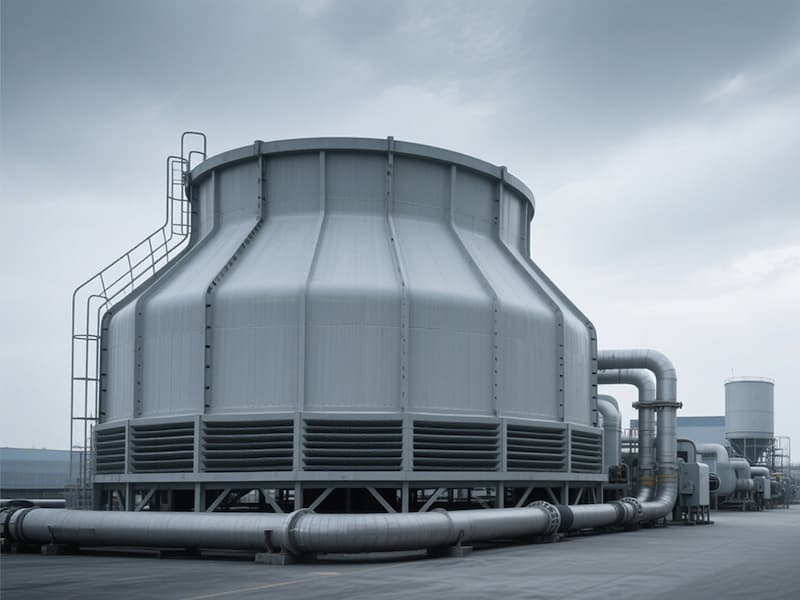
In an era of increasing environmental awareness and the need for sustainable industrial practices, the cooling tower industry is witnessing a surge in innovative solutions that combine efficiency, reliability, and eco-friendliness. These advancements are helping industrial facilities reduce their carbon footprint, lower operating costs, and meet strict environmental regulations. New Materials for Enhanced Performance One of the key areas of innovation is the use of advanced materials in cooling tower construction. Composite materials, such as fiberglass-reinforced plastic (FRP), are becoming increasingly popular due to their high strength, corrosion resistance, and lightweight properties. FRP cooling towers offer longer service life compared to traditional metal structures, reducing the need for frequent replacements and minimizing waste. Another promising material is high-performance plastics for fill media and drift eliminators. These materials are designed to improve heat transfer efficiency while reducing pressure drop, resulting in lower energy consumption. Additionally, they are more resistant to scaling and biological fouling, requiring less chemical treatment and reducing environmental impact. Smart Cooling Tower Technology The integration of smart technology is revolutionizing cooling tower operation and maintenance. Internet of Things (IoT)-enabled sensors can monitor key parameters such as water temperature, flow rate, fan speed, and energy consumption in real-time. This data is analyzed using advanced algorithms to optimize cooling tower performance, predict maintenance needs, and detect potential issues before they escalate. Smart cooling towers can also be integrated with building management systems (BMS) or industrial control systems, allowing for seamless coordination with other equipment and enabling proactive energy management. By adjusting operating parameters based on demand and environmental conditions, these systems can achieve significant energy savings, sometimes up to 20% compared to traditional cooling towers. Water Conservation Innovations Water scarcity is a growing concern in many regions, making water conservation a top priority for industrial facilities. New cooling tower designs incorporate features such as advanced drift eliminators that reduce water loss due to evaporation and wind drift. Some models also include water recycling systems that capture and reuse condensate and blowdown water, minimizing freshwater consumption. In addition, closed-circuit cooling towers are gaining popularity as they prevent water loss through evaporation by using a secondary coolant loop. These systems are particularly suitable for areas with strict water restrictions or where water quality is a concern. The Future of Sustainable Industrial Cooling As the demand for sustainable industrial solutions continues to grow, the cooling tower industry is poised for further innovation. Manufacturers are focusing o...
Read More

Our company's series of products are well-known in the plastic auxiliary machinery industry for their excellent performance and high cost performance.


 IPv6 network supported


 English
  English
 español
 العربية