ZL-PC180 Industrial Plastic Crusher Machine 2.2kW 120-150kg/h | ZILLION
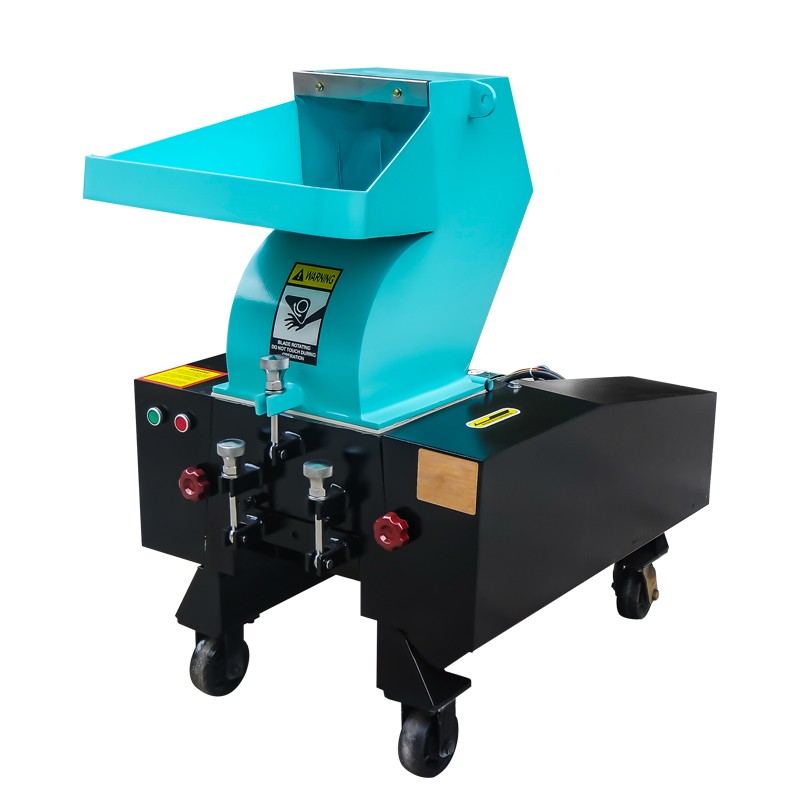
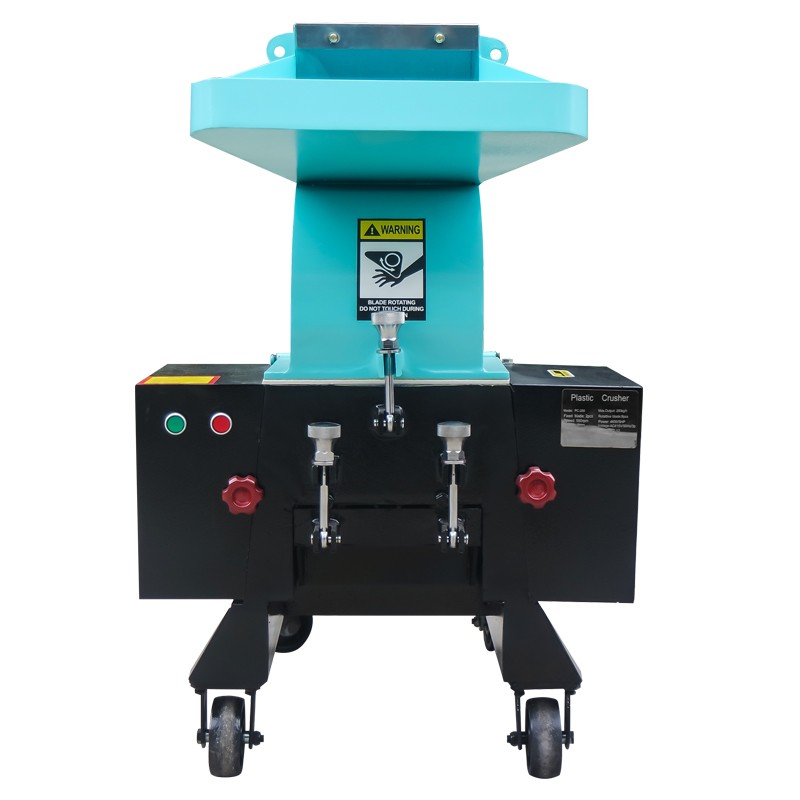
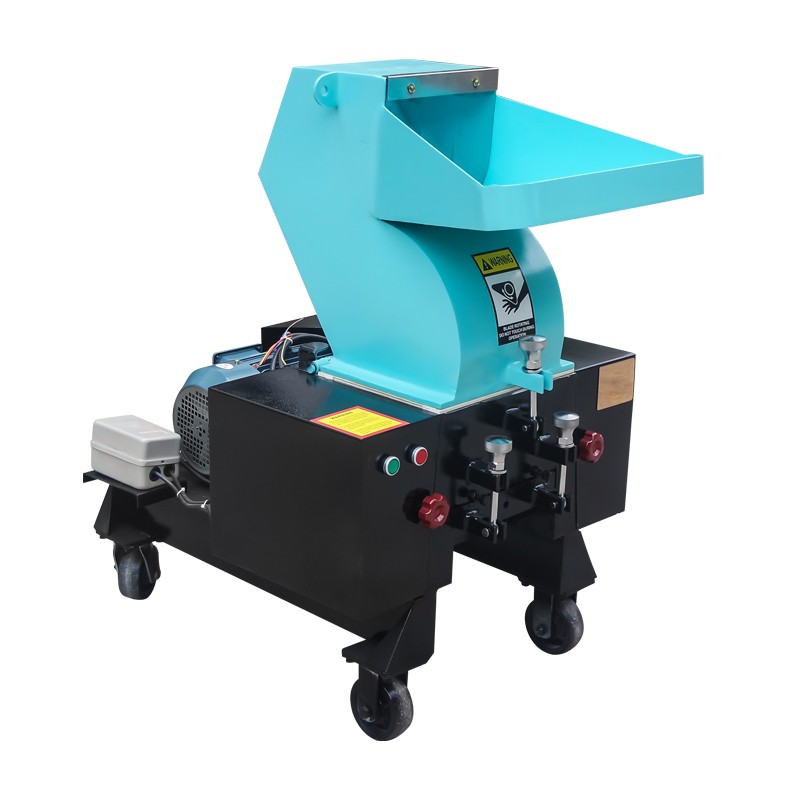
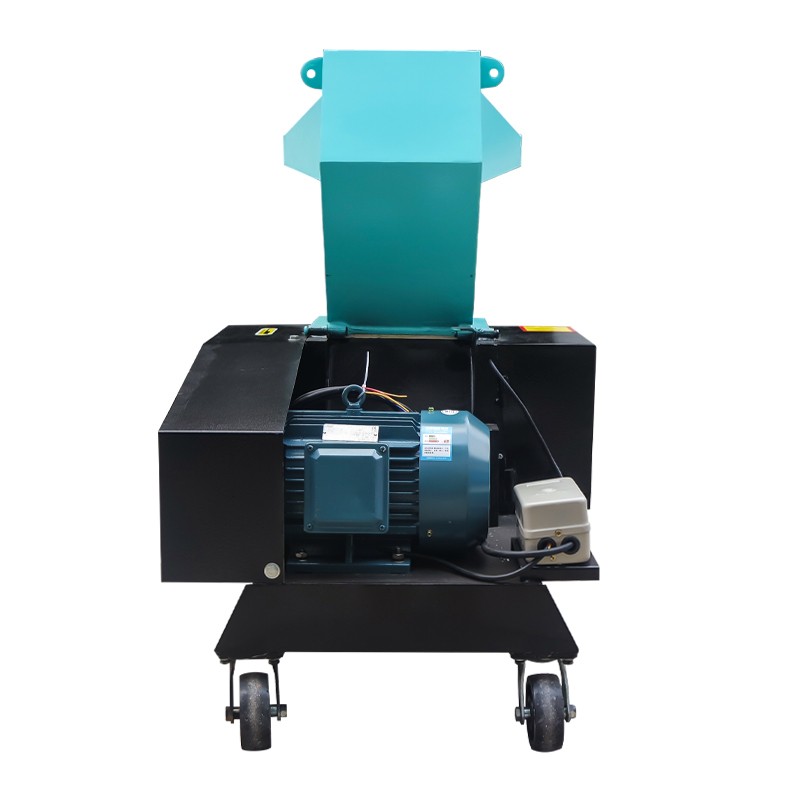
Small workshop operators often need industrial-grade reliability in a compact package. The ZL-PC180 Industrial Plastic Crusher delivers 120-150 kg/h throughput with the SKD-11 blade system and sealed-for-life bearings typically found in larger industrial machines. For small workshop owners who need industrial durability without industrial size or cost.
| Model | ZL-PC180 | Power | 2.2 kW (3 HP) |
| Voltage | 3-Phase 380V / 50Hz (Customizable: 220V/415V) | Motor Speed | 1480 rpm |
| Capacity | 120-150 kg/h | Feed Opening | 260 x 210 mm |
| Rotating Blades | 6 pcs SKD-11 | Fixed Blades | 2 pcs SKD-11 |
| Screen Hole | 5-10 mm (customizable) | Net Weight | 130 kg |
| Machine Size (L x W x H) | 670 x 310 x 700 mm | Crushing Chamber | 280 x 230 mm |
| Material Compatibility | PET, PP, PE, PVC, ABS, PS | Noise Level | max 78 dB |
| Warranty | 1 year (consumables excluded) | Certifications | CE / ISO 9001:2015 |
The ZL-PC180 Industrial Plastic Crusher uses the same SKD-11 blade material as larger ZL-PC machines (PC250 through PC800). SKD-11 is a high-carbon, high-chromium tool steel (similar to AISI D2) with working hardness 58-60 HRC, holding a working edge through 600-800 hours of PET crushing service before re-sharpening. Each blade is reversible, yielding two cutting edges per blade.
For small workshop operators, the SKD-11 blade durability means lower annual maintenance cost than competitor machines with softer blade steel (typically 52-55 HRC). The ZL-PC180 blade replacement schedule: 2 sets per year at USD 80 per set = USD 160 annual cost. Competitor machines with softer blades require 4-6 sets per year = USD 280-420 annual cost. The ZL-PC180 saves USD 120-260 annually on blade replacement alone.
Many small workshop buyers are confused by industrial naming conventions. The ZL-PC180 'Industrial Plastic Crusher' label reflects the build quality (SKD-11 blades, sealed bearings, CE certification), not the throughput class. At 2.2 kW and 120-150 kg/h, the ZL-PC180 is sized for small workshop operations, not industrial-scale production.
For workshop owners evaluating 'industrial' labeled machines at the same 2.2 kW power class, the differentiators are: 1) blade material (SKD-11 vs generic tool steel), 2) bearing quality (sealed-for-life vs greased requiring service), 3) certification (CE/ISO 9001:2015 vs none), 4) build quality (cast iron housing vs sheet metal). The ZL-PC180 meets all 4 industrial criteria despite its small size.
Small workshop buyers frequently have misconceptions about 2.2 kW plastic crushers. Misconception 1: '2.2 kW is too small for industrial use.' Reality: 2.2 kW matches the requirement for 120-150 kg/h throughput on most common plastics; going larger wastes electricity. Misconception 2: 'Cheaper machines are the same.' Reality: USD 300-400 competitor machines use generic blade steel and greased bearings, requiring more maintenance.
Misconception 3: 'All 2.2 kW machines have the same throughput.' Reality: throughput varies by 40-60% across machines depending on rotor geometry, blade count, and screen size. The ZL-PC180's 6-blade rotor with optimized geometry delivers 120-150 kg/h, while competitor machines with similar power deliver only 80-110 kg/h. Misconception 4: 'Higher RPM is better.' Reality: RPM must match material density; the ZL-PC180's 1480 RPM is optimized for PET/PP/PE processing.
The ZL-PC180 Industrial Plastic Crusher uses sealed-for-life bearings in the rotor assembly, eliminating the grease-fitting maintenance that competitor machines require. The bearing service interval under normal operating conditions is 5 years or 8,000 operating hours, whichever comes first. This contrasts with greased bearings that require re-greasing every 200-500 operating hours.
For small workshop owners who operate part-time or seasonally, the sealed-for-life bearings eliminate the maintenance anxiety of competitor machines. A workshop owner who forgets to grease the bearings on a competitor machine risks premature bearing failure (typically 2,000-4,000 hours vs the rated 8,000 hours). The ZL-PC180's sealed bearings are a 'fit and forget' design that matches small operator capability.
For small workshop owners evaluating 5-year total cost: ZL-PC180 purchase USD 630; electricity 2.2 kW x 2,000 hours/year x 5 years x USD 0.10/kWh = USD 2,200; blade replacement 10 sets x USD 80 = USD 800; bearing service USD 0 (sealed bearings); labor USD 30,000 (operator wages); overhead USD 25,000. Total 5-year cost: USD 58,630.
Competitor 2.2 kW machine at USD 400: purchase USD 400; electricity USD 2,200; blade replacement 25 sets x USD 65 = USD 1,625; bearing service 3 events x USD 80 = USD 240; bearing grease 40 events x USD 15 = USD 600; labor USD 30,000; overhead USD 25,000. Total 5-year cost: USD 60,065. The ZL-PC180 saves USD 1,435 over 5 years through lower blade and bearing maintenance despite the higher initial purchase price.
Q: What is the actual difference between ZL-PC180 and ZL-PC250?
The PC180 is 2.2 kW (3 HP) with 6 blades and 120-150 kg/h throughput. The PC250 is 4 kW (5 HP) with 9 blades and 250 kg/h throughput. For workshop operators, the PC180 fits through standard doorways and operates on 3-phase 380V; the PC250 requires 3-phase 380V with higher amperage (16A vs 8A breaker).
Q: Can the machine run continuously for 8 hours?
Yes, with 15-minute rest periods every 2 hours for bearing cooldown. The ZL-PC180 is rated for 80% duty cycle (8 hours operation per 10-hour shift). For 24/7 operation, the PC400 or larger is recommended.
Q: What is the noise level compared to competitor machines?
78 dB at 1 meter distance, comparable to other 2.2 kW machines in the same class. The ZL-PC180 acoustic enclosure (USD 280) reduces noise to 68 dB for installations near offices or residential areas.
Q: How does the SKD-11 blade compare to cheaper blade options?
SKD-11 (58-60 HRC) holds a working edge 2-3 times longer than generic tool steel (52-55 HRC). For a workshop running 8 hours/day, the SKD-11 blade replacement interval is 600-800 hours vs 200-300 hours for generic blades. Lower replacement frequency and longer service life make SKD-11 blades cost-effective despite the higher initial cost.
Q: Is the machine suitable for ABS automotive scrap?
Limited. ABS automotive scrap with glass fiber reinforcement requires more torque than the 2.2 kW motor delivers. For glass-fiber ABS, the PC250 (4 kW) or larger is recommended. Non-reinforced ABS processes at the rated 120-150 kg/h throughput.
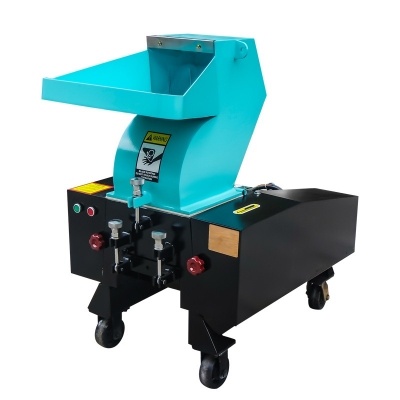
The ZL-PC180 PET Bottle Crusher is purpose-built for small-scale PET recycling operations processing 800-1500 kg/day of post-consumer bottles. Its 2.2kW motor with 9 SKD-11 rotating blades and 6-12mm interchangeable screen delivers 120-150 kg/h of uniformly-sized PET flakes-ready as direct feed for hot wash lines, dewatering, and pelletizing. Ideal PET Recycling Applications PET bottle recycling lines (water, cola, juice, cooking oil containers) HDPE/PP container crushing (milk jugs, detergent bottles, caps) Post-consumer bottle recovery for community collection centers Pre-shredding before hot wash tanks (froth flotation separation) Printing waste and injection molding sprue recovery
The ZL-PC180 Plastic Crusher Machine is manufactured in China by Zillion — a leading plastic crusher supplier with 15+ years of OEM/ODM experience. This 2.2kW industrial model produces 120-150 kg/h and ships directly from our Dongguan factory at competitive wholesale pricing. China Supplier Advantages Factory-direct pricing with no middleman markup OEM/ODM branding and packaging available Multi-voltage: 220V/380V/400V/415V/440V CE certified for global markets
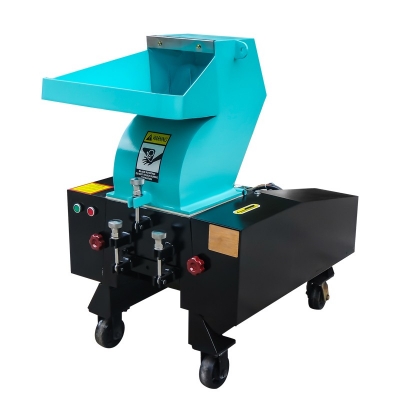
The small plastic crusher is a device specially used for crushing small plastic items. It is small in size and easy to be placed in various places, such as small factories, laboratories, and corners of workshops. The machine is mainly composed of a feeding port, a crushing chamber, cutting tools, a motor and a discharge port. Through the motor driving the cutting tools to rotate at high speed, the plastic put into the feeding port is quickly crushed into small particles. The small plastic crusher is suitable for processing various waste plastic products, such as beverage bottles, plastic films, small plastic parts, etc. It is simple to operate, safe and reliable, and can effectively realize the recycling of plastics, reducing resource waste and environmental pollution.
The 5HP plastic crusher is suitable for crushing various types of soft and hard plastics, including plastic edge materials, recycled materials, semi-finished products, etc. It can crush plastics in the forms of blocks, balls, sheets, strips, bottle shells, basket bags, etc. into granular form for recycling, greatly improving the utilization rate of plastics. This crusher is power-saving and has excellent crushing effect. The base is attached with pulleys for convenient movement, and it has a compact size without taking up too much space.
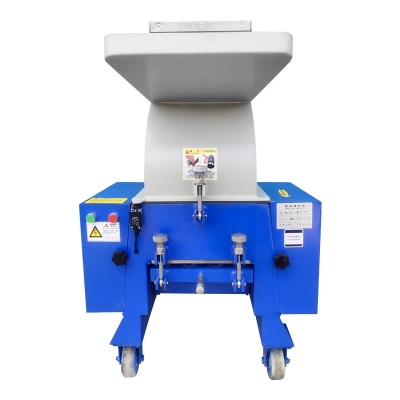
Plastic crusher is a device designed for crushing various plastic materials. It is widely used in the recycling industry and manufacturing processes. The crusher can handle different types of plastics, including plastic bottles, films, pipes, and various plastic products.
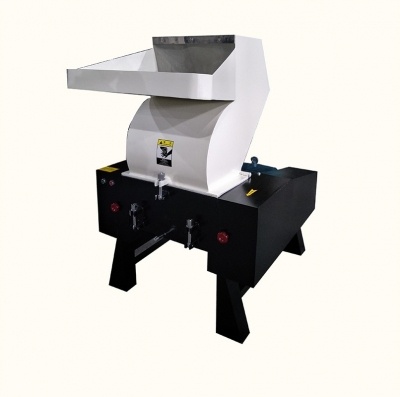
The plastic crusher is a machine specially designed for crushing various plastic materials. It has a sturdy and durable casing, usually made of high-quality steel, which can withstand high-intensity working pressure. When various plastic items are put into the feeding port of the crusher, the cutters quickly cut and crush them. Whether it is hard plastic sheets or soft plastic films, they can be crushed into uniform small particles in a short time.
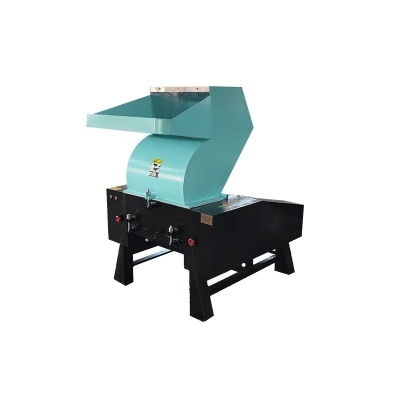
This machine is usually made of high-quality steel, ensuring durability and stability. It is equipped with powerful motors and sharp cutting blades. The plastic materials are fed into the crusher through a hopper. Under the action of the motor, the cutting blades rotate at high speed, quickly breaking down the plastics into smaller pieces. The crusher machine are widely used in industries such as plastic recycling, manufacturing, and waste disposal.
The plastic crusher is a key device specially used for processing plastics. Its core function lies in efficient crushing. It can quickly cut and crush various plastic products of different shapes and sizes, such as plastic bottles, films, and pipes, into uniform small particles through a powerful power system driving high-speed rotating cutters. It can easily handle both engineering plastics with high hardness and softer plastic films, adapting to the crushing needs of different plastic materials.


Our company's series of products are well-known in the plastic auxiliary machinery industry for their excellent performance and high cost performance.


 IPv6 network supported


 English
  English
 español
 العربية