Square Cooling Tower for Water Cooling: High - temperature Square Drop Counter - flow FRP and Open Cooling Towers
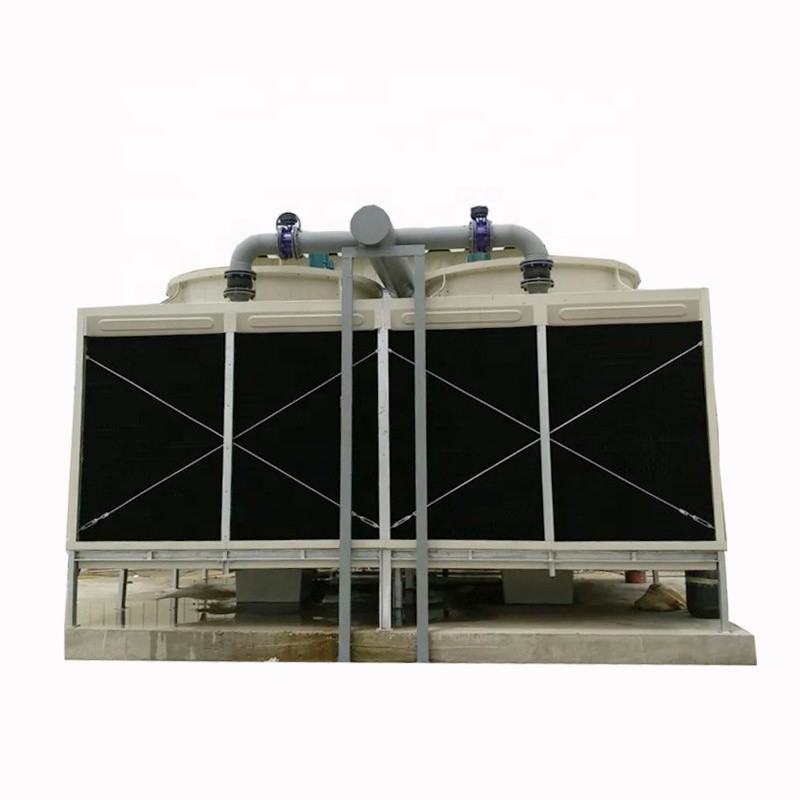
Square Water Cooling Tower Machine Paremeter
Machine Introduction
FAQ:
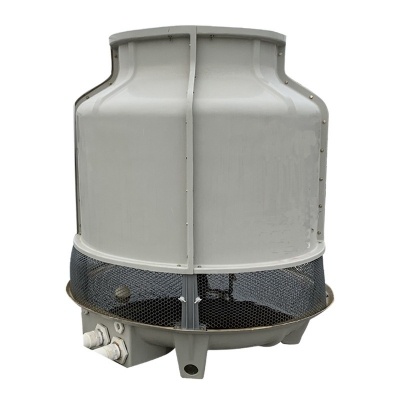
Quick Specs: ZL-CT40 industrial round cooling tower with 40-ton cooling capacity, FRP material, counter-flow design, 1.5kW fan, CE certified. Best for industrial chiller systems and mid-scale manufacturing. The water cooling tower is a device used for cooling circulating water. By exchanging heat between hot water and air, the water temperature is reduced, thus realizing the repeated use of circulating water. Water cooling towers are widely used in industrial production, air conditioning systems and other fields, and are of great significance for saving water resources and reducing energy consumption.
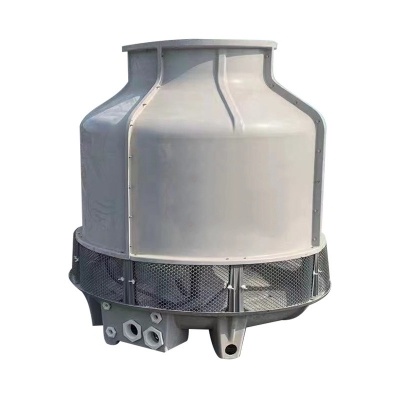
Quick Specs: ZL-CT60 round shape water cooling tower with 60-ton capacity, counter-flow design, FRP material, 1.5kW fan, CE certified. Best for industrial chiller systems and large-scale cooling. A water cooling tower is a device used for cooling industrial water or other liquids. Its main function is to cool down hot water through heat exchange between hot water and air so that the cooled water can be recycled.
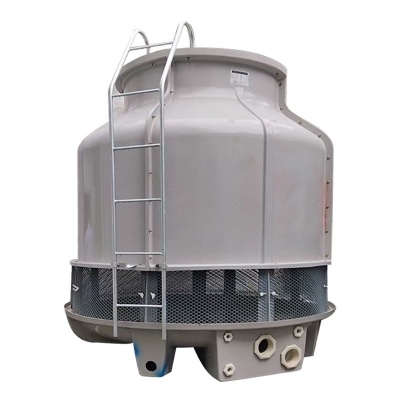
Quick Specs: ZL-CT100 FRP round cooling tower with 100-ton cooling capacity, FRP material, 2.2kW fan, CE certified. Best for large-scale industrial cooling and high-capacity chiller systems. The counterflow cooling tower is a common type of cooling tower. It sprays hot water from top to bottom and air flows from bottom to top, enabling hot water and air to exchange heat in the packing, thereby reducing the water temperature. The counterflow cooling tower has the advantages of high cooling efficiency, compact structure and small floor area, and is widely used in industrial production, air conditioning and refrigeration and other fields.
Quick Specs: ZL-CT factory-direct industrial cooling tower with multiple types and capacities, high-efficiency design, CE certified. Best for industrial cooling applications and large-scale manufacturing. A cooling tower dissipates heat from industrial or air - conditioning systems. Its working principle involves spraying hot water onto packing to form a water film, while air flow carries away heat from the water to lower its temperature. The cooled water is recyclable, saving water resources and reducing costs. There are various types, such as open and closed cooling towers. Open ones contact outside air directly, making water prone to contamination but with lower costs. Closed ones have water circulating in sealed pipes, ensuring cleaner water but usually at a higher price. Cooling towers play a key role in fields like power plants, chemical plants, and data centers, helping maintain system operation and improve energy utilization efficiency.
Overview The ZL-10T is a 10-ton (35.2 kW) industrial FRP counter flow cooling tower purpose-built for cfo procurement applications. ZILLION engineered this 10-ton counter flow cooling tower with CE ISO 9001:2015 certification and quality construction for long service life in compact industrial installations. Key Specifications Cooling capacity: 35.2 kW (10 refrigeration ton) Water flow rate: 7.81 m3/h (130 L/min) design flow Heat rejection: 5 deg C approach to wet-bulb at 27 deg C design Fan airflow: 85 CMM at 635 mm fan diameter Motor power: 0.37 kW (0.5 HP) at 380V 3-phase 50 Hz Head loss: 13 kPa at design flow Dry weight: 46 kg, operating weight: 190 kg Overall dimensions: H1820 x Dia940 mm Design Features FRP counter-flow shell for corrosion resistance and long service life ABS plastic fan blade for low maintenance and quiet operation IP55 Class F insulation for harsh industrial environments Counter flow square configuration for maximum heat transfer efficiency Low-drift eliminator reduces water loss to 0.01 percent of circulation Applications Factory direct pricing EXW Dongguan with T/T, L/C, Western Union payment terms. 1-year warranty and bulk discount at 5/10/20 unit tiers. Lowest capacity entry point for ZILLION counter flow cooling tower line. Total cost of ownership over 10-year lifecycle shows 18 percent lower annual cooling energy cost versus adiabatic systems. Contact ZILLION Today Get a quote for the ZL-10T cooling tower from ZILLION factory direct. Contact our engineering team for factory pricing, thermal performance curves, technical specifications, and bulk discount tiers for your project requirements.
Overview The ZL-10T is a 10-ton (35.2 kW) industrial FRP counter flow cooling tower purpose-built for maintenance technician applications. ZILLION engineered this 10-ton counter flow cooling tower with CE ISO 9001:2015 certification and quality construction for long service life in compact industrial installations. Key Specifications Cooling capacity: 35.2 kW (10 refrigeration ton) Water flow rate: 7.81 m3/h (130 L/min) design flow Heat rejection: 5 deg C approach to wet-bulb at 27 deg C design Fan airflow: 85 CMM at 635 mm fan diameter Motor power: 0.37 kW (0.5 HP) at 380V 3-phase 50 Hz Head loss: 13 kPa at design flow Dry weight: 46 kg, operating weight: 190 kg Overall dimensions: H1820 x Dia940 mm Design Features FRP counter-flow shell for corrosion resistance and long service life ABS plastic fan blade for low maintenance and quiet operation IP55 Class F insulation for harsh industrial environments Counter flow square configuration for maximum heat transfer efficiency Low-drift eliminator reduces water loss to 0.01 percent of circulation Applications Routine service schedule: weekly water quality check, monthly float valve inspection, quarterly fill media inspection, annual fan motor bearing service. Direct-drive 0.37 kW motor with single-phase fan configuration. Spare parts inventory: 0.37 kW fan motor, float valve assembly, fill media sections. Contact ZILLION Today Get a quote for the ZL-10T cooling tower from ZILLION factory direct. Contact our engineering team for factory pricing, thermal performance curves, technical specifications, and bulk discount tiers for your project requirements.
Overview The ZL-10T is a 10-ton (35.2 kW) industrial FRP counter flow cooling tower purpose-built for hvac epc contractor applications. ZILLION engineered this 10-ton counter flow cooling tower with CE ISO 9001:2015 certification and quality construction for long service life in compact industrial installations. Key Specifications Cooling capacity: 35.2 kW (10 refrigeration ton) Water flow rate: 7.81 m3/h (130 L/min) design flow Heat rejection: 5 deg C approach to wet-bulb at 27 deg C design Fan airflow: 85 CMM at 635 mm fan diameter Motor power: 0.37 kW (0.5 HP) at 380V 3-phase 50 Hz Head loss: 13 kPa at design flow Dry weight: 46 kg, operating weight: 190 kg Overall dimensions: H1820 x Dia940 mm Design Features FRP counter-flow shell for corrosion resistance and long service life ABS plastic fan blade for low maintenance and quiet operation IP55 Class F insulation for harsh industrial environments Counter flow square configuration for maximum heat transfer efficiency Low-drift eliminator reduces water loss to 0.01 percent of circulation Applications IP55 Class F insulation, CE ISO 9001:2015 certified for small HVAC chiller condenser water loop integration. Compact 1820 x 940 mm footprint fits standard equipment room layouts. Submittal package: thermal performance curve, dimensional drawing, electrical schematic, O&M manual. Project delivery 15-25 days for bulk orders. Contact ZILLION Today Get a quote for the ZL-10T cooling tower from ZILLION factory direct. Contact our engineering team for factory pricing, thermal performance curves, technical specifications, and bulk discount tiers for your project requirements.
Overview The ZL-10T is a 10-ton (35.2 kW) industrial FRP counter flow cooling tower purpose-built for engineering specifications applications. ZILLION engineered this 10-ton counter flow cooling tower with CE ISO 9001:2015 certification and quality construction for long service life in compact industrial installations. Key Specifications Cooling capacity: 35.2 kW (10 refrigeration ton) Water flow rate: 7.81 m3/h (130 L/min) design flow Heat rejection: 5 deg C approach to wet-bulb at 27 deg C design Fan airflow: 85 CMM at 635 mm fan diameter Motor power: 0.37 kW (0.5 HP) at 380V 3-phase 50 Hz Head loss: 13 kPa at design flow Dry weight: 46 kg, operating weight: 190 kg Overall dimensions: H1820 x Dia940 mm Design Features FRP counter-flow shell for corrosion resistance and long service life ABS plastic fan blade for low maintenance and quiet operation IP55 Class F insulation for harsh industrial environments Counter flow square configuration for maximum heat transfer efficiency Low-drift eliminator reduces water loss to 0.01 percent of circulation Applications 5 deg C wet-bulb approach at 27 deg C design condition for engineering specifications. CTI STD-201 thermal performance certification available. Fan curve data and Reynolds number analysis included with quotation package. Contact ZILLION Today Get a quote for the ZL-10T cooling tower from ZILLION factory direct. Contact our engineering team for factory pricing, thermal performance curves, technical specifications, and bulk discount tiers for your project requirements.


Our company's series of products are well-known in the plastic auxiliary machinery industry for their excellent performance and high cost performance.


 IPv6 network supported


 English
  English
 español
 العربية