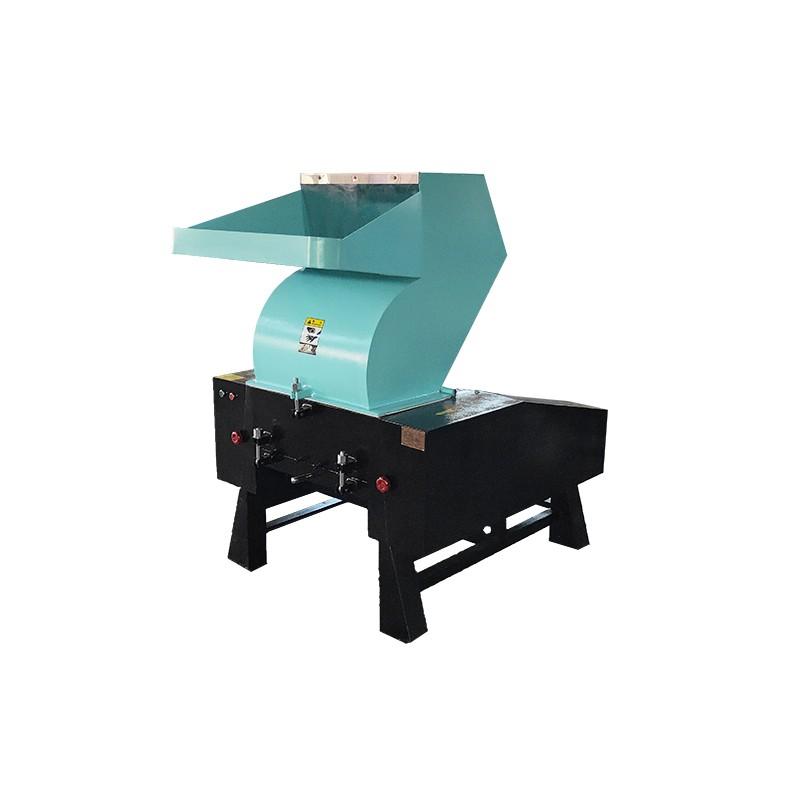
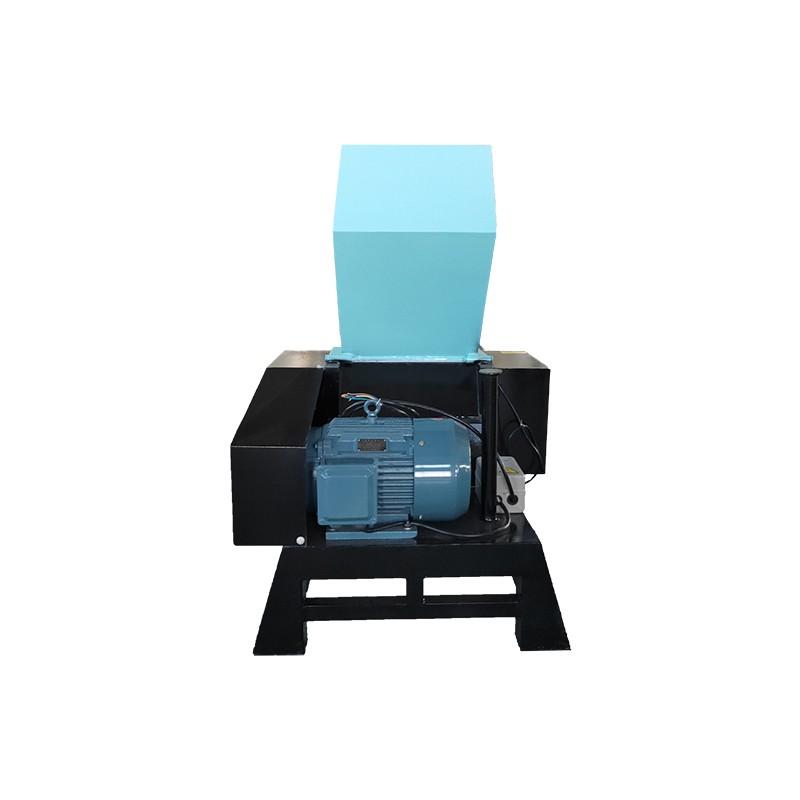
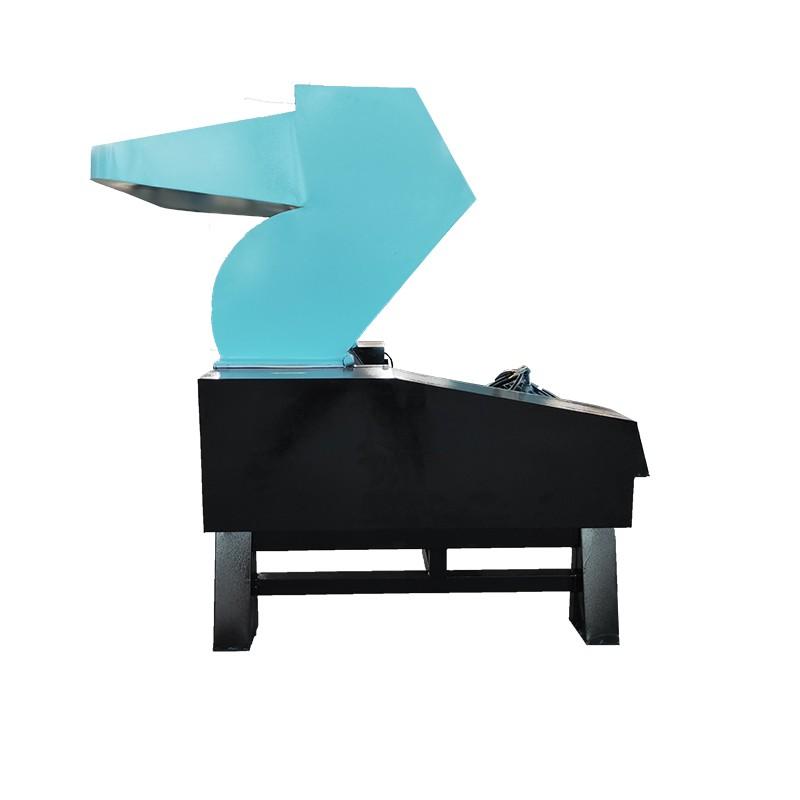
IBC (Intermediate Bulk Container) tote recycling is a specialized industrial niche requiring a shredder calibrated for the specific geometry of 1000L caged containers. The ZL-PC700 IBC Tote Shredder handles both decaged IBC bottles and post-consumer IBC streams with the rotor geometry and feed opening optimized for the 1000L container profile.
| Model | ZL-PC700 | Power | 22 kW |
| Voltage | 3-Phase 380V / 50Hz (Customizable: 220V/415V/440V/480V) | Motor Speed | 1480 rpm |
| Capacity | 700-1000 kg/h | Feed Opening | 710 x 420 mm |
| Rotating Blades | 21 pcs SKD-11 | Fixed Blades | 4 pcs SKD-11 |
| Screen Hole | 6-12 mm (customizable) | Net Weight | 1000 kg |
| Machine Size (L x W x H) | 1700 x 1300 x 1850 mm | Crushing Chamber | 730 x 440 mm |
| Material Compatibility | PET, PP, PE, PVC, ABS, PS, PC, PMMA | Noise Level | max 90 dB |
| Warranty | 1 year (consumables excluded) | Certifications | CE / ISO 9001:2015 |
A standard IBC tote consists of a 1000L HDPE inner bottle (typically 4-6 mm wall thickness) surrounded by a galvanized steel cage with a pallet base. Total empty weight is 50-60 kg (15-20 kg plastic bottle + 35-40 kg steel cage + pallet). When filled with liquid, the IBC weighs up to 1,500 kg total.
The ZL-PC700 IBC Tote Shredder processes the plastic inner bottle at 600-800 kg/h after cage removal. Shredding the caged IBC directly (without cage removal) damages blades within hours and is not recommended. Most IBC recycling operations have a dedicated cage removal station upstream of the ZL-PC700.
Many IBC applications use LDPE liner bags inside the HDPE bottle to prevent contamination of the bottle itself. These liner bags are a separate plastic stream (LDPE, 0.92 g/cc) that must be processed separately from the HDPE bottle stream.
For mixed IBC + liner bag processing, the ZL-PC700 with a 12 mm screen can process both streams simultaneously at 500-600 kg/h, with downstream density separation recovering HDPE (sinks) and LDPE (floats). For pure IBC bottle processing without liner bags, throughput increases to 700-800 kg/h on 10 mm screen.
IBC totes are designed for forklift handling - the pallet base has standard forklift pocket dimensions. The ZL-PC700 IBC Tote Shredder integrates with a forklift-loading feed conveyor (4-meter length, 1-meter belt width) that accepts IBC totes directly from forklift discharge. The feed conveyor indexes the IBC into the crushing chamber at a controlled rate.
For plants without a forklift-loading conveyor, manual IBC handling requires 2 operators (one to position the IBC, one to control the feed). The ZL-PC700 standard feed opening (710x420 mm) accepts folded IBC sections but not full IBC bottles. A pre-crushing step (manual or hydraulic) is required for full-bottle processing.
Chemical IBC totes (used for solvents, acids, surfactants) require triple-rinsing and contamination testing before shredding. Residual chemical contamination above 100 ppm renders the recycled HDPE unsuitable for food-grade applications but acceptable for industrial-grade applications (pipe, container, automotive).
Food-grade IBC totes (used for syrups, oils, juice concentrates) are typically post-consumer recycled into new food-grade applications (bottles, containers) after shredding, washing, and extrusion. The ZL-PC700 IBC Tote Shredder output at 8 mm screen is calibrated for the food-grade recycling wash systems.
A dedicated IBC recycling plant processing 2,000 IBC totes per day (24-hour operation) requires 3 ZL-PC700 machines operating in parallel. Plant economics: tipping fee revenue USD 30 per IBC x 2,000 IBC x 365 days = USD 21.9 million annual; sorted HDPE resin sales USD 700/tonne x 35 tonnes/day (17.5 kg plastic per IBC x 2,000 IBC) = USD 8.9 million; total revenue USD 30.8 million.
Operating cost: cage removal labor USD 5/IBC x 2,000 IBC x 365 days = USD 3.65 million; shredding energy USD 0.5/IBC = USD 0.37 million; blade and bearing service USD 1.0 million; sorting and baling USD 2.0 million; plant overhead USD 4.0 million. Total operating cost USD 11.0 million. Net annual revenue USD 19.8 million from a USD 8 million capital investment, payback period 5 months.
Q: Must the steel cage be removed before shredding?
Yes. Steel cage removal is mandatory. Attempting to shred a caged IBC will damage the SKD-11 blades within hours and may cause rotor damage. Cage removal options: manual torch cutting (labor-intensive), hydraulic cage crusher (USD 4,500 one-time investment).
Q: What is the throughput for caged vs decaged IBC?
Decaged IBC bottles: 700-800 kg/h. Caged IBC (not recommended): not specified, expect blade damage within hours. Always decage upstream.
Q: Can the machine handle IBC with residual liquid inside?
No. All liquid must be drained and the IBC rinsed before shredding. Residual liquid causes slippage on the rotor, blade damage, and potential hazardous vapor release.
Q: Is the ZL-PC700 suitable for pallet recycling too?
Yes, at 400-500 kg/h on standard wooden pallets and 300-400 kg/h on plastic pallets (HDPE, PP). The ZL-PC700 is a versatile industrial shredder suitable for mixed industrial waste streams including pallets, drums, containers, and large rigid plastics.
Q: What is the warranty on the rotor bearings?
1 year or 4,000 operating hours, whichever comes first. The main rotor bearings are the highest-wear component; replacement cost is USD 720 (parts) + USD 360 (labor) = USD 1,080. With predictive maintenance alerts via the optional IOT gateway, bearing replacement can be scheduled during planned downtime.
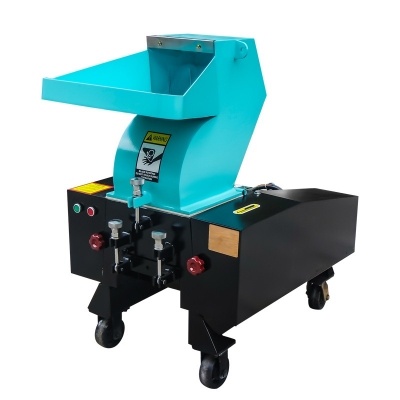
The ZL-PC180 PET Bottle Crusher is purpose-built for small-scale PET recycling operations processing 800-1500 kg/day of post-consumer bottles. Its 2.2kW motor with 9 SKD-11 rotating blades and 6-12mm interchangeable screen delivers 120-150 kg/h of uniformly-sized PET flakes-ready as direct feed for hot wash lines, dewatering, and pelletizing. Ideal PET Recycling Applications PET bottle recycling lines (water, cola, juice, cooking oil containers) HDPE/PP container crushing (milk jugs, detergent bottles, caps) Post-consumer bottle recovery for community collection centers Pre-shredding before hot wash tanks (froth flotation separation) Printing waste and injection molding sprue recovery
The ZL-PC180 Industrial Plastic Crusher is engineered for factory production lines requiring reliable 120-150 kg/h throughput. Its 2.2kW heavy-duty motor paired with 9 SKD-11 rotating blades delivers consistent particle size for downstream extrusion or compounding lines. Industrial Features Heavy-duty 2.2kW motor for continuous operation SKD-11 blades rated for 1000+ hours of use Industrial-grade frame and bearings CE certified for global deployment
The ZL-PC180 Plastic Crusher Machine is manufactured in China by Zillion — a leading plastic crusher supplier with 15+ years of OEM/ODM experience. This 2.2kW industrial model produces 120-150 kg/h and ships directly from our Dongguan factory at competitive wholesale pricing. China Supplier Advantages Factory-direct pricing with no middleman markup OEM/ODM branding and packaging available Multi-voltage: 220V/380V/400V/415V/440V CE certified for global markets
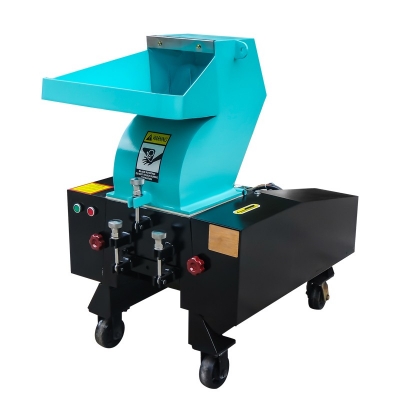
The small plastic crusher is a device specially used for crushing small plastic items. It is small in size and easy to be placed in various places, such as small factories, laboratories, and corners of workshops. The machine is mainly composed of a feeding port, a crushing chamber, cutting tools, a motor and a discharge port. Through the motor driving the cutting tools to rotate at high speed, the plastic put into the feeding port is quickly crushed into small particles. The small plastic crusher is suitable for processing various waste plastic products, such as beverage bottles, plastic films, small plastic parts, etc. It is simple to operate, safe and reliable, and can effectively realize the recycling of plastics, reducing resource waste and environmental pollution.
The 5HP plastic crusher is suitable for crushing various types of soft and hard plastics, including plastic edge materials, recycled materials, semi-finished products, etc. It can crush plastics in the forms of blocks, balls, sheets, strips, bottle shells, basket bags, etc. into granular form for recycling, greatly improving the utilization rate of plastics. This crusher is power-saving and has excellent crushing effect. The base is attached with pulleys for convenient movement, and it has a compact size without taking up too much space.
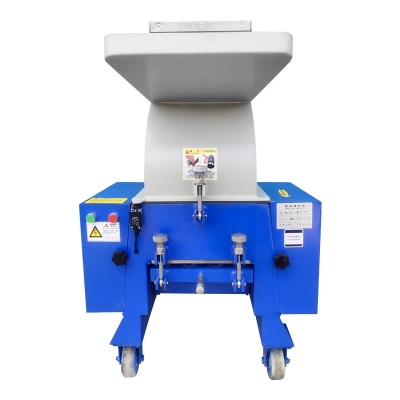
Plastic crusher is a device designed for crushing various plastic materials. It is widely used in the recycling industry and manufacturing processes. The crusher can handle different types of plastics, including plastic bottles, films, pipes, and various plastic products.
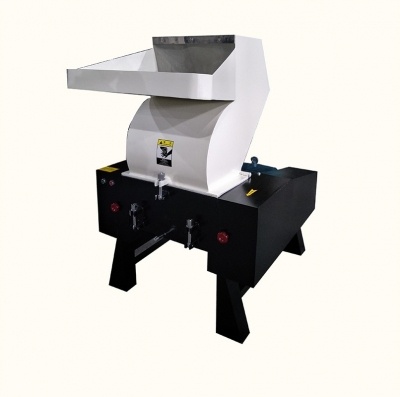
The plastic crusher is a machine specially designed for crushing various plastic materials. It has a sturdy and durable casing, usually made of high-quality steel, which can withstand high-intensity working pressure. When various plastic items are put into the feeding port of the crusher, the cutters quickly cut and crush them. Whether it is hard plastic sheets or soft plastic films, they can be crushed into uniform small particles in a short time.
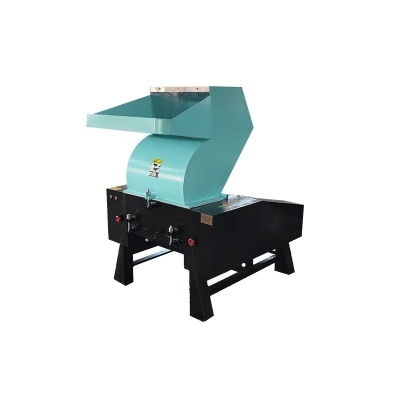
This machine is usually made of high-quality steel, ensuring durability and stability. It is equipped with powerful motors and sharp cutting blades. The plastic materials are fed into the crusher through a hopper. Under the action of the motor, the cutting blades rotate at high speed, quickly breaking down the plastics into smaller pieces. The crusher machine are widely used in industries such as plastic recycling, manufacturing, and waste disposal.


Our company's series of products are well-known in the plastic auxiliary machinery industry for their excellent performance and high cost performance.


 IPv6 network supported


 English
  English
 español
 العربية