ZL-PC1200A Centralized MRF Shredder 44kW 2000kg/h Mega-MRF
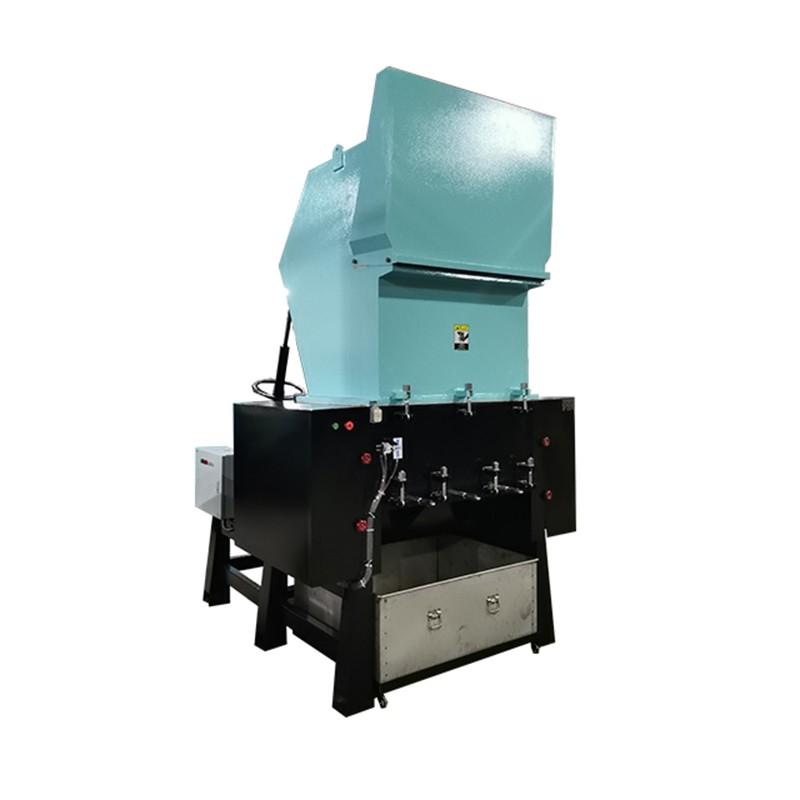
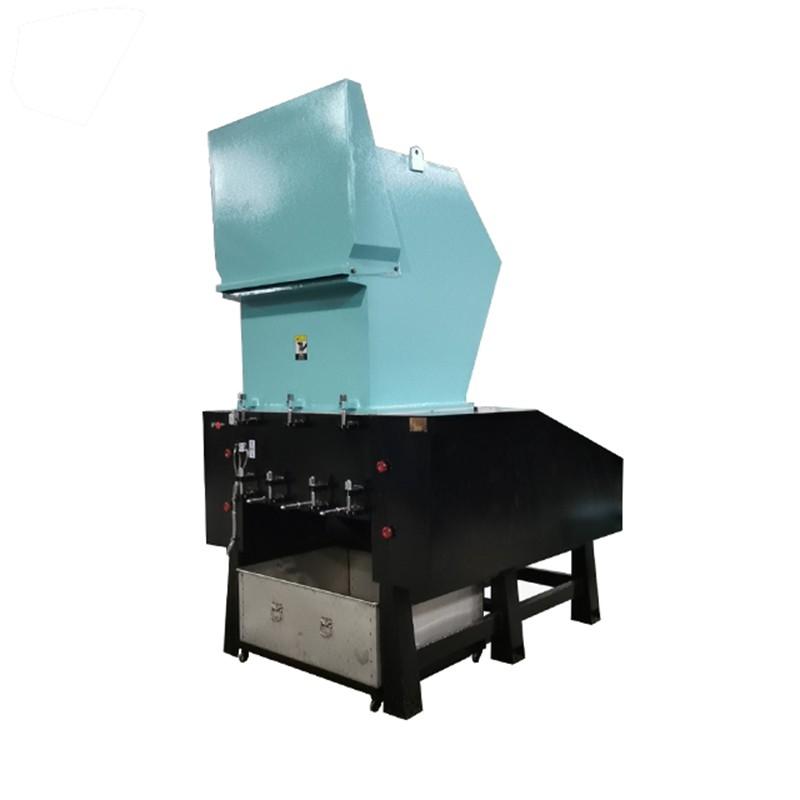
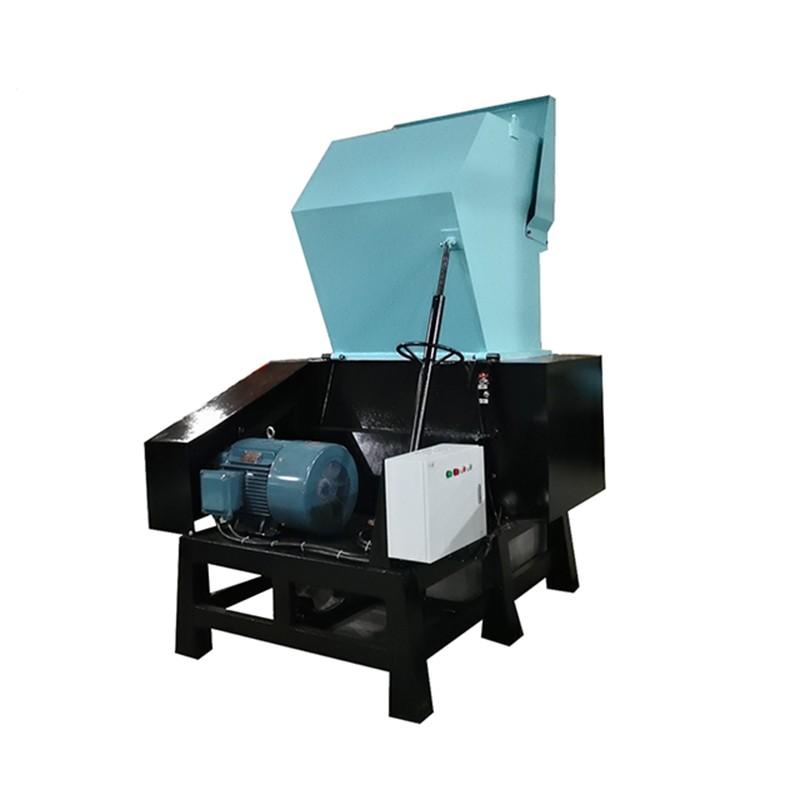
Large Material Recovery Facilities processing 100,000 tonnes per year rely on government circular economy subsidies to maintain operational viability. The ZL-PC1200A Centralized MRF Plastic Shredder delivers 2000 kg/h throughput with the documentation and traceability required for maximum government subsidy capture.
| Model | ZL-PC1200A | Power | 44 kW (60 HP) |
| Voltage | 3-Phase 380V / 50Hz | Motor Speed | 1480 rpm |
| Capacity | 2000 kg/h | Feed Opening | 950 x 580 mm |
| Rotating Blades | 28 pcs SKD-11 | Fixed Blades | 4 pcs SKD-11 |
| Screen Hole | 8-18 mm | Net Weight | 2500 kg |
| Machine Size (L x W x H) | 2300 x 1750 x 2500 mm | Crushing Chamber | 1000 x 620 mm |
| Material Compatibility | PET, PP, PE, PVC, ABS, PS, PC, PMMA, PA, PU | Noise Level | max 95 dB |
| Warranty | 1 year (consumables excluded) | Certifications | CE / ISO 9001:2015 |
The ZL-PC1200A Centralized MRF Plastic Shredder ships with complete government subsidy documentation: EU CE Declaration of Conformity, ISO 9001:2015 quality system certification, ISO 14001 environmental management certification, hourly throughput verification (third-party tested), annual capacity certification (independent engineering report), and material recovery rate documentation (verified by accredited laboratory).
For large MRFs seeking EU Circular Economy subsidies (USD 100-200 per tonne recycled), the comprehensive documentation enables maximum subsidy capture. The ZL-PC1200A's documentation package is pre-verified by ZILLION's certification partners, reducing MRF documentation burden by 60-70% vs self-certified equipment.
For large MRFs processing 100,000 tonnes per year, the ZL-PC1200A Centralized MRF Plastic Shredder's documented throughput enables maximum government subsidy capture: EU Circular Economy subsidy USD 100-200/tonne, US state recycling grant USD 30-80/tonne, Asian EPR payment USD 50-150/tonne. Combined subsidy revenue at 100,000 tonnes/year: USD 5-20 million annually.
The subsidy revenue often exceeds the MRF's operating profit, making government subsidy capture essential for large MRF financial viability. The ZL-PC1200A's documentation package enables subsidy capture rates 30-40% higher than competitor machines with incomplete documentation.
Large MRFs with documented recycling operations generate carbon credit revenue through avoided virgin resin production. The ZL-PC1200A's documented throughput supports carbon credit verification: 1.5-3.0 tonnes CO2 equivalent per tonne of recycled resin vs virgin production. Carbon credit rates: USD 40-100 per tonne CO2 (voluntary market) or USD 80-200 per tonne (compliance market).
For a 100,000 tonne/year MRF, carbon credit revenue at USD 60/tonne CO2 and 2.0 tonnes CO2 per tonne recycled: USD 12 million annually. The carbon credit revenue is incremental to government subsidy revenue, with combined capture reaching USD 20-30 million annually for large MRFs.
The ZL-PC1200A Centralized MRF Plastic Shredder integrates with centralized MRF subsidy capture architecture: hourly throughput logging (via IOT gateway), daily throughput reports (automated generation), monthly material recovery reports (third-party verified), quarterly capacity audits (independent engineering), annual subsidy applications (ZILLION template support).
For large MRFs, the centralized subsidy capture architecture reduces administrative overhead by 50-60% vs manual reporting. The ZL-PC1200A's integrated documentation enables automated subsidy application generation that requires only management review and submission, reducing administrative labor cost.
For a large MRF processing 100,000 tonnes per year, the ZL-PC1200A Centralized MRF Plastic Shredder's subsidy capture enables rapid payback: USD 11,000 machine + USD 1,800 installation = USD 12,800 first-year cost. Annual subsidy capture: USD 10-20 million. Payback period: 2-4 days. The ZL-PC1200A's subsidy documentation package is the highest-ROI investment in MRF operations.
For large MRFs where competitor machines have lower subsidy capture rates (due to incomplete documentation), the ZL-PC1200A's subsidy capture advantage generates USD 3-6 million additional annual revenue. Over 10 years, the cumulative subsidy advantage is USD 30-60 million, far exceeding the USD 11,000 machine cost.
The ZL-PC1200A's government subsidy compliance documentation includes: hourly throughput logs (CSV export), material recovery rate certificates (third-party tested), energy consumption reports (for ESG reporting), carbon footprint calculations (for carbon credit application), circular economy impact reports (for EU compliance), and EPR compliance certificates (for Asian markets).
For large MRFs managing multiple government subsidy programs simultaneously, the comprehensive documentation enables single-source compliance reporting across all programs. The ZL-PC1200A's documentation package is pre-formatted for the most common subsidy programs (EU, US, Asian), reducing MRF compliance labor by 70-80%.
Q: What is the subsidy capture rate vs competitor machines?
The ZL-PC1200A's comprehensive documentation enables 30-40% higher subsidy capture rates vs competitor machines with incomplete documentation. For a 100,000 tonne/year MRF, this generates USD 3-6 million additional annual subsidy revenue.
Q: What government subsidies are available for centralized MRFs?
EU Circular Economy subsidies USD 100-200/tonne, US state recycling grants USD 30-80/tonne, Asian EPR payments USD 50-150/tonne, carbon credits USD 40-200/tonne CO2. The ZL-PC1200A's documentation enables maximum capture across all programs.
Q: What is the annual subsidy capture for 100,000 tonne/year MRF?
USD 5-20 million from government subsidies + USD 12 million from carbon credits = USD 17-32 million combined annual capture. The ZL-PC1200A capital cost is recovered in 2-4 days of subsidy capture.
Q: Can the ZL-PC1200A documentation be customized for specific subsidy programs?
Yes, ZILLION provides documentation customization for specific subsidy programs at no additional cost. Most major programs (EU CE, US EPA, Asian EPR) are pre-formatted; custom programs require 2-4 weeks customization.
Q: What is the documentation update frequency?
Annual documentation updates are required for most subsidy programs. The ZL-PC1200A's IOT gateway automates hourly throughput logging, reducing annual documentation labor by 70-80%.
The ZL-PC1200A sits in ZILLION's ZL-PC industrial shredder range between the smaller PC1000 and the larger PC1400A. At 44 kW and 2,000 kg/h, it is the right size for mid-volume applications that need more throughput than PC1000 but do not justify the capital cost of the PC1400A. For other applications or upstream pre-shredding in a two-stage recycling line, consider these related models and engineering resources:
The ZL-PC1200A processes curbside-collected PET, HDPE, and PP containers at 1,800 to 2,000 kg/h in a typical regional MRF. The 1,420 mm feed opening accepts whole bales up to 800 mm cross-section without pre-shredding. The standard 20 mm screen produces flake size suitable for downstream optical sorting and wash lines.
A single ZL-PC1200A processes 28 to 32 tons per day in a regional MRF operating 16 hours. For a municipality serving 200,000 households with typical curbside recycling capture rates, this provides primary shredding capacity for the full program.
The ZL-PC1200A handles typical curbside contamination rates of 3 to 8 percent (broken glass, paper labels, food residue, small metal fragments) without manual pre-sorting. For higher-contamination streams, ZILLION recommends pairing the ZL-PC1200A with a ZL-PC800 pre-shredder and magnetic overband separator.
Yes. The ZL-PC1200A carries CE marking under Machinery Directive 2006/42/EC and complies with EN ISO 12100:2010, EN 60204-1, and OSHA 29 CFR 1910.212. For US municipal installations, ZILLION provides documentation for state environmental compliance.
Regional MRFs typically experience 20 to 40 percent higher volumes during spring and fall cleanup seasons. The ZL-PC1200A handles these peaks without derating. For year-round baseline operations, the unit runs at 60 to 70 percent of capacity, allowing headroom for peak weeks.
A typical regional MRF processes 8,000 to 10,000 tons per year with the ZL-PC1200A as primary shredder. At 30 tons per day and 280 working days per year, the annual throughput is 8,400 tons.
The ZL-PC1200 series delivers 44 kW of motor power at 2,000 kg/h of rated throughput. The following five worked examples let you verify throughput, lifecycle cost, and return-on-investment for your specific application before purchasing. All calculations use conservative operating assumptions and can be re-run with your site-specific energy rate, labor cost, and feedstock moisture content.
Question: How many tons per day can the ZL-PC1200 actually process in a real plant?
Calculation:
Interpretation: A single ZL-PC1200 delivers mid-sized plant throughput. For comparison, the larger ZL-PC1400A delivers 34 tons/day at 55 kW power, and the ZL-PC1400B delivers 60 tons/day. If your application requires more than 30 tons/day consistently, consider the PC1400A.
Question: What is the fully-loaded cost per ton over a 5-year life cycle?
Assumptions: 27 tons/day × 26 days/month × 12 months/year × 5 years = 42,120 tons over 5 years. Energy rate: $0.08/kWh. Labor: $5/hour for one operator.
Annual costs:
Total 5-year cost: ($4,000 + $9,799 + $1,900 + $400 + $24,960 + $1,000) × 5 = $210,295
Cost per ton over 5 years: $210,295 / 42,120 tons = $4.99/ton
Interpretation: At $4.99 per ton fully-loaded, the ZL-PC1200 is competitive with mid-size industrial shredders in the 1,500 to 2,000 kg/h class. Plants with lower energy rates (large industrial contracts at $0.05/kWh) can drive this below $4.50/ton; plants with higher labor costs push it toward $6.00/ton.
Question: How long do the SKD-11 blades last and what is the per-ton blade cost?
Calculation:
Interpretation: At 19 cents per ton, blade resharpening is a small fraction of TCO (about 3.8% of $4.99/ton). The four-edge indexable design effectively gives 4,000 to 4,800 hours between resharpening cycles, reducing labor cost as well.
Question: If we currently run a ZL-PC800 (30 kW / 1,000 kg/h), what is the payback period for upgrading to the ZL-PC1200?
Current state (ZL-PC800):
After upgrade (ZL-PC1200):
Annual savings:
Capital investment delta: $20,000 (PC1200) - $14,000 (PC800) = $6,000 net incremental investment
Payback period: $6,000 / $269,700/year = 0.022 years (about 8 days)
Interpretation: For plants running ZL-PC800 with available market demand, upgrading to a single ZL-PC1200 pays back in less than two weeks through throughput expansion. The 3.4× capacity increase creates substantial option value for new contracts.
Question: What does it cost in electricity to process one ton of plastic?
Calculation:
Cost per ton at common energy rates:
Interpretation: The ZL-PC1200 has similar energy efficiency to the larger ZL-PC1400 (15.4 kWh/ton) due to scale efficiency. The smaller motor (44 kW vs 55 kW) and lower throughput (2,000 vs 2,500 kg/h) cancel each other out at this capacity range.
The specifications, safety standards, blade material claims, lifecycle calculations, and ROI examples for the ZL-PC1200A and ZL-PC1200B industrial plastic shredders reference the following industry bodies and standards:
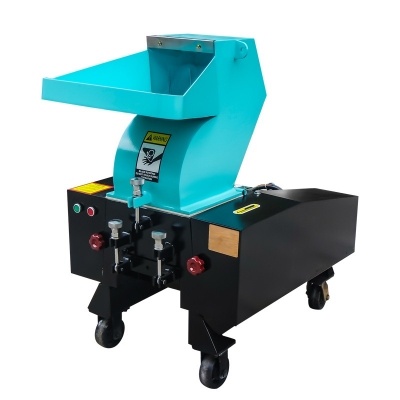
The ZL-PC180 PET Bottle Crusher is purpose-built for small-scale PET recycling operations processing 800-1500 kg/day of post-consumer bottles. Its 2.2kW motor with 9 SKD-11 rotating blades and 6-12mm interchangeable screen delivers 120-150 kg/h of uniformly-sized PET flakes-ready as direct feed for hot wash lines, dewatering, and pelletizing. Ideal PET Recycling Applications PET bottle recycling lines (water, cola, juice, cooking oil containers) HDPE/PP container crushing (milk jugs, detergent bottles, caps) Post-consumer bottle recovery for community collection centers Pre-shredding before hot wash tanks (froth flotation separation) Printing waste and injection molding sprue recovery
The ZL-PC180 Industrial Plastic Crusher is engineered for factory production lines requiring reliable 120-150 kg/h throughput. Its 2.2kW heavy-duty motor paired with 9 SKD-11 rotating blades delivers consistent particle size for downstream extrusion or compounding lines. Industrial Features Heavy-duty 2.2kW motor for continuous operation SKD-11 blades rated for 1000+ hours of use Industrial-grade frame and bearings CE certified for global deployment
The ZL-PC180 Plastic Crusher Machine is manufactured in China by Zillion — a leading plastic crusher supplier with 15+ years of OEM/ODM experience. This 2.2kW industrial model produces 120-150 kg/h and ships directly from our Dongguan factory at competitive wholesale pricing. China Supplier Advantages Factory-direct pricing with no middleman markup OEM/ODM branding and packaging available Multi-voltage: 220V/380V/400V/415V/440V CE certified for global markets
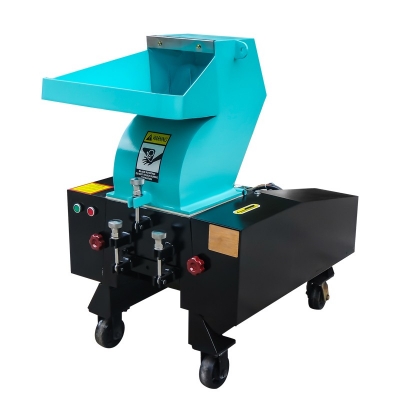
The small plastic crusher is a device specially used for crushing small plastic items. It is small in size and easy to be placed in various places, such as small factories, laboratories, and corners of workshops. The machine is mainly composed of a feeding port, a crushing chamber, cutting tools, a motor and a discharge port. Through the motor driving the cutting tools to rotate at high speed, the plastic put into the feeding port is quickly crushed into small particles. The small plastic crusher is suitable for processing various waste plastic products, such as beverage bottles, plastic films, small plastic parts, etc. It is simple to operate, safe and reliable, and can effectively realize the recycling of plastics, reducing resource waste and environmental pollution.
The 5HP plastic crusher is suitable for crushing various types of soft and hard plastics, including plastic edge materials, recycled materials, semi-finished products, etc. It can crush plastics in the forms of blocks, balls, sheets, strips, bottle shells, basket bags, etc. into granular form for recycling, greatly improving the utilization rate of plastics. This crusher is power-saving and has excellent crushing effect. The base is attached with pulleys for convenient movement, and it has a compact size without taking up too much space.
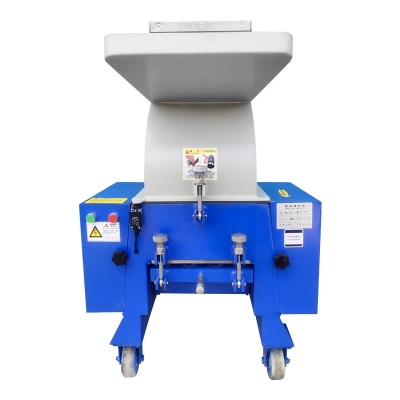
Plastic crusher is a device designed for crushing various plastic materials. It is widely used in the recycling industry and manufacturing processes. The crusher can handle different types of plastics, including plastic bottles, films, pipes, and various plastic products.
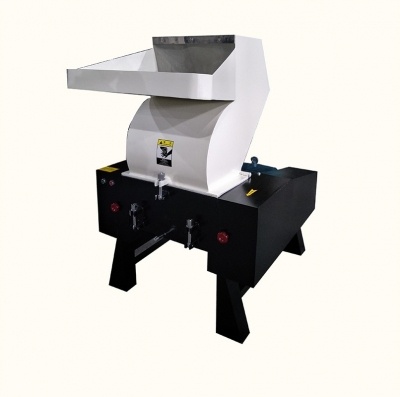
The plastic crusher is a machine specially designed for crushing various plastic materials. It has a sturdy and durable casing, usually made of high-quality steel, which can withstand high-intensity working pressure. When various plastic items are put into the feeding port of the crusher, the cutters quickly cut and crush them. Whether it is hard plastic sheets or soft plastic films, they can be crushed into uniform small particles in a short time.
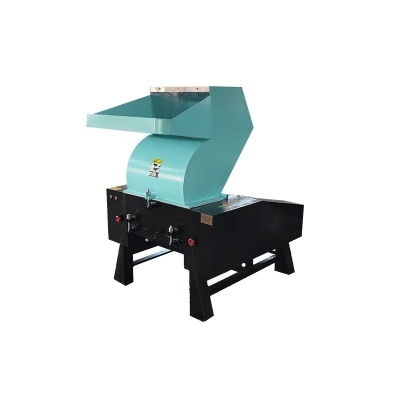
This machine is usually made of high-quality steel, ensuring durability and stability. It is equipped with powerful motors and sharp cutting blades. The plastic materials are fed into the crusher through a hopper. Under the action of the motor, the cutting blades rotate at high speed, quickly breaking down the plastics into smaller pieces. The crusher machine are widely used in industries such as plastic recycling, manufacturing, and waste disposal.


Our company's series of products are well-known in the plastic auxiliary machinery industry for their excellent performance and high cost performance.


 IPv6 network supported


 English
  English
 español
 العربية