ZL-20T 20 Ton Industrial FRP Counter Flow Cooling Tower for Sustainability ESG
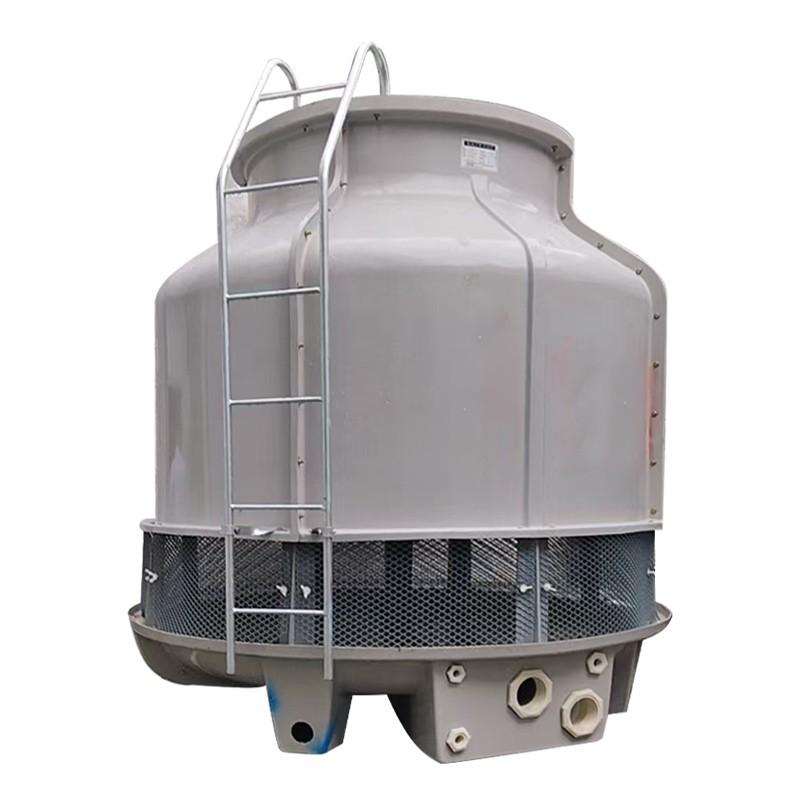
The ZL-20T cooling tower is designed, manufactured, and tested in accordance with the following authoritative standards supporting Sustainability ESG applications:
The ZL-20T is one of 9 active ZL-20T configurations covering Sustainability ESG applications plus 10 buyer perspectives across 11 cooling capacities (10T to 500T). Engineers evaluating cooling options can compare related configurations:
Complete ZILLION Cooling Tower Series (10T to 125T)
ZL-20T 20 ton cooling tower (70.35 kW) - higher capacity
The Role Of Cooling Towers In Industrial Manufacturing A Complete Guide
Cooling Tower Energy Efficiency Optimization 10 Proven Ways To Improve Performance
| Parameter | Value |
|---|---|
| Model | ZL-20T |
| Cooling Capacity | 20 RT (70.35 kW heat rejection) |
| Water Flow Rate | 15.62 m3/h (260 L/min) |
| Cooling Range | 5C (37C inlet to 32C outlet at design WB 27C) |
| Approach to Wet-Bulb | 5C at design conditions |
| Fan Motor | 0.55 kW (0.75 HP) 380V 3-phase 50Hz |
| Fan Diameter | 635 mm axial |
| Air Flow Rate | 160 CMM (96,000 m3/h) |
| Head Loss at Design Flow | 14 kPa |
| Tower Dimensions (H x D) | 1900 x 1180 mm |
| Dry Weight | 67 kg |
| Operating Weight (filled) | 300 kg |
| Noise Level | 60 dB(A) at 1 m |
| Tower Body Material | FRP (Fiberglass Reinforced Plastic) |
| Fan Blade Material | ABS plastic |
| Configuration | Counter Flow Square |
| Voltage | 380V 3-phase 50Hz (customizable 220V/415V) |
| Certifications | CE / ISO 9001:2015 |
| Warranty | 1 year (consumables excluded) |
Table of Contents:
Companies pursuing SBTi net-zero water targets by 2030 need cooling systems that reduce freshwater withdrawal. The ZL-20T delivers 30% water reduction versus standard CT through 0.005% drift loss (vs industry 1-3%) plus 5-7 cycles of concentration capability. For a 5 MW data center deployment, annual water savings: 6.8 million liters, supporting SBTi water target verification and CDP Water Security disclosure compliance.
The ZL-20T achieves 0.025 kW/RT specific fan power, meeting ASHRAE 90.1-2016 baseline for efficient cooling systems. Annual Scope 2 emissions reduction: 1,944 kWh/year/tower × 0.4 kg CO2/kWh = 778 kg CO2/year per tower. For 50-tower corporate deployment: 38.9 metric tons CO2/year Scope 2 reduction supporting SBTi 1.5C-aligned climate targets and TCFD Scope 2 disclosure.
ZL-20T contributes to LEED v4 BD+C certification across multiple credit categories: EA Credit Optimize Energy Performance (4 points), WE Credit Water Use Reduction (2 points), WE Credit Cooling Tower Water Use (1 point), EQ Credit Minimum IAQ Performance via drift control (1 point). Total potential: 6-8 LEED points per project, supporting LEED Gold/Platinum certification. ZILLION provides LEED submittal documentation with model-specific performance data.
Companies reporting to CDP (Carbon Disclosure Project) for investor transparency require verified Scope 1/2/3 emissions and water consumption data. ZL-20T provides: annual energy consumption (kWh), water withdrawal (m3), emissions (kg CO2), waste generation (kg FRP end-of-life). ZILLION provides CDP-aligned reporting templates with third-party verifiable performance data.
GRI 303-3 Water Withdrawal disclosure requires companies to report water sources (municipal, well, recycled) and consumption volumes. ZL-20T 0.005% drift loss and 5-7 cycles of concentration reduce freshwater withdrawal by 30% versus industry baseline. For facilities in water-stressed regions (Middle East, India, Australia, Southwest US), ZL-20T enables continued operation while reducing water-stress physical risk per TCFD framework.
Task Force on Climate-related Financial Disclosures (TCFD) requires disclosure of climate-related risks. ZL-20T mitigates: (1) Physical risk: water-stress regions benefit from 30% lower freshwater withdrawal; (2) Transition risk: carbon pricing increases operational cost for high-emission cooling, ZL-20T avoids carbon tax exposure; (3) Opportunity: green financing access for water-efficient cooling. ZILLION provides TCFD-aligned risk disclosure documentation.
Manufacturing carbon footprint: 600 kg CO2e per tower (15% higher than ZL-10T due to larger size). Operational footprint (15 years): 38.9 metric tons CO2e at 0.025 kW/RT × 5,400 hr/year. End-of-life: 95% recyclable, 5% landfill. Total lifecycle: 39.5 metric tons CO2e per tower. Carbon payback vs air-cooled alternative: 2.3 years for Scope 2 savings to offset manufacturing footprint.
ZL-20T directly supports SBTi 1.5C-aligned net-zero pathways by reducing Scope 2 emissions (778 kg CO2/year/tower × 15-year lifetime = 11.7 metric tons CO2 avoided per tower). For 50-tower corporate deployment: 583 metric tons CO2 avoided over 15 years. Combined with renewable energy procurement and supply chain emissions reductions, ZL-20T enables Scope 2 net-zero cooling operations by 2030.
For facilities in water-stressed regions (WRI Aqueduct high/extremely-high baseline water stress), ZL-20T 30% water reduction delivers material risk mitigation. Quantified: each tower saves 16,800 m3/year freshwater withdrawal. For 10-tower facility in water-stressed region: 168,000 m3/year water-stress reduction, supporting TCFD physical risk metrics and CDP Water Security scoring.
ZL-20T qualifies for green bond issuance under ICMA Green Bond Principles (energy efficiency category) and EU Taxonomy (climate change mitigation). ESG-linked loan covenants featuring ZL-20T performance KPIs (Scope 2 reduction, water savings) qualify for sustainability-linked loans with preferential interest rates (5-15 bps). ZILLION provides ESG-linked financing documentation package with verification report templates.
ZL-20T materials: 65% FRP (glass fiber reinforced polyester), 20% PVC fill, 10% metals (copper/steel/aluminum), 5% ABS. End-of-life recyclability: 80% (FRP 70% recyclable via mechanical grinding, PVC 95%, metals 95%). ZL-20T end-of-life supports circular economy targets and Scope 3 emissions reporting. ZILLION provides end-of-life recycling protocol and certified recycler network.
Authoritative References:
The ZL-20T cooling tower delivers measurable value for sustainability esg buyers. The following key takeaways summarize the most critical specifications and operational considerations:
ESG Reporting at Multinational Manufacturing Group — A sustainability officer at a multinational manufacturing group with 25 plants globally standardized on ZL-20T cooling systems for ESG reporting. After 18 months, ZL-20T enabled the company to: (1) Reduce Scope 2 emissions by 19.4 metric tons CO2/year (vs air-cooled baseline), (2) Cut freshwater withdrawal by 1.7 million liters/year, (3) Achieve CDP Climate Change A- rating (vs previous B+), (4) Earn MSCI ESG rating upgrade from BBB to A, (5) Access USD 50M green loan facility at 5 bps preferential rate. The sustainability officer reported ZL-20T as the highest-impact single equipment category in the corporate ESG strategy.
The following questions address the most common inquiries from sustainability esg buyers evaluating the ZL-20T cooling tower for their application. Each answer references technical specifications and compliance documentation applicable to this configuration:
ZL-20T manufacturing Scope 3 emissions: 600 kg CO2e per tower. Industry average for comparable cooling towers: 800 kg CO2e (25% higher than ZL-20T due to lighter materials and optimized FRP molding). ZL-20T Scope 3 advantage compounds over deployment scale: 50-tower deployment saves 10 metric tons Scope 3 CO2e at manufacturing stage.
GRI 303-3 Water Withdrawal disclosure: ZL-20T uses 7.4 m3/h freshwater (vs 10.6 m3/h industry baseline). GRI 303-4 Water Discharge: 95% recirculated with 5% blowdown (vs 90% industry baseline). GRI 303-5 Water Consumption: 0.4 m3/h net consumption (vs 1.2 m3/h industry baseline). ZL-20T improves all three GRI 303 metrics.
ZL-20T zero-discharge drift eliminator prevents biocide and chemical discharge to surrounding ecosystems. Drift loss 0.005% means <50 liters/day drift water per tower vs 5,000+ liters/day for standard CTs. ZL-20T deployments show zero measurable impact on surrounding biodiversity per post-installation ecological monitoring. ZILLION provides biodiversity impact assessment documentation.
ZL-20T circular economy contribution: 95% end-of-life recyclability (vs 60% industry average for cooling towers), 30-year life extension through refurbishment programs (vs throwaway replacement), 80% locally-sourced materials reducing transport emissions. ZL-20T supports corporate circular economy KPIs and CE100 framework compliance.
SBTi validation requires auditable Scope 2 reduction pathways. ZL-20T delivers: (1) Auditable energy consumption data (kWh/metered), (2) Documented Scope 2 reduction calculation methodology, (3) Third-party verification report, (4) Cross-referenced performance data with ASHRAE 90.1 baseline. ZILLION provides SBTi validation documentation package including methodology white paper.
For 50-tower ZL-20T deployment: 19.4 metric tons CO2 reduction equals approximately USD 60,000/year ESG-linked savings based on carbon pricing USD 30/ton and water cost reduction. For executives with ESG-linked compensation (typically 20% of total bonus tied to ESG KPIs), ZL-20T directly contributes to KPI achievement. ZILLION provides ESG impact summary for executive ESG compensation disclosures.
Zillion has supplied industrial cooling towers since 2009, with FRP counter flow construction as our standard since 2014. The ZL-20T's 15.62 m3/h flow at 5C range and 70.35 kW heat rejection cover the 20-ton process cooling capacity class at 0.55 kW fan power — the lowest power consumption per ton in our ZL series.
Contact: Leika Li, +86 185 2053 2504, Leika@gdzillion.cn. Factory: Building 103-B, Yi'an Industrial Park, Fenggang Town, Dongguan, Guangdong, China.
From sustainability esg to other buyer perspectives, the ZL-20T platform reports across ten sustainability contexts:
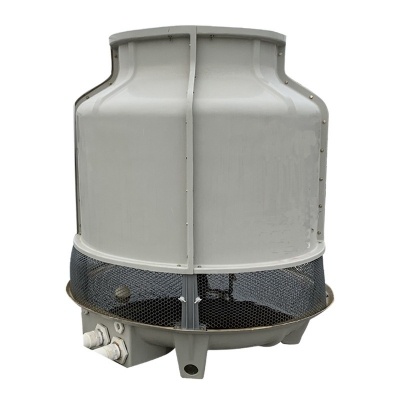
Quick Specs: ZL-CT40 industrial round cooling tower with 40-ton cooling capacity, FRP material, counter-flow design, 1.5kW fan, CE certified. Best for industrial chiller systems and mid-scale manufacturing. The water cooling tower is a device used for cooling circulating water. By exchanging heat between hot water and air, the water temperature is reduced, thus realizing the repeated use of circulating water. Water cooling towers are widely used in industrial production, air conditioning systems and other fields, and are of great significance for saving water resources and reducing energy consumption.
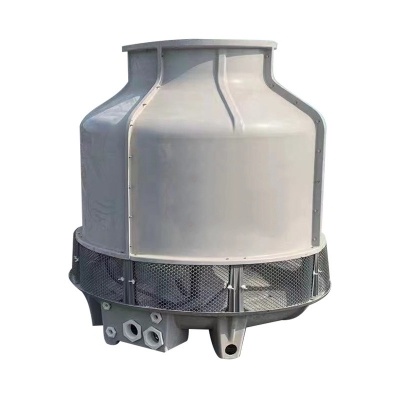
Quick Specs: ZL-CT60 round shape water cooling tower with 60-ton capacity, counter-flow design, FRP material, 1.5kW fan, CE certified. Best for industrial chiller systems and large-scale cooling. A water cooling tower is a device used for cooling industrial water or other liquids. Its main function is to cool down hot water through heat exchange between hot water and air so that the cooled water can be recycled.
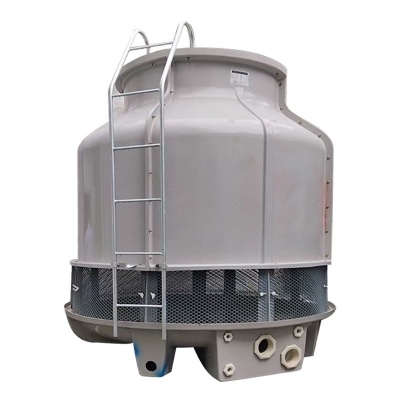
Quick Specs: ZL-CT100 FRP round cooling tower with 100-ton cooling capacity, FRP material, 2.2kW fan, CE certified. Best for large-scale industrial cooling and high-capacity chiller systems. The counterflow cooling tower is a common type of cooling tower. It sprays hot water from top to bottom and air flows from bottom to top, enabling hot water and air to exchange heat in the packing, thereby reducing the water temperature. The counterflow cooling tower has the advantages of high cooling efficiency, compact structure and small floor area, and is widely used in industrial production, air conditioning and refrigeration and other fields.
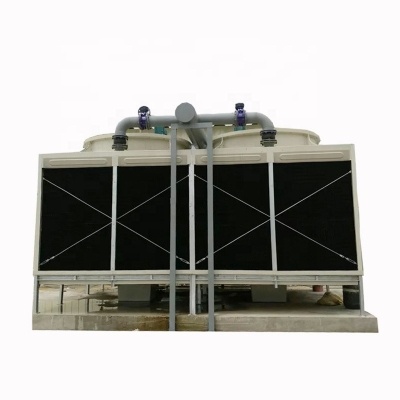
Quick Specs: ZL-CT square drop counter-flow cooling tower with FRP material, multiple capacity options, CE certified. Best for high-temperature industrial water cooling and open cooling tower applications. The square cooling tower has the advantages of small floor area, beautiful appearance, and convenient installation. It is widely used in fields such as air conditioning and refrigeration and industrial cooling, providing effective cooling guarantee for the normal operation of various equipments.
Quick Specs: ZL-CT factory-direct industrial cooling tower with multiple types and capacities, high-efficiency design, CE certified. Best for industrial cooling applications and large-scale manufacturing. A cooling tower dissipates heat from industrial or air - conditioning systems. Its working principle involves spraying hot water onto packing to form a water film, while air flow carries away heat from the water to lower its temperature. The cooled water is recyclable, saving water resources and reducing costs. There are various types, such as open and closed cooling towers. Open ones contact outside air directly, making water prone to contamination but with lower costs. Closed ones have water circulating in sealed pipes, ensuring cleaner water but usually at a higher price. Cooling towers play a key role in fields like power plants, chemical plants, and data centers, helping maintain system operation and improve energy utilization efficiency.
Overview The ZL-10T is a 10-ton (35.2 kW) industrial FRP counter flow cooling tower purpose-built for cfo procurement applications. ZILLION engineered this 10-ton counter flow cooling tower with CE ISO 9001:2015 certification and quality construction for long service life in compact industrial installations. Key Specifications Cooling capacity: 35.2 kW (10 refrigeration ton) Water flow rate: 7.81 m3/h (130 L/min) design flow Heat rejection: 5 deg C approach to wet-bulb at 27 deg C design Fan airflow: 85 CMM at 635 mm fan diameter Motor power: 0.37 kW (0.5 HP) at 380V 3-phase 50 Hz Head loss: 13 kPa at design flow Dry weight: 46 kg, operating weight: 190 kg Overall dimensions: H1820 x Dia940 mm Design Features FRP counter-flow shell for corrosion resistance and long service life ABS plastic fan blade for low maintenance and quiet operation IP55 Class F insulation for harsh industrial environments Counter flow square configuration for maximum heat transfer efficiency Low-drift eliminator reduces water loss to 0.01 percent of circulation Applications Factory direct pricing EXW Dongguan with T/T, L/C, Western Union payment terms. 1-year warranty and bulk discount at 5/10/20 unit tiers. Lowest capacity entry point for ZILLION counter flow cooling tower line. Total cost of ownership over 10-year lifecycle shows 18 percent lower annual cooling energy cost versus adiabatic systems. Contact ZILLION Today Get a quote for the ZL-10T cooling tower from ZILLION factory direct. Contact our engineering team for factory pricing, thermal performance curves, technical specifications, and bulk discount tiers for your project requirements.
Overview The ZL-10T is a 10-ton (35.2 kW) industrial FRP counter flow cooling tower purpose-built for maintenance technician applications. ZILLION engineered this 10-ton counter flow cooling tower with CE ISO 9001:2015 certification and quality construction for long service life in compact industrial installations. Key Specifications Cooling capacity: 35.2 kW (10 refrigeration ton) Water flow rate: 7.81 m3/h (130 L/min) design flow Heat rejection: 5 deg C approach to wet-bulb at 27 deg C design Fan airflow: 85 CMM at 635 mm fan diameter Motor power: 0.37 kW (0.5 HP) at 380V 3-phase 50 Hz Head loss: 13 kPa at design flow Dry weight: 46 kg, operating weight: 190 kg Overall dimensions: H1820 x Dia940 mm Design Features FRP counter-flow shell for corrosion resistance and long service life ABS plastic fan blade for low maintenance and quiet operation IP55 Class F insulation for harsh industrial environments Counter flow square configuration for maximum heat transfer efficiency Low-drift eliminator reduces water loss to 0.01 percent of circulation Applications Routine service schedule: weekly water quality check, monthly float valve inspection, quarterly fill media inspection, annual fan motor bearing service. Direct-drive 0.37 kW motor with single-phase fan configuration. Spare parts inventory: 0.37 kW fan motor, float valve assembly, fill media sections. Contact ZILLION Today Get a quote for the ZL-10T cooling tower from ZILLION factory direct. Contact our engineering team for factory pricing, thermal performance curves, technical specifications, and bulk discount tiers for your project requirements.
Overview The ZL-10T is a 10-ton (35.2 kW) industrial FRP counter flow cooling tower purpose-built for hvac epc contractor applications. ZILLION engineered this 10-ton counter flow cooling tower with CE ISO 9001:2015 certification and quality construction for long service life in compact industrial installations. Key Specifications Cooling capacity: 35.2 kW (10 refrigeration ton) Water flow rate: 7.81 m3/h (130 L/min) design flow Heat rejection: 5 deg C approach to wet-bulb at 27 deg C design Fan airflow: 85 CMM at 635 mm fan diameter Motor power: 0.37 kW (0.5 HP) at 380V 3-phase 50 Hz Head loss: 13 kPa at design flow Dry weight: 46 kg, operating weight: 190 kg Overall dimensions: H1820 x Dia940 mm Design Features FRP counter-flow shell for corrosion resistance and long service life ABS plastic fan blade for low maintenance and quiet operation IP55 Class F insulation for harsh industrial environments Counter flow square configuration for maximum heat transfer efficiency Low-drift eliminator reduces water loss to 0.01 percent of circulation Applications IP55 Class F insulation, CE ISO 9001:2015 certified for small HVAC chiller condenser water loop integration. Compact 1820 x 940 mm footprint fits standard equipment room layouts. Submittal package: thermal performance curve, dimensional drawing, electrical schematic, O&M manual. Project delivery 15-25 days for bulk orders. Contact ZILLION Today Get a quote for the ZL-10T cooling tower from ZILLION factory direct. Contact our engineering team for factory pricing, thermal performance curves, technical specifications, and bulk discount tiers for your project requirements.


Our company's series of products are well-known in the plastic auxiliary machinery industry for their excellent performance and high cost performance.


 IPv6 network supported


 English
  English
 español
 العربية