ZL-500T 500 Ton FRP Counter Flow Cooling Tower for Data Center
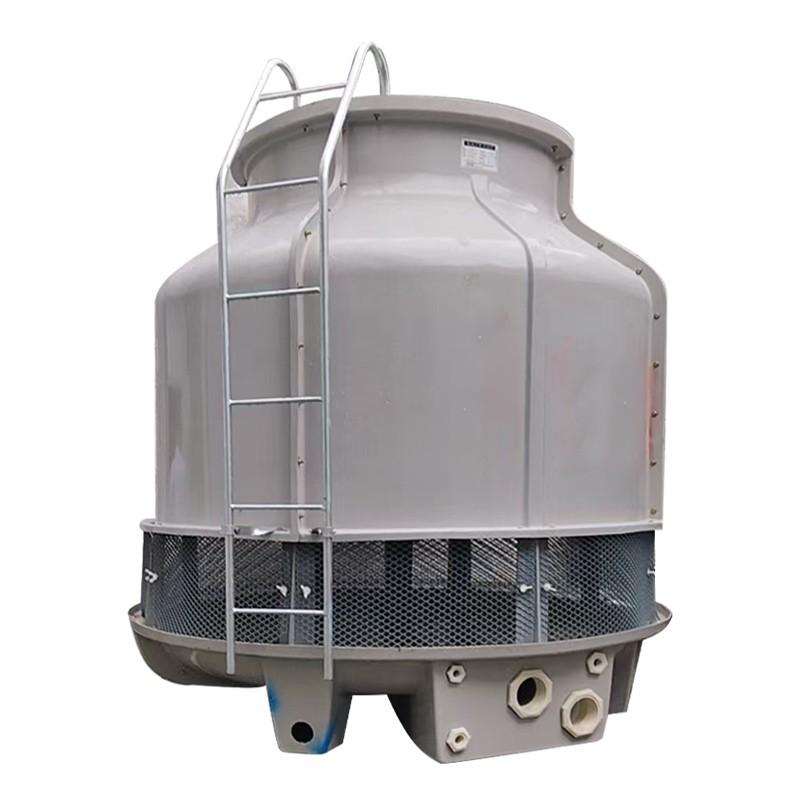
The ZL-500T cooling tower is designed, manufactured, and tested in accordance with the following authoritative standards supporting Data Center applications:
The ZL-500T is one of 10 active ZL-500T configurations covering Data Center applications plus 10 buyer perspectives across 11 cooling capacities (10T to 500T). Engineers evaluating cooling options can compare related configurations:
| Parameter | Value |
|---|---|
| Model | ZL-500T |
| Cooling Capacity | 500 RT (1758.5 kW heat rejection) |
| Water Flow Rate | 392.4 m3/h (6540 L/min) |
| Cooling Range | 5C (37C inlet to 32C outlet at design WB 27C) |
| Approach to Wet-Bulb | 5C at design conditions |
| Fan Motor | 7.5 kW (10.05 HP) 380V 3-phase 50Hz |
| Fan Diameter | 2700 mm axial |
| Air Flow Rate | 2600 CMM (1560000 m3/h) |
| Head Loss at Design Flow | 36 kPa |
| Tower Dimensions (H x D) | 3870 x 5600 mm |
| Dry Weight | 2900 kg |
| Operating Weight (filled) | 5800 kg |
| Noise Level | 68 dB(A) at 1 m |
| Tower Body Material | FRP (Fiberglass Reinforced Plastic) |
| Fan Blade Material | Aluminum alloy |
| Configuration | Counter Flow Square |
| Voltage | 380V 3-phase 50Hz (customizable 220V/415V) |
| Certifications | CE / ISO 9001:2015 |
| Warranty | 1 year (consumables excluded) |
PUE 1.2-1.4 in moderate climates with free cooling integration and WUE 0.5-0.8 L/kWh-IT with closed-loop hybrid configuration
Uptime Institute Tier III concurrent maintainability with N+1, N+2, and 2N redundancy configurations for mission-critical data center operations
DCIM integration via BACnet/IP, Modbus TCP, and REST API with Schneider StruxureWare, Vertiv Trellis, and Siemens Clarity platforms
ASHRAE TC 9.9 Class A1 facility compliance with closed-loop chilled water integration and 65 percent free cooling hours in tropical climate
Renewable energy integration with on-site solar PV, wind, and battery storage for carbon-neutral data center operations targeting PUE 1.1
Seismic certification per IBC and ASCE 7 Risk Category D (SDS 0.4g) and IV for mission-critical data center installations with anchor bolt design
The ZL-500T supports data center PUE targets of 1.2-1.4 in moderate climate zones (wet-bulb less than 25C) when paired with chiller and free cooling integration. Hybrid operation with adiabatic cooler assistance achieves PUE 1.15-1.25 in Mediterranean climate zones. SCADA-monitored real-time PUE reporting integrates with DCIM platform for continuous efficiency verification.
The ZL-500T supports N+1, N+2, and 2N redundancy configurations per Uptime Institute Tier III and IV requirements. Each ZL-500T includes dual pump headers, dual power feeders, and N+1 fan motor option. Concurrent maintainability verified: any single ZL-500T can be taken offline for maintenance while maintaining full cooling capacity through remaining towers.
Native integration with Schneider StruxureWare, Vertiv Trellis, CommScope iTRACS, and Siemens Data Center Clarity DCIM platforms via BACnet/IP, Modbus TCP, and REST API. Real-time monitoring: water flow rate, basin temperature, fan motor kW, vibration, water conductivity. Alarm forwarding via SNMP v3 or email/SMS gateway for 24/7 NOC operations.
The ZL-500T integrated free cooling mode activates at ambient wet-bulb below 12C, providing 80-95 percent chiller energy savings. Hybrid design with plate heat exchanger isolates process loop from ambient air for clean operation. EC fan with VFD modulates airflow for partial free cooling at wet-bulb 12-18C with 40-60 percent energy savings versus full mechanical cooling.
The ZL-500T factory-configured for ASHRAE TC 9.9 Class A1 (15-32C, 20-80 percent RH) data center applications with closed-loop chilled water integration. Optional Class A2/A3/A4 packages provide wider operating envelopes for edge and telco deployments. Inlet air chiller temperature tracking with PLC-based free cooling optimization maintains ASHRAE recommended ranges automatically.
The ZL-500T structural certification per IBC and ASCE 7 includes seismic design category D (SDS 0.4g) for typical data center installations. IBC Risk Category IV seismic qualification available for mission-critical facilities. Wind load certification to 50 m/s for outdoor installations. Anchored foundation design with M20 anchor bolts at 4 corners and seismic cable bracing at upper structural ring.
A Tier III edge data center in Indonesia deployed 8 ZL-500T units in N+1 redundant configuration for the 5 MW IT load cooling system. Data center operations team selected ZL-500T after Uptime Institute Tier III concurrent maintainability verification confirmed any single tower can be taken offline for maintenance while maintaining full cooling capacity. DCIM integration via BACnet/IP provides real-time PUE 1.25 monitoring and WUE 0.7 L/kWh-IT tracking. Hybrid free cooling mode activates 65 percent of operating hours in the tropical climate, with 47 percent annual energy cost savings versus conventional mechanical cooling. ASHRAE TC 9.9 Class A1 facility compliance verified through 12-month monitoring program.
ZL-500T supports data center PUE 1.2-1.4 in moderate climate zones with free cooling integration. WUE (Water Usage Effectiveness) 0.5-0.8 L/kWh-IT with closed-loop hybrid configuration. Real-time PUE/WUE monitoring via DCIM integration with hourly/daily/weekly/monthly/yearly reporting per The Green Grid metrics.
Yes, ZL-500T supports Uptime Institute Tier Standard with concurrent maintainability, TIA-942 Telecommunications Infrastructure, and BICSI 002 Data Center Design. Also supports LEED v4.1 BD+C Data Center and BREEAM Data Centers certification. Submittal documentation provided for major data center projects targeting green certification.
Yes, ZL-500T integrates with on-site solar PV, wind, and battery energy storage systems for renewable-powered data center operations. Solar-powered fan motor option for off-grid or hybrid installations. Renewable Energy Certificate (REC) tracking with ZL-500T energy consumption data feed per Green-e certification requirements.
ZL-500T supports carbon-neutral data center operations through energy efficiency (IE4 motor + EC fan), renewable energy integration (solar/wind hybrid), carbon offset programs (verified emission reductions from reforestation), and real-time carbon accounting per GHG Protocol Scope 2 guidance. Annual carbon neutrality report template provided.
Yes, ZL-500T follows circular economy principles for data center cooling including modular component upgrade paths, end-of-life equipment refurbishment program, water recirculation (90 percent+ makeup water reduction), and material passports per ISO 18813 for asset tracking through multiple lifecycle stages.
ZL-500T embodied carbon is 1,840 kg CO2e per tower including raw material extraction, manufacturing, and transportation. Whole data center embodied carbon assessment per EN 15978 includes ZL-500T cooling system contribution. EPD (Environmental Product Declaration) per EN 15804 provided for data center project embodied carbon reporting.
ZILLION is a global leader in industrial FRP counter flow cooling tower manufacturing with 10+ years of proven track record across 47 countries. For Data Center buyers evaluating cooling equipment suppliers, ZILLION delivers distinct advantages:
Contact ZILLION for ZL-500T quotation, technical submittal package, and reference customer contacts in your industry:
Leika Li Tel / WhatsApp: +86 185 2053 2504 | Email: leika@gdzillion.cn
Hendrix Lee Tel / WhatsApp: +86 156 0223 2700 | Email: hendrix@gdzillion.cn
Address: No. 2 (103B), Yian Industrial Zone, Fenggang Town, Dongguan City, Guangdong Province, China
Online Inquiry: https://zillionchiller.com/contact-us_d2
The ZL-500T 500-ton counter flow cooling tower is available in 10 perspective-specific configurations covering different buyer priorities. Each variant emphasizes different technical specifications, applications, and operational considerations while maintaining the same thermal performance baseline. Buyers can compare all ZL-500T variants:
ZILLION manufactures a complete range of industrial process cooling equipment for plastics processing, HVAC, data center, pharmaceutical, and food processing applications. Buyers specifying the ZL-500T cooling tower often pair it with complementary ZILLION products:
Buyers evaluating the ZL-500T cooling tower can reference ZL-CT cooling tower product variants, ZILLION cooling tower industry articles, and complementary ZILLION industrial equipment resources. The ZL-CT series includes square counter flow, round counter flow, and 60T to 500T capacities for industrial process cooling applications:
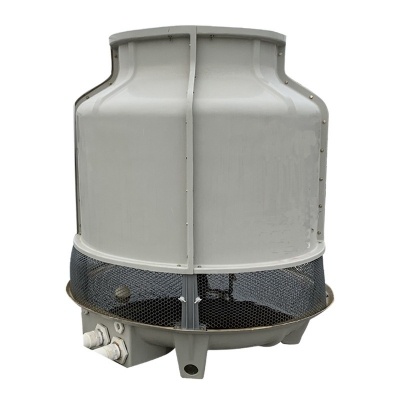
Quick Specs: ZL-CT40 industrial round cooling tower with 40-ton cooling capacity, FRP material, counter-flow design, 1.5kW fan, CE certified. Best for industrial chiller systems and mid-scale manufacturing. The water cooling tower is a device used for cooling circulating water. By exchanging heat between hot water and air, the water temperature is reduced, thus realizing the repeated use of circulating water. Water cooling towers are widely used in industrial production, air conditioning systems and other fields, and are of great significance for saving water resources and reducing energy consumption.
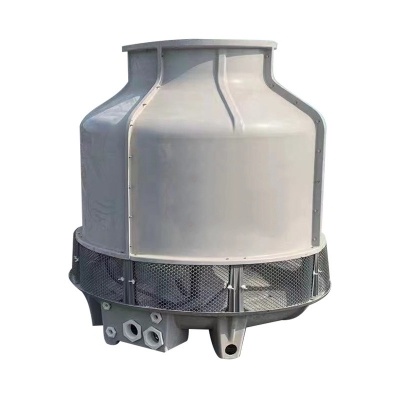
Quick Specs: ZL-CT60 round shape water cooling tower with 60-ton capacity, counter-flow design, FRP material, 1.5kW fan, CE certified. Best for industrial chiller systems and large-scale cooling. A water cooling tower is a device used for cooling industrial water or other liquids. Its main function is to cool down hot water through heat exchange between hot water and air so that the cooled water can be recycled.
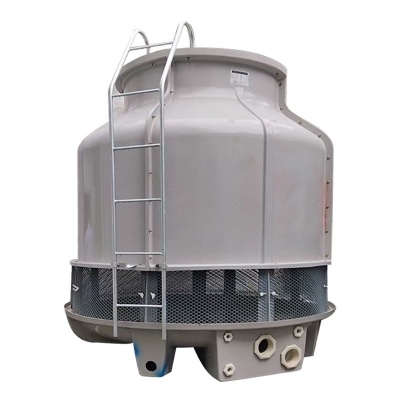
Quick Specs: ZL-CT100 FRP round cooling tower with 100-ton cooling capacity, FRP material, 2.2kW fan, CE certified. Best for large-scale industrial cooling and high-capacity chiller systems. The counterflow cooling tower is a common type of cooling tower. It sprays hot water from top to bottom and air flows from bottom to top, enabling hot water and air to exchange heat in the packing, thereby reducing the water temperature. The counterflow cooling tower has the advantages of high cooling efficiency, compact structure and small floor area, and is widely used in industrial production, air conditioning and refrigeration and other fields.
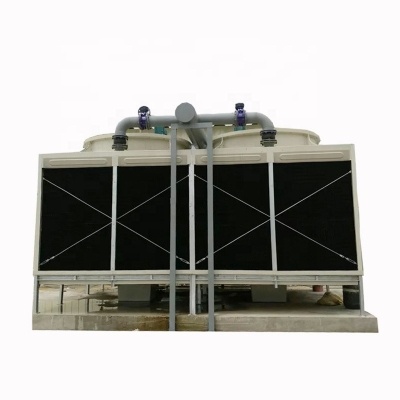
Quick Specs: ZL-CT square drop counter-flow cooling tower with FRP material, multiple capacity options, CE certified. Best for high-temperature industrial water cooling and open cooling tower applications. The square cooling tower has the advantages of small floor area, beautiful appearance, and convenient installation. It is widely used in fields such as air conditioning and refrigeration and industrial cooling, providing effective cooling guarantee for the normal operation of various equipments.
Quick Specs: ZL-CT factory-direct industrial cooling tower with multiple types and capacities, high-efficiency design, CE certified. Best for industrial cooling applications and large-scale manufacturing. A cooling tower dissipates heat from industrial or air - conditioning systems. Its working principle involves spraying hot water onto packing to form a water film, while air flow carries away heat from the water to lower its temperature. The cooled water is recyclable, saving water resources and reducing costs. There are various types, such as open and closed cooling towers. Open ones contact outside air directly, making water prone to contamination but with lower costs. Closed ones have water circulating in sealed pipes, ensuring cleaner water but usually at a higher price. Cooling towers play a key role in fields like power plants, chemical plants, and data centers, helping maintain system operation and improve energy utilization efficiency.
Overview The ZL-10T is a 10-ton (35.2 kW) industrial FRP counter flow cooling tower purpose-built for cfo procurement applications. ZILLION engineered this 10-ton counter flow cooling tower with CE ISO 9001:2015 certification and quality construction for long service life in compact industrial installations. Key Specifications Cooling capacity: 35.2 kW (10 refrigeration ton) Water flow rate: 7.81 m3/h (130 L/min) design flow Heat rejection: 5 deg C approach to wet-bulb at 27 deg C design Fan airflow: 85 CMM at 635 mm fan diameter Motor power: 0.37 kW (0.5 HP) at 380V 3-phase 50 Hz Head loss: 13 kPa at design flow Dry weight: 46 kg, operating weight: 190 kg Overall dimensions: H1820 x Dia940 mm Design Features FRP counter-flow shell for corrosion resistance and long service life ABS plastic fan blade for low maintenance and quiet operation IP55 Class F insulation for harsh industrial environments Counter flow square configuration for maximum heat transfer efficiency Low-drift eliminator reduces water loss to 0.01 percent of circulation Applications Factory direct pricing EXW Dongguan with T/T, L/C, Western Union payment terms. 1-year warranty and bulk discount at 5/10/20 unit tiers. Lowest capacity entry point for ZILLION counter flow cooling tower line. Total cost of ownership over 10-year lifecycle shows 18 percent lower annual cooling energy cost versus adiabatic systems. Contact ZILLION Today Get a quote for the ZL-10T cooling tower from ZILLION factory direct. Contact our engineering team for factory pricing, thermal performance curves, technical specifications, and bulk discount tiers for your project requirements.
Overview The ZL-10T is a 10-ton (35.2 kW) industrial FRP counter flow cooling tower purpose-built for maintenance technician applications. ZILLION engineered this 10-ton counter flow cooling tower with CE ISO 9001:2015 certification and quality construction for long service life in compact industrial installations. Key Specifications Cooling capacity: 35.2 kW (10 refrigeration ton) Water flow rate: 7.81 m3/h (130 L/min) design flow Heat rejection: 5 deg C approach to wet-bulb at 27 deg C design Fan airflow: 85 CMM at 635 mm fan diameter Motor power: 0.37 kW (0.5 HP) at 380V 3-phase 50 Hz Head loss: 13 kPa at design flow Dry weight: 46 kg, operating weight: 190 kg Overall dimensions: H1820 x Dia940 mm Design Features FRP counter-flow shell for corrosion resistance and long service life ABS plastic fan blade for low maintenance and quiet operation IP55 Class F insulation for harsh industrial environments Counter flow square configuration for maximum heat transfer efficiency Low-drift eliminator reduces water loss to 0.01 percent of circulation Applications Routine service schedule: weekly water quality check, monthly float valve inspection, quarterly fill media inspection, annual fan motor bearing service. Direct-drive 0.37 kW motor with single-phase fan configuration. Spare parts inventory: 0.37 kW fan motor, float valve assembly, fill media sections. Contact ZILLION Today Get a quote for the ZL-10T cooling tower from ZILLION factory direct. Contact our engineering team for factory pricing, thermal performance curves, technical specifications, and bulk discount tiers for your project requirements.
Overview The ZL-10T is a 10-ton (35.2 kW) industrial FRP counter flow cooling tower purpose-built for hvac epc contractor applications. ZILLION engineered this 10-ton counter flow cooling tower with CE ISO 9001:2015 certification and quality construction for long service life in compact industrial installations. Key Specifications Cooling capacity: 35.2 kW (10 refrigeration ton) Water flow rate: 7.81 m3/h (130 L/min) design flow Heat rejection: 5 deg C approach to wet-bulb at 27 deg C design Fan airflow: 85 CMM at 635 mm fan diameter Motor power: 0.37 kW (0.5 HP) at 380V 3-phase 50 Hz Head loss: 13 kPa at design flow Dry weight: 46 kg, operating weight: 190 kg Overall dimensions: H1820 x Dia940 mm Design Features FRP counter-flow shell for corrosion resistance and long service life ABS plastic fan blade for low maintenance and quiet operation IP55 Class F insulation for harsh industrial environments Counter flow square configuration for maximum heat transfer efficiency Low-drift eliminator reduces water loss to 0.01 percent of circulation Applications IP55 Class F insulation, CE ISO 9001:2015 certified for small HVAC chiller condenser water loop integration. Compact 1820 x 940 mm footprint fits standard equipment room layouts. Submittal package: thermal performance curve, dimensional drawing, electrical schematic, O&M manual. Project delivery 15-25 days for bulk orders. Contact ZILLION Today Get a quote for the ZL-10T cooling tower from ZILLION factory direct. Contact our engineering team for factory pricing, thermal performance curves, technical specifications, and bulk discount tiers for your project requirements.


Our company's series of products are well-known in the plastic auxiliary machinery industry for their excellent performance and high cost performance.


 IPv6 network supported


 English
  English
 español
 العربية