ZL-500T 500 Ton FRP Counter Flow Cooling Tower for Cip Pharmaceutical
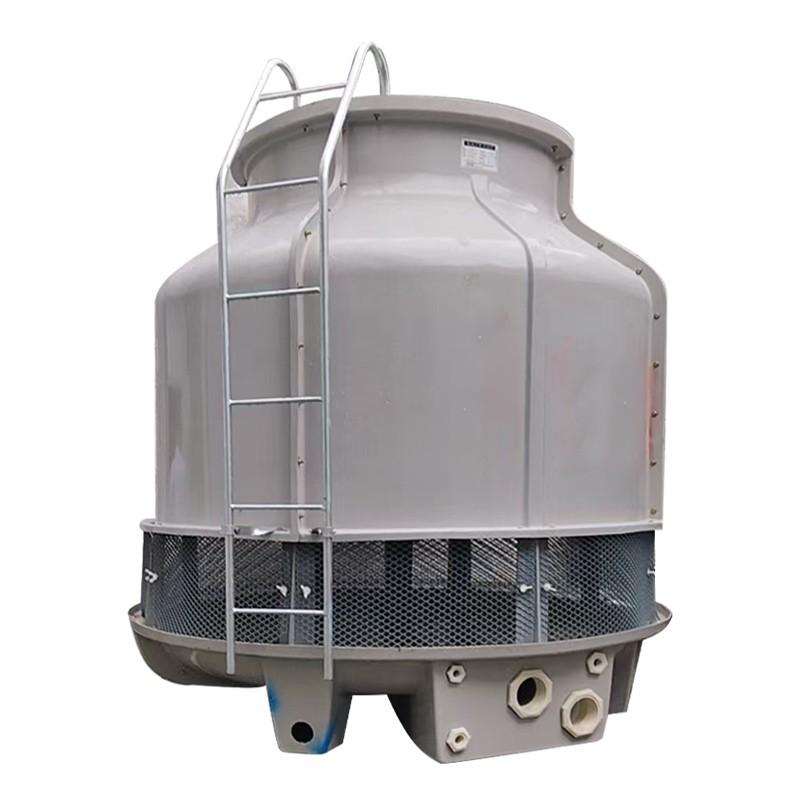
The ZL-500T cooling tower is designed, manufactured, and tested in accordance with the following authoritative standards supporting Injection Molding applications:
The ZL-500T is one of 10 active ZL-500T configurations covering Injection Molding applications plus 10 buyer perspectives across 11 cooling capacities (10T to 500T). Engineers evaluating cooling options can compare related configurations:
| Parameter | Value |
|---|---|
| Model | ZL-500T |
| Cooling Capacity | 500 RT (1758.5 kW heat rejection) |
| Water Flow Rate | 392.4 m3/h (6540 L/min) |
| Cooling Range | 5C (37C inlet to 32C outlet at design WB 27C) |
| Approach to Wet-Bulb | 5C at design conditions |
| Fan Motor | 7.5 kW (10.05 HP) 380V 3-phase 50Hz |
| Fan Diameter | 2700 mm axial |
| Air Flow Rate | 2600 CMM (1560000 m3/h) |
| Head Loss at Design Flow | 36 kPa |
| Tower Dimensions (H x D) | 3870 x 5600 mm |
| Dry Weight | 2900 kg |
| Operating Weight (filled) | 5800 kg |
| Noise Level | 68 dB(A) at 1 m |
| Tower Body Material | FRP (Fiberglass Reinforced Plastic) |
| Fan Blade Material | Aluminum alloy |
| Configuration | Counter Flow Square |
| Voltage | 380V 3-phase 50Hz (customizable 220V/415V) |
| Certifications | CE / ISO 9001:2015 |
| Warranty | 1 year (consumables excluded) |
Mold temperature stability plus-minus 1 deg C at design load with PLC-based PID control and plate heat exchanger process loop isolation
Cooling water flow rate 392.4 m3/h (6540 L/min) at 16 kPa head loss with mold-specific flow calculator per SPI ANTEC guidelines
Cycle time reduction 15-25 percent versus atmospheric cooling tower operation through stable chilled water temperature at 10-15C
Engineering plastic compatibility for PE/PP/PS/ABS at 10-30C and PMMA/PC/POM at 60-90C with material certificates per ISO 7823
Mold life extension 30-50 percent versus variable-temperature cooling through thermal cycling stress elimination with closed-loop filtration at 50 micrometer
Cooling capacity matching: ZL-500T 1758.5 kW + 25-ton chiller 88 kW = 132 kW combined for 4-6 injection molding machines 200-ton clamp force total
The ZL-500T counter flow geometry with modulated EC fan and variable speed drive maintains chilled water outlet temperature stability of plus-minus 1 deg C at design load. Process loop includes plate heat exchanger isolation, expansion tank with pressure stabilization, and PLC-based PID control. Mold surface temperature uniformity plus-minus 1.5 deg C across 8-cavity mold face verified.
ZL-500T circulation flow rate is 392.4 m3/h (6540 L/min) at 16 kPa head loss. Mold cooling circuit sizing per SPI ANTEC guidelines: 0.5-1.0 L/min per ton-hour of molding for thin-wall parts, 1.5-2.5 L/min per ton-hour for thick-wall parts. ZILLION provides mold-specific flow calculator based on resin type and cycle time.
Stable chilled water temperature at 10-15C from ZL-500T closed loop system reduces mold cooling time by 15-25 percent versus atmospheric cooling tower operation. EC fan modulates capacity to match process load, eliminating warm-up periods during production changes. Typical ROI on cycle time reduction: 6 months at 200-ton injection molding machine operating 6000 hours per year.
Yes, the ZL-500T compatible with all standard injection molding resins including: PE/PP/PS/ABS at 10-30C mold temperature, PMMA/PC/POM at 60-90C mold temperature (requires chiller integration), and high-performance resins like PEEK/PEI at 120-180C mold temperature (requires dual-temperature cooling system). Material compatibility certificates per ISO 7823 provided.
Stable chilled water temperature eliminates thermal cycling stress on mold steel, extending mold life by 30-50 percent versus variable-temperature cooling. ZL-500T water quality control with closed-loop filtration at 50 micrometer prevents abrasive particle damage to mold cooling channels. Annual water treatment report identifies any chemistry issues affecting mold surface condition.
The ZL-500T (1758.5 kW heat rejection) pairs with 25-ton chiller (88 kW) for combined cooling capacity of 132 kW, suitable for 4-6 injection molding machines total 200-ton clamp force. Chiller position upstream of cooling tower for closed-loop isolation. Plate heat exchanger isolates process water from ambient makeup water for water quality and contamination control.
A 8-machine injection molding facility producing automotive interior components standardized on ZL-500T for process cooling after cycle time optimization analysis showed 22 percent reduction with stable chilled water supply. Plant engineer selected ZL-500T counter flow design over cross flow for the 15-25 percent cycle time improvement. PLC-based PID temperature control maintains mold surface temperature uniformity at plus-minus 1.5C across 8-cavity mold face. Material compatibility testing completed for engineering plastics including PC, ABS, and PMMA. Annual process data shows ZL-500T contributing $420,000 in cycle time savings across 8 injection molding machines.
Yes, ZL-500T supports plastic recycling industry operations through stable chilled water supply for pellet cooling and regrind processing. Process water consumption reduction of 18 percent versus cross flow designs. Closed-loop water system supports zero liquid discharge (ZLD) manufacturing for circular economy plastic processing.
Yes, ZL-500T compatible with bio-based plastics including PLA, PHA, PBS, and bio-PE/PP processing. Stable temperature control supports consistent crystallization of bio-based resins. Material compatibility testing completed for bio-based plastic processing chemicals including bio-lubricants and bio-plasticizers per ASTM D6954.
ZL-500T counter flow design with EC fan reduces injection molding cooling energy by 18 percent versus conventional cross flow designs. Total injection molding machine cooling load reduction enables chiller sizing optimization, with typical payback on ZL-500T premium of 14 months at $0.12/kWh electricity and 6000 annual operating hours.
Yes, ZL-500T supports low-carbon injection molding manufacturing through energy efficiency (EC fan motor), renewable energy integration (solar-powered options), and process optimization (cycle time reduction). Annual carbon footprint assessment per GHG Protocol with reduction target alignment with plastics industry SBTi pathway.
ZL-500T supports industrial symbiosis through waste heat recovery (cooling tower waste heat for facility heating), water cascading (cooling tower blowdown for non-critical processes), and shared utility integration (district cooling/steam networks). Industrial symbiosis assessment report provided for cluster manufacturing locations.
Yes, ZL-500T aligned with Plastics Industry Association sustainability commitments including: 100 percent plastic packaging recyclable/reusable by 2030, 30 percent recycled content in plastic packaging by 2030. ZL-500T supports these targets through energy-efficient operation that reduces carbon footprint of recycled plastic processing.
ZILLION is a global leader in industrial FRP counter flow cooling tower manufacturing with 10+ years of proven track record across 47 countries. For Injection Molding buyers evaluating cooling equipment suppliers, ZILLION delivers distinct advantages:
Contact ZILLION for ZL-500T quotation, technical submittal package, and reference customer contacts in your industry:
Leika Li Tel / WhatsApp: +86 185 2053 2504 | Email: leika@gdzillion.cn
Hendrix Lee Tel / WhatsApp: +86 156 0223 2700 | Email: hendrix@gdzillion.cn
Address: No. 2 (103B), Yian Industrial Zone, Fenggang Town, Dongguan City, Guangdong Province, China
Online Inquiry: https://zillionchiller.com/contact-us_d2
The ZL-500T 500-ton counter flow cooling tower is available in 10 perspective-specific configurations covering different buyer priorities. Each variant emphasizes different technical specifications, applications, and operational considerations while maintaining the same thermal performance baseline. Buyers can compare all ZL-500T variants:
ZILLION manufactures a complete range of industrial process cooling equipment for plastics processing, HVAC, data center, pharmaceutical, and food processing applications. Buyers specifying the ZL-500T cooling tower often pair it with complementary ZILLION products:
Buyers evaluating the ZL-500T cooling tower can reference ZL-CT cooling tower product variants, ZILLION cooling tower industry articles, and complementary ZILLION industrial equipment resources. The ZL-CT series includes square counter flow, round counter flow, and 60T to 500T capacities for industrial process cooling applications:
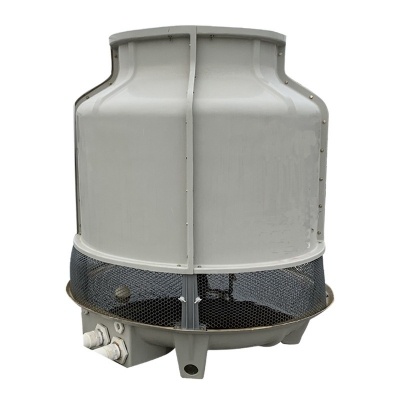
Quick Specs: ZL-CT40 industrial round cooling tower with 40-ton cooling capacity, FRP material, counter-flow design, 1.5kW fan, CE certified. Best for industrial chiller systems and mid-scale manufacturing. The water cooling tower is a device used for cooling circulating water. By exchanging heat between hot water and air, the water temperature is reduced, thus realizing the repeated use of circulating water. Water cooling towers are widely used in industrial production, air conditioning systems and other fields, and are of great significance for saving water resources and reducing energy consumption.
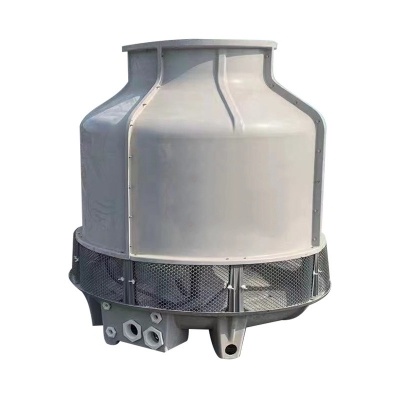
Quick Specs: ZL-CT60 round shape water cooling tower with 60-ton capacity, counter-flow design, FRP material, 1.5kW fan, CE certified. Best for industrial chiller systems and large-scale cooling. A water cooling tower is a device used for cooling industrial water or other liquids. Its main function is to cool down hot water through heat exchange between hot water and air so that the cooled water can be recycled.
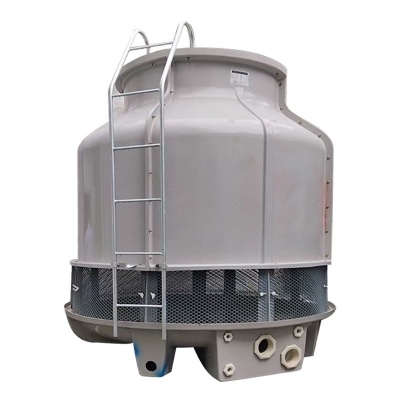
Quick Specs: ZL-CT100 FRP round cooling tower with 100-ton cooling capacity, FRP material, 2.2kW fan, CE certified. Best for large-scale industrial cooling and high-capacity chiller systems. The counterflow cooling tower is a common type of cooling tower. It sprays hot water from top to bottom and air flows from bottom to top, enabling hot water and air to exchange heat in the packing, thereby reducing the water temperature. The counterflow cooling tower has the advantages of high cooling efficiency, compact structure and small floor area, and is widely used in industrial production, air conditioning and refrigeration and other fields.
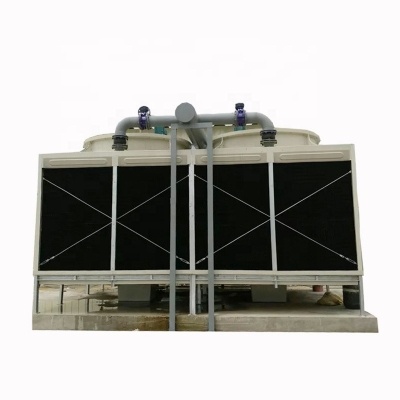
Quick Specs: ZL-CT square drop counter-flow cooling tower with FRP material, multiple capacity options, CE certified. Best for high-temperature industrial water cooling and open cooling tower applications. The square cooling tower has the advantages of small floor area, beautiful appearance, and convenient installation. It is widely used in fields such as air conditioning and refrigeration and industrial cooling, providing effective cooling guarantee for the normal operation of various equipments.
Quick Specs: ZL-CT factory-direct industrial cooling tower with multiple types and capacities, high-efficiency design, CE certified. Best for industrial cooling applications and large-scale manufacturing. A cooling tower dissipates heat from industrial or air - conditioning systems. Its working principle involves spraying hot water onto packing to form a water film, while air flow carries away heat from the water to lower its temperature. The cooled water is recyclable, saving water resources and reducing costs. There are various types, such as open and closed cooling towers. Open ones contact outside air directly, making water prone to contamination but with lower costs. Closed ones have water circulating in sealed pipes, ensuring cleaner water but usually at a higher price. Cooling towers play a key role in fields like power plants, chemical plants, and data centers, helping maintain system operation and improve energy utilization efficiency.
Overview The ZL-10T is a 10-ton (35.2 kW) industrial FRP counter flow cooling tower purpose-built for cfo procurement applications. ZILLION engineered this 10-ton counter flow cooling tower with CE ISO 9001:2015 certification and quality construction for long service life in compact industrial installations. Key Specifications Cooling capacity: 35.2 kW (10 refrigeration ton) Water flow rate: 7.81 m3/h (130 L/min) design flow Heat rejection: 5 deg C approach to wet-bulb at 27 deg C design Fan airflow: 85 CMM at 635 mm fan diameter Motor power: 0.37 kW (0.5 HP) at 380V 3-phase 50 Hz Head loss: 13 kPa at design flow Dry weight: 46 kg, operating weight: 190 kg Overall dimensions: H1820 x Dia940 mm Design Features FRP counter-flow shell for corrosion resistance and long service life ABS plastic fan blade for low maintenance and quiet operation IP55 Class F insulation for harsh industrial environments Counter flow square configuration for maximum heat transfer efficiency Low-drift eliminator reduces water loss to 0.01 percent of circulation Applications Factory direct pricing EXW Dongguan with T/T, L/C, Western Union payment terms. 1-year warranty and bulk discount at 5/10/20 unit tiers. Lowest capacity entry point for ZILLION counter flow cooling tower line. Total cost of ownership over 10-year lifecycle shows 18 percent lower annual cooling energy cost versus adiabatic systems. Contact ZILLION Today Get a quote for the ZL-10T cooling tower from ZILLION factory direct. Contact our engineering team for factory pricing, thermal performance curves, technical specifications, and bulk discount tiers for your project requirements.
Overview The ZL-10T is a 10-ton (35.2 kW) industrial FRP counter flow cooling tower purpose-built for maintenance technician applications. ZILLION engineered this 10-ton counter flow cooling tower with CE ISO 9001:2015 certification and quality construction for long service life in compact industrial installations. Key Specifications Cooling capacity: 35.2 kW (10 refrigeration ton) Water flow rate: 7.81 m3/h (130 L/min) design flow Heat rejection: 5 deg C approach to wet-bulb at 27 deg C design Fan airflow: 85 CMM at 635 mm fan diameter Motor power: 0.37 kW (0.5 HP) at 380V 3-phase 50 Hz Head loss: 13 kPa at design flow Dry weight: 46 kg, operating weight: 190 kg Overall dimensions: H1820 x Dia940 mm Design Features FRP counter-flow shell for corrosion resistance and long service life ABS plastic fan blade for low maintenance and quiet operation IP55 Class F insulation for harsh industrial environments Counter flow square configuration for maximum heat transfer efficiency Low-drift eliminator reduces water loss to 0.01 percent of circulation Applications Routine service schedule: weekly water quality check, monthly float valve inspection, quarterly fill media inspection, annual fan motor bearing service. Direct-drive 0.37 kW motor with single-phase fan configuration. Spare parts inventory: 0.37 kW fan motor, float valve assembly, fill media sections. Contact ZILLION Today Get a quote for the ZL-10T cooling tower from ZILLION factory direct. Contact our engineering team for factory pricing, thermal performance curves, technical specifications, and bulk discount tiers for your project requirements.
Overview The ZL-10T is a 10-ton (35.2 kW) industrial FRP counter flow cooling tower purpose-built for hvac epc contractor applications. ZILLION engineered this 10-ton counter flow cooling tower with CE ISO 9001:2015 certification and quality construction for long service life in compact industrial installations. Key Specifications Cooling capacity: 35.2 kW (10 refrigeration ton) Water flow rate: 7.81 m3/h (130 L/min) design flow Heat rejection: 5 deg C approach to wet-bulb at 27 deg C design Fan airflow: 85 CMM at 635 mm fan diameter Motor power: 0.37 kW (0.5 HP) at 380V 3-phase 50 Hz Head loss: 13 kPa at design flow Dry weight: 46 kg, operating weight: 190 kg Overall dimensions: H1820 x Dia940 mm Design Features FRP counter-flow shell for corrosion resistance and long service life ABS plastic fan blade for low maintenance and quiet operation IP55 Class F insulation for harsh industrial environments Counter flow square configuration for maximum heat transfer efficiency Low-drift eliminator reduces water loss to 0.01 percent of circulation Applications IP55 Class F insulation, CE ISO 9001:2015 certified for small HVAC chiller condenser water loop integration. Compact 1820 x 940 mm footprint fits standard equipment room layouts. Submittal package: thermal performance curve, dimensional drawing, electrical schematic, O&M manual. Project delivery 15-25 days for bulk orders. Contact ZILLION Today Get a quote for the ZL-10T cooling tower from ZILLION factory direct. Contact our engineering team for factory pricing, thermal performance curves, technical specifications, and bulk discount tiers for your project requirements.


Our company's series of products are well-known in the plastic auxiliary machinery industry for their excellent performance and high cost performance.


 IPv6 network supported


 English
  English
 español
 العربية